

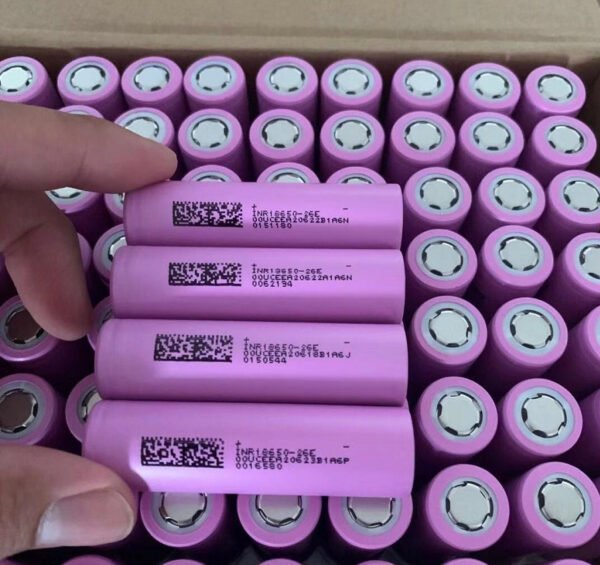
Complete Minimal Capacity Fade Solution for EV Using High-Quality 18650 LFP Cells
In the rapidly evolving landscape of electric mobility, battery longevity remains the primary metric for total cost of ownership (TCO). For B2B procurement managers and engineering teams, the challenge is not merely sourcing cells, but securing a complete minimal capacity fade solution. While prismatic cells often dominate headlines, the 18650 LFP (Lithium Iron Phosphate) cylindrical cell offers a unique combination of maturity, thermal stability, and cost-efficiency that, when managed correctly, delivers exceptional cycle life. This article outlines the technical framework for minimizing capacity degradation in EV applications using high-quality 18650 LFP cells.
The Chemistry Advantage: Why LFP 18650?
Capacity fade in lithium-ion batteries is primarily driven by the growth of the Solid Electrolyte Interphase (SEI) layer, lithium plating, and structural degradation of the cathode. LFP chemistry inherently mitigates these risks. The olivine crystal structure of LiFePO4 is significantly more stable than layered oxide structures (like NMC or NCA), reducing the likelihood of oxygen release and thermal runaway.
When paired with the 18650 cylindrical form factor, the benefits are twofold. First, the manufacturing process for 18650 cells is highly automated and mature, ensuring consistent electrode coating and winding tension, which directly correlates to uniform aging across a battery pack. Second, the cylindrical shape provides a superior surface-area-to-volume ratio compared to prismatic cells, facilitating more efficient passive or active cooling. Maintaining optimal cell temperature is the single most effective method to slow down chemical aging kinetics.
For businesses seeking reliable components, verifying the specific chemistry and form factor is the first step. You can explore detailed specifications for these components at https://cnsbattery.com/products-3/cylindrical-battery-cell/.
Core Technical Strategies for Fade Mitigation
Achieving “minimal capacity fade” requires a system-level approach beyond just cell selection. The following three pillars are critical for EV integrators:
1. Precision Cell Grading and Matching
Inconsistency is the enemy of longevity. In a series-parallel configuration, the weakest cell dictates the pack’s capacity and safety limits. High-quality 18650 LFP cells must be graded strictly by capacity, internal resistance (AC IR), and open circuit voltage (OCV) before assembly. A variance of less than 1% in capacity and 1mΩ in internal resistance is recommended for premium EV applications. This ensures that no single cell is over-stressed during charge or discharge cycles, preventing accelerated degradation of outliers.
2. Advanced Battery Management System (BMS)
A passive BMS is insufficient for long-term fade reduction. An active BMS with high-precision SOC (State of Charge) and SOH (State of Health) estimation algorithms is essential.
- Active Balancing: Unlike passive bleeding, active balancing redistributes energy from high-voltage cells to low-voltage cells. This keeps all cells within a tight voltage window, preventing overcharge (which causes SEI growth) and over-discharge (which causes copper dissolution).
- Thermal Monitoring: The BMS must integrate temperature sensors at multiple points within the pack. Charging LFP cells below 0°C can cause lithium plating, permanently reducing capacity. The system should inhibit charging until the cells are warmed to a safe operating window (ideally 15°C–35°C).
3. Thermal Management Architecture
While LFP is thermally stable, heat accelerates aging. For 18650 packs, an air-cooled or liquid-cooled plate system should be designed to maximize contact with the cylindrical surface. Keeping the average cell temperature below 40°C during operation can double the cycle life compared to unmanaged thermal environments.
Procurement and Compliance for Overseas Buyers
For international B2B buyers, technical specs are only half the equation. Supply chain compliance and manufacturer verification are equally vital to ensure the “Low Price High Quality” promise is real, not just marketing.
- Regulatory Compliance: Ensure cells and packs meet UN38.3 for transportation, IEC 62133 for safety, and relevant regional standards (CE, UL, KC). Non-compliant cells often lack the internal safety vents or PTC devices required to prevent catastrophic failure, which indirectly leads to higher fade rates due to poor internal construction.
- Manufacturer Verification: The battery market is saturated with tier-2 and tier-3 suppliers claiming tier-1 quality. It is crucial to audit the manufacturer’s production capabilities. Look for automated winding machines, dry room humidity control (dew point < -40°C), and aging testing facilities. Partnering with verified battery manufacturers in China ensures access to the global supply chain hub while maintaining quality control. You can verify supplier credentials and industry connections at https://cnsbattery.com/battery-manufacturers-in-china/.
- Warranty and Data: A credible supplier should offer warranty terms backed by cycle life data. Request test reports showing capacity retention after 2000 cycles at 1C discharge.
Conclusion: Building for Longevity
The goal of a minimal capacity fade solution is to align the battery’s lifespan with the vehicle’s operational life. By selecting high-quality 18650 LFP cells, implementing an active BMS, and enforcing strict thermal management, EV manufacturers can significantly reduce degradation rates. However, the foundation of this solution lies in sourcing from reputable partners who prioritize consistency and compliance over short-term cost cuts.
For engineering teams and procurement officers ready to optimize their EV battery strategy, direct communication with technical experts is the next logical step. We invite you to discuss your specific project requirements, customization needs, and compliance questions. Reach out to our technical sales team directly via https://cnsbattery.com/contact-2/ to secure a supply chain partner dedicated to longevity and performance.
In the competitive EV sector, the battery is not just a component; it is the core asset. Protecting its capacity is protecting your business value.

