

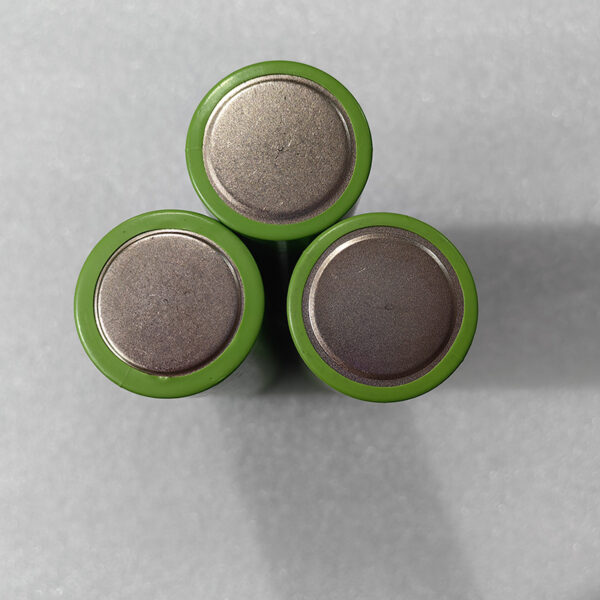
Complete High Reliability Solution for EV Using High-Quality 18650 LFP Cells China Factory Direct Supplier
Introduction: The Critical Role of LFP Battery Technology in Electric Vehicle Evolution
The electric vehicle (EV) industry demands battery solutions that balance safety, longevity, and cost-effectiveness. Among various lithium-ion chemistries, Lithium Iron Phosphate (LFP) 18650 cylindrical cells have emerged as the preferred choice for commercial EV applications requiring high reliability. As a leading China factory direct supplier, we deliver complete battery solutions engineered for optimal performance in demanding automotive environments. This article examines the technical advantages of 18650 LFP cells and provides essential guidance for engineers and technical procurement professionals evaluating battery suppliers.
Technical Advantages of 18650 LFP Cells for EV Applications
Superior Thermal Stability and Safety Performance
LFP chemistry offers exceptional thermal stability compared to NMC or NCA alternatives. The olivine crystal structure of lithium iron phosphate provides inherent resistance to thermal runaway, with decomposition temperatures exceeding 270°C. This characteristic is critical for EV battery packs where multiple cells operate in close proximity under varying load conditions. The 18650 cylindrical format further enhances safety through robust steel casing that withstands internal pressure variations during charge-discharge cycles.
For fleet operators and commercial vehicle manufacturers, this translates to reduced fire risk and lower insurance costs. Our cells undergo rigorous nail penetration, overcharge, and short-circuit testing per UN38.3 and IEC62133 standards, ensuring compliance with international safety regulations.
Extended Cycle Life and Degradation Characteristics
One of the most compelling advantages of LFP 18650 cells is their exceptional cycle life. Quality LFP cells consistently deliver 3,000-5,000 full cycles at 80% depth of discharge while maintaining 80% capacity retention. This significantly outperforms conventional NMC cells, which typically achieve 1,500-2,500 cycles under similar conditions.
The degradation mechanism in LFP chemistry differs fundamentally from other lithium-ion types. Capacity fade occurs gradually through solid electrolyte interface (SEI) layer growth rather than catastrophic structural changes. This predictable degradation pattern enables accurate battery management system (BMS) algorithms for state-of-health (SOH) estimation, crucial for warranty management and second-life applications.
Cost-Effectiveness Without Compromising Performance
LFP cells eliminate cobalt from the cathode composition, reducing raw material costs by approximately 30-40% compared to NMC equivalents. This cost advantage becomes increasingly significant at pack level, where cell procurement represents 60-70% of total battery system cost. For high-volume EV manufacturers, this translates to substantial savings without sacrificing performance metrics.
Quality Assurance and Manufacturing Excellence
Factory Direct Supply Chain Advantages
Working directly with a certified China battery manufacturer eliminates intermediary markups while ensuring traceability throughout the production process. Direct factory engagement enables customized specifications, accelerated technical support, and transparent quality documentation. Our manufacturing facilities maintain ISO9001, ISO14001, and IATF16949 certifications, demonstrating commitment to automotive-grade quality management.
Each production batch undergoes comprehensive testing including capacity verification, internal resistance measurement, self-discharge rate analysis, and dimensional inspection. Statistical process control (SPC) monitors critical parameters throughout manufacturing, ensuring consistent cell-to-cell variation below 3%—essential for balanced pack performance.
Technical Support and Engineering Collaboration
Successful EV battery integration requires more than component supply. Our engineering team provides cell characterization data, thermal modeling support, and BMS compatibility guidance. We offer sample evaluation programs allowing customers to validate performance under actual operating conditions before volume commitment.
For detailed product specifications and technical documentation, visit our cylindrical battery cell product page. Our team maintains comprehensive test reports including cycle life data, impedance spectra, and temperature performance curves essential for system design validation.
Selection Criteria for EV Battery Procurement
Key Performance Parameters
Technical procurement teams should evaluate suppliers based on measurable criteria:
- Capacity Consistency: Standard deviation should remain below 2% within production batches
- Internal Resistance: Variation under 5mΩ ensures balanced current distribution
- Self-Discharge Rate: Quality LFP cells demonstrate less than 3% monthly self-discharge at 25°C
- Temperature Performance: Operational range from -20°C to 60°C with minimal capacity loss
Supplier Verification Requirements
Before committing to volume purchases, verify manufacturer credentials through factory audits, reference customer validation, and independent third-party testing reports. Reputable manufacturers maintain transparent communication channels and provide complete documentation packages including material safety data sheets (MSDS), transportation certifications, and warranty terms.
To explore our manufacturing capabilities and quality certifications, review information at battery manufacturers in China. This resource provides comprehensive insights into production capacity, quality control systems, and compliance documentation.
Implementation Best Practices for EV Battery Systems
Battery Management System Integration
Optimal LFP cell performance requires properly configured BMS algorithms. LFP’s flat voltage plateau (3.2V nominal) demands precise voltage sensing accuracy within ±5mV for accurate state-of-charge estimation. We recommend coulomb counting combined with open-circuit voltage calibration for optimal SOC accuracy.
Thermal management系统设计 should maintain cell temperature between 15-35°C during operation. While LFP chemistry tolerates wider temperature ranges, performance optimization occurs within this window. Active cooling becomes necessary for high-power applications exceeding 3C discharge rates.
Pack Design Considerations
Cylindrical 18650 cells enable flexible pack configurations through series-parallel arrangements. Standard module designs utilize 48-96 cells per module, balancing voltage requirements with thermal management complexity. Mechanical design should accommodate cell expansion during cycling (typically 0.5-1mm radial growth) while maintaining structural integrity under vibration and shock conditions per automotive standards.
Conclusion: Partnering for Long-Term EV Success
The transition to electric mobility requires battery partners committed to quality, reliability, and continuous improvement. High-quality 18650 LFP cells from certified China manufacturers provide the foundation for successful EV deployments across commercial and industrial applications.
For technical inquiries, sample requests, or partnership discussions, contact our engineering team through our contact page. We maintain dedicated support channels for international customers, providing responsive communication across time zones with technical expertise in multiple languages.
Investing in quality battery cells today ensures operational reliability and total cost of ownership advantages throughout your EV platform’s lifecycle. Our commitment to manufacturing excellence, transparent documentation, and engineering support positions us as your strategic partner in electric vehicle development.
Technical specifications subject to verification based on specific application requirements. All performance data represents typical values under standard test conditions. Custom specifications available upon engineering review.


