

The Definitive Guide to Wide Temperature Batteries for Low-Speed Vehicles
Navigating the unique demands of low-speed electric vehicles (LSVs) requires more than just a standard battery pack. These vehicles—encompassing neighborhood electric vehicles (NEVs), golf carts, utility trucks, and last-mile delivery scooters—operate in environments that are often exposed to the elements and subject to inconsistent charging cycles. The critical factor determining their lifespan and reliability is not just capacity, but thermal resilience.
For fleet managers, OEMs, and engineering teams, selecting a Wide Temperature Battery is no longer an option but a necessity. This guide delves into the specific electrochemical and engineering requirements for these applications, moving beyond generic marketing to provide the technical insights you need to make a procurement decision that saves costs and enhances safety.
Why Standard Lithium-Ion Fails in LSV Applications
Most consumer-grade lithium-ion batteries are designed for controlled environments (e.g., smartphones, laptops, or climate-controlled EVs). When deployed in open-body LSVs, they face a “triple threat”:
- Thermal Runaway Risk: Standard NMC or LFP cells can degrade rapidly above 45°C or suffer lithium plating below 0°C during charging.
- Calendar Aging: Exposure to direct sunlight, especially in desert climates, accelerates electrolyte decomposition.
- Partial State of Charge (PSOC) Cycling: LSVs are rarely fully cycled daily, leading to sulfation in lead-acid and impedance rise in standard lithium chemistries.
To counter this, a specialized approach to cell chemistry and Battery Management Systems (BMS) is required.
The Core Technology: Wide Temperature Lithium Iron Phosphate (LFP)
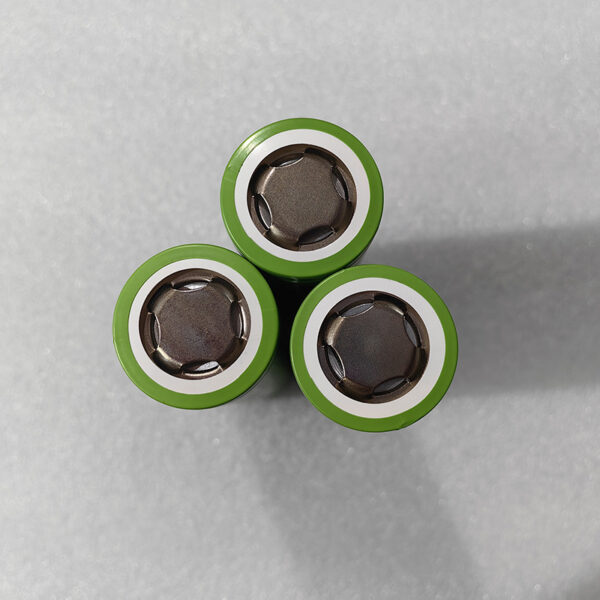
While 18650 and 21700 cylindrical cells dominate the consumer market, the LSV sector is shifting decisively toward Cylindrical Lithium Iron Phosphate (LFP) technology. Here is why this specific chemistry is the gold standard for wide-temperature operation.
1. Intrinsic Thermal Stability
The olivine structure of LFP cathodes provides superior bond stability compared to Nickel-based chemistries. This translates to a much higher thermal runaway threshold, typically above 270°C, compared to ~150°C for standard NMC cells. For vehicles parked under the sun, this margin of safety is non-negotiable.
2. Electrolyte Engineering for Extremes
The secret sauce lies in the electrolyte additives. Advanced wide-temperature formulations utilize:
- High-boiling-point solvents: To prevent vaporization in desert heat.
- Low-freezing-point co-solvents: To maintain ionic conductivity in sub-zero conditions.
- CEA (Cyclic Sulfate) Additives: These form a robust Solid Electrolyte Interphase (SEI) layer that remains stable across a vast temperature gradient.
3. Performance Metrics
Modern LSV batteries are engineered to operate efficiently in a range of -40°C to +65°C. However, charging below 0°C requires specific BMS protocols to prevent damage.
Technical Specifications: What to Look for in a Spec Sheet
When evaluating a Battery Manufacturer in China or globally, you must scrutinize the data sheet for specific LSV-centric metrics. Do not settle for generic “industrial grade” claims.
| Parameter | Standard LFP | Wide Temperature LFP (LSV Grade) | Significance |
|---|---|---|---|
| Operating Temp (Discharge) | -20°C to +60°C | -40°C to +65°C | Ensures operation in Arctic or Desert climates without power derating. |
| Cycle Life (PSOC) | 2000 Cycles | 3000+ Cycles | Compensates for the shallow, irregular charging patterns typical of LSV use. |
| Thermal Shutdown | 130°C (PTC) | 150°C+ (CID + PTC) | Dual safety mechanisms prevent catastrophic failure if the vehicle cabin overheats. |
| Energy Density | ~90-100 Wh/kg | 120+ Wh/kg | Higher density allows for smaller, lighter packs, increasing payload capacity for delivery vehicles. |
Note: Always verify if the cycle life data is tested at 25°C or at elevated temperatures (e.g., 45°C), as the latter is a truer indicator of real-world LSV durability.
Case Study: Optimizing a Last-Mile Delivery Fleet
The Scenario: A logistics company in Dubai operates a fleet of 50 electric tuk-tuks for last-mile delivery. They were experiencing a 40% failure rate within 12 months using standard LFP packs.
The Problem: The packs were parked under direct sunlight between shifts, with cabin temperatures exceeding 70°C. The standard BMS lacked the thermal buffering capacity, causing the cells to dry out and the SEI layer to crack.
The Solution: We engineered a custom 32700 Cylindrical Cell solution with:
- Enhanced Thermal Interface Material (TIM): Filling gaps between the 32700 cells to wick heat away from the core.
- High-Temp Electrolyte: Formulated to withstand vapor pressure up to 85°C.
- Passive Ventilation Design: Utilizing the chimney effect within the cylindrical module structure.
The Result: After 18 months of deployment, the fleet reported zero thermal-related failures and maintained 85% State of Health (SOH).
Procurement Strategy: OEMs vs. Aftermarket
When sourcing these specialized components, you face a choice: buy off-the-shelf or go custom.
1. Off-the-Shelf (Standard Cylindrical Cells)
If your design is finalized, sourcing standard 18650, 21700, or 32700 cells allows for rapid deployment. This is ideal for startups or smaller fleets. Ensure the manufacturer provides full UN38.3 testing data for transport safety.
2. Custom Battery Packs (OEM Integration)
For established manufacturers, integrating wide-temperature cells directly into the vehicle chassis offers the best performance. This involves:
- Mechanical Integration: Designing the chassis as a heatsink.
- BMS Co-Design: Synchronizing the battery’s thermal data with the vehicle’s telematics.
3. The “China Sourcing” Advantage
Many leading LSV manufacturers look toward China for supply chain efficiency. However, the key is finding a partner that acts as a Battery Manufacturer in China with R&D capabilities, not just a trader. You need access to their electrochemistry lab data, not just their sales catalog.
The Future is Cylindrical
While prismatic and pouch cells are common, the Cylindrical Battery Cell format is experiencing a renaissance in the LSV sector. The 32700 format, in particular, offers a sweet spot between energy density and thermal management. The steel casing provides excellent mechanical robustness for bumpy roads, and the uniform geometry allows for precise thermal modeling.
For your next generation of low-speed vehicles, moving to a wide-temperature cylindrical platform is the strategic move to dominate markets from the tropics to the tundra.
Ready to upgrade your LSV fleet with a battery solution engineered for extremes?
Explore our range of industrial-grade cylindrical cells designed for durability and wide-temperature operation: Cylindrical Battery Cell Product Range
For technical inquiries and OEM partnership opportunities, contact our engineering team directly: Contact CNS BATTERY
Learn more about our manufacturing capabilities and quality standards as a leading Battery Manufacturer in China: About CNS BATTERY


