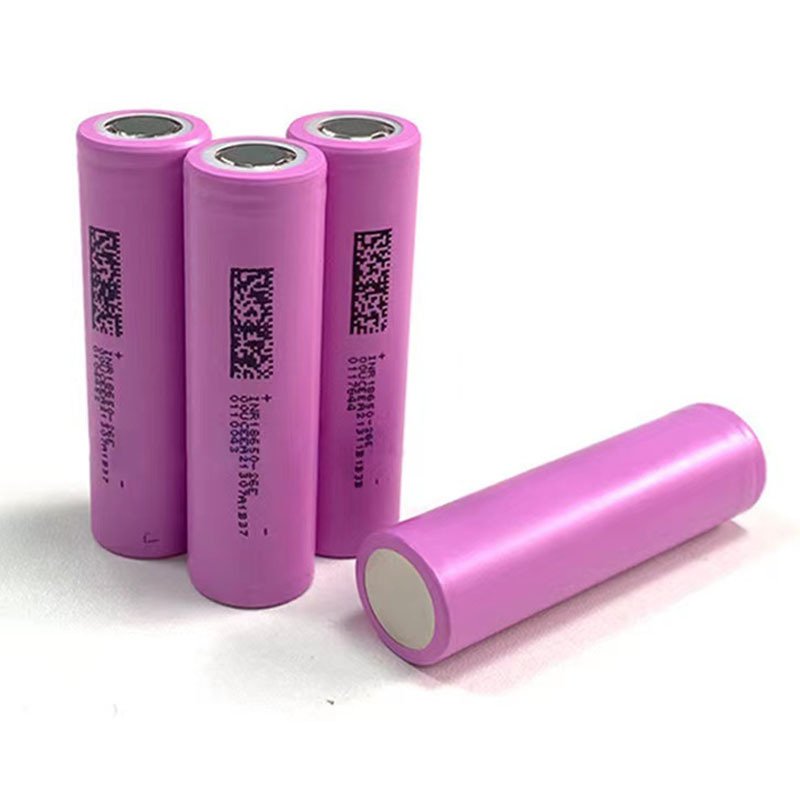
18650 Battery Cell for Dirt E-Bike: Technical Specifications and Selection Guide for B2B Applications
The electrification of off-road mobility has created unprecedented demand for high-performance energy storage solutions. Among various lithium-ion configurations, the 18650 battery cell has emerged as the industry standard for dirt e-bike applications, offering an optimal balance of energy density, thermal management, and cost-effectiveness. This technical analysis examines the critical parameters that engineering teams and procurement specialists must evaluate when selecting 18650 cells for demanding off-road electric vehicle platforms.
Understanding 18650 Cell Architecture for Off-Road Applications
The 18650 designation refers to cylindrical lithium-ion cells measuring 18mm in diameter and 65mm in length. This form factor has dominated the dirt e-bike sector due to its proven manufacturing maturity and reliable performance under high-discharge conditions. The fundamental electrochemistry typically employs lithium nickel manganese cobalt oxide (NMC) or lithium iron phosphate (LFP) cathode materials, each presenting distinct advantages for off-road duty cycles.
From a technical standpoint, the cylindrical geometry facilitates superior heat dissipation compared to pouch or prismatic alternatives. During aggressive riding conditions where discharge rates can exceed 3C continuously, thermal management becomes critical for maintaining cell longevity and safety. The steel casing provides mechanical protection against vibration and impact—essential characteristics for dirt e-bike applications operating in challenging terrain.
Key Performance Parameters for Dirt E-Bike Integration
Capacity and Energy Density: Modern 18650 cells for e-mobility applications typically range from 2,500mAh to 3,500mAh per cell. For dirt e-bike battery packs requiring 48V to 72V nominal voltage, engineers must calculate series-parallel configurations that balance total energy capacity with peak power delivery. Higher capacity cells generally employ silicon-enhanced anodes, though this may impact cycle life under high-stress conditions.
Discharge Rate Capability: Off-road electric bicycles demand sustained high-current discharge during hill climbs and acceleration. Quality 18650 cells should support continuous discharge rates of 15A to 30A without excessive voltage sag or thermal runaway risk. The internal resistance specification, typically below 50mΩ for power-oriented cells, directly influences efficiency and heat generation during operation.
Cycle Life and Degradation: Professional-grade 18650 cells should deliver minimum 500 full equivalent cycles while retaining 80% of initial capacity. However, dirt e-bike applications often operate in partial state-of-charge windows, which can extend practical service life. Temperature-compensated charging algorithms and battery management system (BMS) integration are essential for maximizing longevity in field conditions.
Manufacturing Quality and Supply Chain Considerations
When evaluating suppliers for 18650 battery cell procurement, technical buyers must verify manufacturing certifications including ISO 9001, IEC 62133, and UN 38.3 transportation compliance. Consistency in cell matching within battery packs directly affects performance uniformity and safety margins. Reputable manufacturers implement automated grading systems that sort cells by capacity, internal resistance, and self-discharge characteristics before pack assembly.
For organizations seeking reliable battery manufacturers in China, due diligence should include factory audit reports, quality control documentation, and reference customer verification. The geographic concentration of lithium-ion supply chains in Asia necessitates careful supplier qualification to mitigate supply disruption risks.
Integration Best Practices for Engineering Teams
Successful 18650 integration requires comprehensive thermal modeling during the design phase. Cell spacing, cooling channel design, and ambient temperature operating ranges must be validated through prototype testing. The battery management system should implement cell-level voltage monitoring, temperature sensing at multiple pack locations, and active balancing to maintain cell uniformity throughout the product lifecycle.
For detailed technical specifications on cylindrical cell options suitable for dirt e-bike applications, engineering teams can review available cylindrical battery cell configurations that meet off-road performance requirements. Customization options including tab configurations, protective coatings, and capacity grading should be discussed during the supplier qualification process.
Conclusion and Next Steps
The 18650 battery cell remains the optimal choice for dirt e-bike manufacturers seeking proven technology with established supply chains. Success depends on selecting cells matched to specific power profiles, implementing robust thermal management, and partnering with qualified manufacturers who understand off-road application demands.
Technical teams requiring detailed consultation on cell selection, pack design, or supply chain qualification are encouraged to contact our engineering team for application-specific recommendations. Early collaboration between OEM engineering departments and cell suppliers significantly reduces development timelines and ensures optimal performance in final product deployments.
This technical guide provides foundational information for B2B decision-makers evaluating 18650 battery solutions for off-road electric vehicle applications. Specifications should be validated against actual operating conditions before final design commitment.