
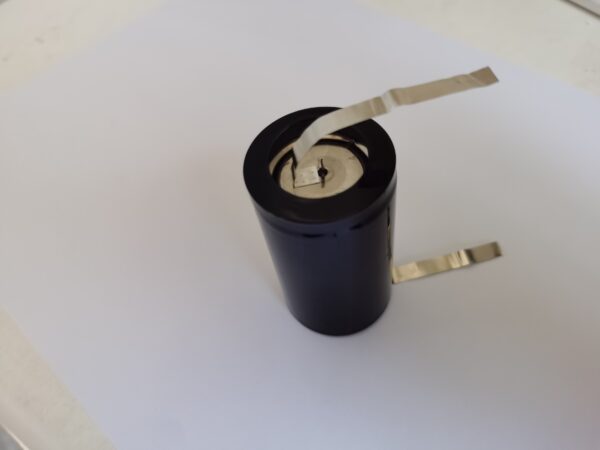
The 88% Solution: Unveiling the Science Behind Long-Term Li-SOCl₂ Capacity Retention
In the world of industrial electronics and remote monitoring, the lifespan of a power source is not just a convenience metric—it is a critical operational parameter. For B2B engineers and procurement managers responsible for deploying devices in inaccessible locations (such as utility meters, military equipment, or IoT sensors), the nightmare scenario is premature battery failure leading to costly field recalls. This is why the statistic stating that a Lithium Thionyl Chloride (Li-SOCl₂) battery retains 88% of its capacity after 8 years of storage is not merely a data point; it is a testament to electrochemical stability and a promise of reliability. As a professional in the lithium primary battery industry, I will dissect the science behind this remarkable retention rate, explaining why it matters for your bottom line and how to leverage it in your designs.
The Electrochemical Foundation of Stability
To understand the 88% retention figure, one must first look at the chemistry. Li-SOCl₂ batteries are classified as “primary” (non-rechargeable) cells. Unlike lithium-ion cells that rely on the shuttling of ions between a graphite anode and a metal oxide cathode—a process that inherently involves structural stress and side reactions—Li-SOCl₂ cells utilize lithium metal and thionyl chloride.
The key to their longevity lies in the passivation layer. When a Li-SOCl₂ cell is manufactured, a thin, protective film of lithium chloride (LiCl) naturally forms on the lithium anode. This layer is the unsung hero of long-term storage. It acts as a barrier, preventing the spontaneous reaction between the lithium metal and the thionyl chloride electrolyte. In a high-quality cell, this layer is uniform and stable. Over the first 8 years, the growth of this layer is minimal and self-limiting. Consequently, the self-discharge rate remains incredibly low, typically less than 1% per year under ideal conditions. This negligible self-discharge is the direct reason the cell can sit on a shelf for nearly a decade and still deliver 88% of its rated energy.
Engineering for the “Field Effect”: Beyond the Lab
While the chemistry provides the potential for longevity, the engineering execution determines the reality. Achieving that 88% retention requires more than just mixing chemicals; it demands precision manufacturing.
First, consider the hermetic seal. Any ingress of moisture or oxygen will destroy the passivation layer and accelerate internal corrosion. At our facilities, we utilize laser welding techniques to ensure a hermetic seal that is impervious to environmental factors. This is crucial because the 8-year storage test assumes a dry, room-temperature environment. If the seal fails, the chemistry fails.
Second, the purity of the materials is non-negotiable. Trace impurities in the electrolyte or the lithium anode act as catalysts for unwanted side reactions. These micro-reactions, though invisible to the naked eye, eat away at the capacity over time. By maintaining ultra-high purity standards in our raw materials, we minimize these parasitic currents, ensuring that the capacity loss remains within the 12% window over 8 years.
Strategic Applications: Why 88% Retention Matters
For B2B clients, this specific retention rate translates into concrete business advantages. It allows for a “Just-in-Time” inventory strategy without the fear of obsolescence.
Consider the utility metering industry. A water or gas meter might be installed immediately or sit in a warehouse for five years before deployment. If the battery only retained 50% of its capacity after 5 years, the meter’s operational life in the field would be halved. However, with an 88% retention rate, even if the device sits for 8 years, it still has the energy budget to function for another 10-15 years in the field. This predictability reduces warranty risks and eliminates the need for “battery rotation” programs in inventory management.
Similarly, in the medical device sector, where backup power for life-saving equipment is mandatory, having a battery that guarantees 88% capacity after long-term storage ensures that the safety net is never compromised, regardless of when the device was manufactured.
Validating the Claim: Our Quality Assurance Process
As a professional, I cannot simply state that our batteries retain 88% capacity; I must prove it. Our quality management system is designed to validate this claim rigorously.
We do not rely on accelerated life testing alone. While Arrhenius equations can model long-term behavior, we maintain a “long-term soak” program. In our climate-controlled chambers, we store statistically significant samples of every production lot for extended periods. We test these samples at intervals (1 year, 3 years, 5 years, and 8 years) to verify the capacity retention curve.
Furthermore, we perform High-Rate Pulse Testing. Even if a battery retains capacity, it must be able to deliver power when needed. After 8 years of storage, a battery might suffer from “voltage delay” due to the thickening of the passivation layer. Our testing ensures that even after 8 years, the cell can deliver the required voltage and current within milliseconds of a load being applied. This validation process is what allows us to stand behind the 88% figure with absolute confidence.
Designing for the Future: Partnering with Your OEM
Understanding this retention curve is vital for your product design cycle. If you are designing a device that requires a 15-year lifespan, you cannot start with a battery that has already lost 12% of its capacity due to storage. You must factor in the “age” of the battery at the time of device assembly.
This is where partnering with a knowledgeable manufacturer becomes essential. We work with OEMs to forecast their production timelines and inventory turnover. By doing so, we can ensure that the batteries shipped to your assembly line are within the optimal “freshness” window, maximizing the end-user experience.
The 88% capacity retention after 8 years is not a marketing slogan; it is a benchmark of quality. It represents the intersection of stable chemistry, rigorous engineering, and precise manufacturing. For B2B clients, this means reduced risk, lower total cost of ownership, and the peace of mind that comes with knowing your device will function when it is needed most. If you are looking to integrate a power source with proven long-term reliability into your next project, we invite you to explore our range of primary lithium solutions.
Explore our Li-SOCl₂ Battery Solutions
For specific inquiries regarding long-term storage specifications or custom battery designs, please contact our technical team.
