

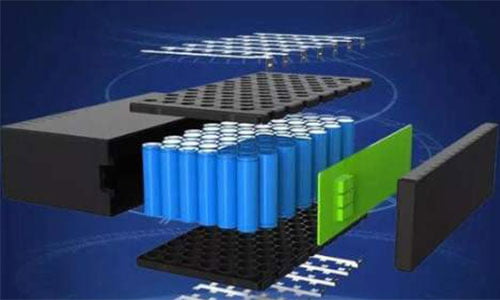
2026 NCM Cylindrical Battery Supplier: Fix High Discharge Rate in Medical Devices Using 60110 Cells OEM Custom Solutions
In the high-stakes environment of medical electronics, power failure is not an option. As we move into 2026, medical Original Equipment Manufacturers (OEMs) are facing a critical bottleneck: sourcing cylindrical lithium-ion batteries capable of sustaining the massive discharge rates required by next-generation portable defibrillators, surgical robots, and high-power imaging probes. Standard 18650 or 21700 cells often fail under the thermal and current stress of these applications.
This is where the 60110 cylindrical cell emerges as a game-changer. For engineers and procurement managers in the US, Europe, and globally, partnering with a specialized 2026 NCM Cylindrical Battery Supplier is no longer just about cost—it is about accessing the technical architecture necessary to future-proof medical devices. This article dissects the technical superiority of the 60110 format, the specific NCM chemistry required for medical stability, and how to navigate the global supply chain to ensure compliance and reliability.
Why the 60110 Cylindrical Format is the Medical Industry Standard
The “60110” designation refers to a cylindrical cell with a 60mm diameter and an 110mm height. This large format is distinct from the common consumer “18650” or “21700” cells. For medical applications, this size offers a unique physical advantage: a lower internal resistance profile.
The Physics of High Discharge:
Medical devices often require bursts of power exceeding 50A to drive motors or lasers. According to Joule’s first law, heat generation ($P_{heat}$) is proportional to the square of the current ($I^2$) and the internal resistance ($R$) of the battery ($P_{heat} = I^2 \times R$).
- Standard Cells: Small cells have high internal resistance. When forced to deliver high currents, they generate excessive heat, leading to thermal runaway risks and voltage sag (where the voltage drops below the device’s operating threshold).
- 60110 Cells: The large cross-sectional area of the 60110 electrode significantly reduces $R$. This allows the cell to deliver high currents (often 3C-5C continuous) with minimal heat generation, ensuring the medical device operates at peak voltage throughout the discharge cycle.
Technical Deep Dive: NCM Chemistry for Life-Critical Stability
Not all Lithium Nickel Cobalt Manganese Oxide (NCM) chemistries are created equal. For medical applications, the balance of the NCM ratio (e.g., NCM 523, 622, or 811) is crucial for balancing energy density with safety.
Key Parameters for Medical Grade NCM:
When evaluating a supplier, engineers must scrutinize the following parameters to ensure the battery acts as a “solid-state power plant” rather than a ticking time bomb:
| Parameter | Medical Requirement | Why it Matters |
|---|---|---|
| Internal Impedance | < 10mΩ (Typically) | Ensures minimal voltage drop under load, preventing device shutdown during critical operation. |
| Cycle Life | > 1000 Cycles | Medical equipment is expensive; batteries must last the lifetime of the device or support thousands of charge cycles. |
| Thermal Runaway | > 200°C Trigger | Safety is paramount. High thermal stability prevents fire hazards in oxygen-rich hospital environments. |
| Self-Discharge Rate | < 2% per Month | Ensures the device is ready for immediate use during emergencies, even after long storage. |
Testing Methodology:
To validate a 60110 cell for your design, rigorous testing protocols must be followed:
- Pulse Discharge Testing: Simulate the actual load profile of the medical device (e.g., 30 seconds on, 5 minutes off) to check for voltage recovery.
- Thermal Imaging: Monitor the cell surface temperature during max load to ensure it stays below 60°C.
- Vibration Testing: Simulate transport conditions to ensure internal connections do not degrade.
Navigating Global Compliance: The 2026 Regulatory Landscape
Selling medical devices in 2026 requires adherence to strict regional safety standards. A generic battery supplier cannot meet these requirements; you need a partner with a documented Quality Management System (QMS).
- European Union (EU) & Medical Device Regulation (MDR): Under the EU MDR, batteries are considered critical components. Your supplier must provide a Technical Construction File (TCF) and ensure the cell passes UN/DOT 38.3 (transport safety) and IEC 62133 (safety standards for portable batteries). For devices plugged into the grid, compliance with RoHS 3 (restricting hazardous substances like lead and mercury) is mandatory.
- United States (US) & FDA: While the FDA does not directly approve the battery chemistry, they audit the manufacturer’s design controls. A 2026-ready supplier will have ISO 13485 certification, which is the standard for medical device quality management. This ensures that every batch of 60110 cells is traceable and manufactured under cleanroom conditions to prevent microscopic contaminants that could cause internal shorts.
The OEM Advantage: From Standard Cells to Bespoke Power
Off-the-shelf (COTS) batteries rarely fit the ergonomic constraints of advanced medical hardware. The true value of a 2026 NCM Cylindrical Battery Supplier lies in their ability to offer OEM Custom Solutions.
This goes beyond simply printing a logo on the wrapper. It involves:
- Form Factor Engineering: Adjusting the length or diameter within the 60110 architecture to fit specific housing cavities.
- Custom BMS Integration: Designing the protection circuit module (PCM) to communicate specific State of Charge (SoC) algorithms to the medical device’s host controller.
- Laser Welding & Busbars: Providing pre-welded modules that snap directly into the device, reducing the client’s assembly line complexity.
By partnering with a manufacturer that specializes in these custom solutions, medical OEMs can reduce their time-to-market by months, as they do not need to design the cell chemistry from scratch.
Partnering with a Certified Global Manufacturer
Selecting a battery partner is a strategic decision that impacts your product’s safety, warranty costs, and regulatory approval timeline. In 2026, the market demands a supplier who is not just a factory, but a technical collaborator.
If you are an engineer or procurement manager working on a medical device requiring high discharge rates, you need a partner with the infrastructure to support global standards. CNS Battery operates as a fully integrated cylindrical battery manufacturer, providing the technical backbone for high-power applications. As a leader in the industry, they offer comprehensive cylindrical battery cells and customizable solutions designed for the global market.
To ensure your 2026 product launch meets all technical and compliance hurdles, connect with a manufacturer capable of delivering the precision of a 60110 cell with the reliability of a certified supply chain.
For technical consultations or to request a datasheet for high-discharge cylindrical cells, visit the Cylindrical Battery Cell product page or contact the engineering team directly via the Contact Us portal to discuss your OEM custom solution requirements.


