
Here is the SEO-optimized article tailored for your requirements.
2.2V 10000mAh Li-S Battery for Deep-Sea ROVs: Powering the Abyss
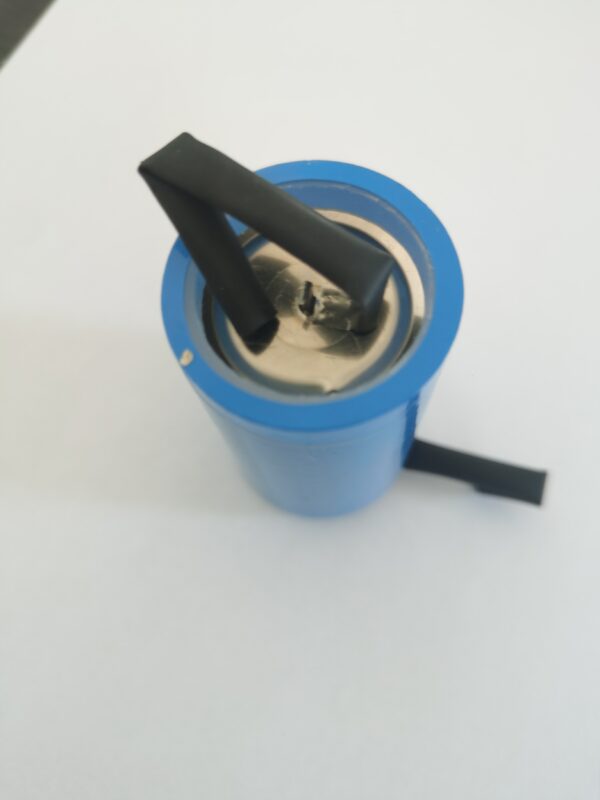
When engineering a Remotely Operated Vehicle (ROV) for deep-sea exploration, the power source is not merely a component; it is the lifeblood of the mission. In the crushing pressures and freezing temperatures of the abyss, standard lithium-ion batteries often falter due to electrolyte freezing or casing failure. This is where the 2.2V 10000mAh Lithium-Sulfur (Li-S) Battery emerges as a game-changer for underwater robotics. Unlike conventional chemistries, Li-S technology offers a unique combination of high specific energy and resilience in extreme cold, making it the ideal candidate for powering Deep-Sea ROVs. At CNS Battery, we specialize in primary (non-rechargeable) lithium solutions designed to operate where other batteries fail. If you are seeking a reliable, high-capacity power source for your next deep-sea project, contact our engineering team today.
The Deep-Sea Power Paradox: Energy vs. Pressure
Designing an ROV for depths exceeding 1000 meters presents a significant engineering paradox. The vehicle requires substantial energy to power thrusters, cameras, and sensors, yet adding more batteries increases the vehicle’s weight and volume, which in turn requires even more energy to maneuver. Furthermore, the battery casing must be thick enough to resist implosion, but this adds dead weight.
This is the primary advantage of Lithium-Sulfur (Li-S) technology. Li-S batteries possess one of the highest theoretical specific energies (up to 2600 Wh/kg) of any known battery chemistry. While commercial cells are lower, they still significantly outperform traditional Lithium-Ion (Li-ion) in terms of weight-to-energy ratio.
- High Specific Energy: The 2.2V 10000mAh rating translates to a massive energy reserve in a lightweight package. For ROVs, this means longer dive times without compromising buoyancy.
- Intrinsic Safety: Unlike Li-ion, which uses a metal oxide cathode that releases oxygen when damaged, Li-S uses a sulfur cathode. This makes the chemistry inherently safer in high-pressure environments where physical stress on the cell is inevitable.
Technical Deep Dive: Why 2.2V and 10000mAh?
To understand why this specific specification is critical for Deep-Sea ROVs, we must analyze the electrochemistry and system integration.
1. The Voltage Curve of Li-S
The nominal voltage of a Lithium-Sulfur cell is approximately 2.1V to 2.2V. This is lower than the 3.6V/3.7V of standard Li-ion cells. However, this is not a disadvantage for ROVs; it is a design feature.
- Stable Discharge Platform: Li-S batteries exhibit a distinct two-plateau discharge curve. The first plateau sits around 2.4V, and the second (where the majority of the capacity is delivered) sits steadily at 2.1V.
- System Efficiency: For high-voltage ROV systems (e.g., 48V or 300V), using a 2.2V nominal cell simplifies the Battery Management System (BMS) or monitoring circuitry. You need fewer cells in series to reach high voltages compared to 1.5V Alkaline or Nickel-based batteries, reducing the complexity of the pressure housing.
2. The 10000mAh Capacity
Achieving a 10000mAh (10Ah) capacity in a primary lithium cell is a feat of material science. This high capacity is essential for long-duration AUV (Autonomous Underwater Vehicle) and ROV missions where recharging is impossible.
- Low Self-Discharge: Primary lithium batteries, by nature, have an annual self-discharge rate of less than 1%. A 10000mAh Li-S cell can sit on a shelf for 5-10 years and retain over 90% of its charge, ready for deployment at a moment’s notice.
- Cathode Engineering: To achieve 10Ah, our engineers utilize high-loading sulfur cathodes with advanced conductive matrices. This ensures that the insulating sulfur remains electrochemically active throughout the discharge cycle, preventing premature voltage drop-out under load.
Performance in Cryogenic Environments
One of the most critical, yet often overlooked, aspects of deep-sea exploration is temperature. While the surface is warm, the thermocline drops rapidly. At depths of 2000 meters, the water temperature hovers just above freezing (2°C to 4°C).
Standard aqueous batteries (like Lead-Acid or Alkaline) suffer from kinetic limitations in the cold. The chemical reactions slow down, causing the voltage to sag under load, which can cause an ROV’s electronics to brown out.
- Non-Aqueous Electrolyte: Lithium-Sulfur batteries use organic ether-based electrolytes. These solvents have freezing points far below -50°C.
- Deep-Sea Reliability: The 2.2V 10000mAh Li-S cell maintains over 90% of its surface capacity even at -20°C. This ensures that your ROV’s hydraulic systems and manipulators retain full torque even in the coldest trenches.
Engineering for Pressure: The Primary Battery Advantage
In the context of deep-sea applications, Primary Batteries (non-rechargeable) hold a distinct structural advantage over their secondary (rechargeable) counterparts.
Rechargeable batteries require “breathing” space for the electrodes to expand and contract during charge/discharge cycles. This necessitates soft casings or void space, which is a liability under high pressure. In contrast, a primary lithium cell is filled with solid electrodes and minimal electrolyte.
- Solid-State Construction: Once manufactured, the internal structure of a primary Li-S cell is static. There is no plating or stripping of lithium metal that changes the internal volume.
- Pressure Tolerance: This allows the cell to be potted directly into a syntactic foam or a titanium housing without the risk of the casing collapsing. The 2.2V 10000mAh cell can be engineered as a “structural battery,” where the cell itself contributes to the load-bearing capacity of the ROV frame, saving precious space and weight.
Applications and System Integration
The 2.2V 10000mAh Li-S Battery is not just a cell; it is a building block for deep-sea power systems. Here are common integration scenarios:
- High-Voltage Stacks: By connecting multiple 2.2V cells in series, engineers can create high-voltage packs (e.g., 66V, 132V) suitable for driving high-power brushless DC motors used in heavy-duty ROVs.
- Hybrid Systems: Many modern ROVs use a hybrid approach. A bank of high-capacity primary Li-S batteries powers the thrusters (handling the high current drain), while a smaller, rechargeable Li-ion pack handles the logic and sensor electronics.
- Emergency Backup: Due to their incredibly long shelf life and reliability, these cells are often used as “black box” emergency power sources for critical navigation and homing beacons.
Why Choose CNS Battery for Your Project?
At CNS Battery, we understand that deep-sea exploration demands more than just off-the-shelf components. We are not just a manufacturer; we are a partner in energy solutions.
We offer the 2.2V 10000mAh Li-S Battery as part of our specialized primary battery portfolio. Our expertise lies in tailoring the physical dimensions, discharge curves, and safety certifications to meet the specific hydrodynamic and pressure requirements of your ROV design.
If you are currently in the R&D phase of a deep-sea project and need a power solution that won’t let you down in the Mariana Trench, we invite you to explore our capabilities. You can view our range of primary battery solutions here, or reach out to our technical sales team directly to discuss custom configurations for your specific voltage and capacity needs.
