
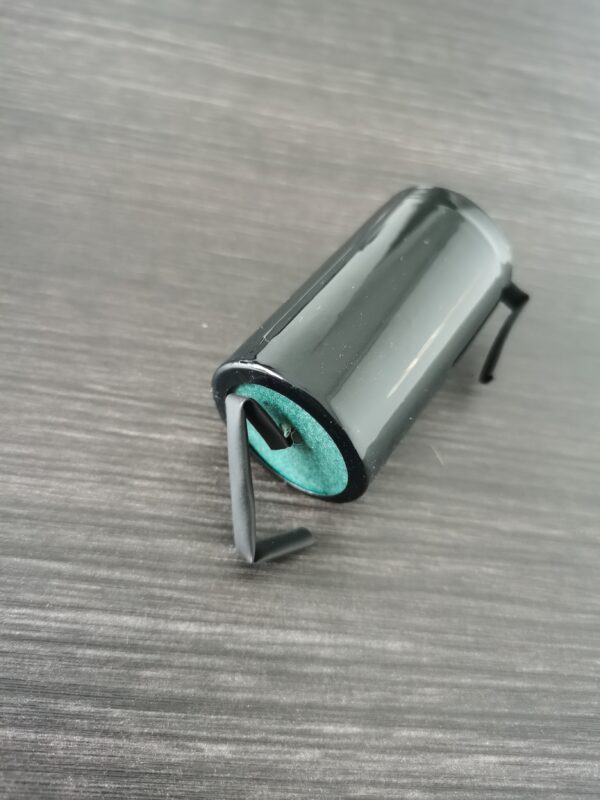
Why Li-MnO₂ Batteries Underperform in High-Temp Industrial Ovens
The Silent Killer of Reliability in the Internet of Things
Imagine this scenario: You are an engineer in Michigan, USA, responsible for deploying a fleet of wireless sensors in a high-temperature industrial oven environment. You select a standard Lithium Manganese Dioxide (Li-MnO₂) battery because of its high nominal voltage (3V) and excellent shelf life. However, within weeks, your sensors fail. The read data disappears, causing a production line halt. You are not alone. This is a common pain point for industrial IoT (IIoT) engineers and technical buyers in the United States and Europe who rely on standard consumer-grade batteries for harsh industrial environments.
The culprit is often not the electronics, but the electrochemical stability of the battery at elevated temperatures. While Li-MnO₂ batteries are ubiquitous in consumer devices like watches and memory backup, they are notoriously fragile when exposed to the thermal stress of industrial applications.
In this deep dive, we will dissect the chemical and physical reasons why standard Li-MnO₂ cells fail in high heat, analyze the testing protocols that expose these weaknesses, and explore how advanced engineering, such as that practiced by CNS BATTERY, creates a solution that meets the stringent safety standards required in North America and the EU.
🔬 The Chemical Breakdown: Why Heat is the Enemy
To understand the failure, we must first look at the chemistry. The Li-MnO₂ system relies on the reaction between metallic lithium (anode) and manganese dioxide (cathode). While this provides a stable voltage, the interface between the lithium anode and the electrolyte is highly sensitive.
1. Accelerated Side Reactions and Passivation
At room temperature, a protective layer (Solid Electrolyte Interphase or SEI) forms on the lithium anode, protecting it from further reaction with the electrolyte. However, in high-temperature environments (typically above 60°C), this balance is destroyed.
- Increased Reactivity: Heat acts as a catalyst. The chemical reactivity between the lithium metal and the organic electrolyte increases exponentially. This leads to rapid “self-discharge.”
- Passivation Layer Growth: The protective SEI layer thickens uncontrollably at high temperatures. While a thin SEI is good, a thick layer acts as an insulator, increasing the cell’s internal resistance. This results in voltage delay—a phenomenon where the voltage sags significantly under load, causing your device to “brown out” and reset, even though the battery still has capacity left.
2. Electrolyte Decomposition and Gas Generation
The organic solvents used in standard Li-MnO₂ electrolytes (such as Propylene Carbonate) have limited thermal stability.
- Gas Evolution: At elevated temperatures, these solvents begin to decompose, generating gases like Carbon Dioxide (CO₂) and Carbon Monoxide (CO).
- Swelling and Venting: As gas builds up inside the sealed cell, pressure increases. In a standard consumer cell, this often leads to swelling, leakage, or even venting of corrosive electrolyte—posing a serious risk to sensitive industrial circuitry.
3. Cathode Instability
Manganese Dioxide (MnO₂) itself can undergo phase changes at high temperatures. The crystal structure can degrade, reducing the active material available for the chemical reaction. This directly translates to a permanent loss of capacity.
📉 Quantifying the Failure: Performance Metrics
To visualize the degradation, let us compare the performance of a standard Li-MnO₂ cell versus an industrial-grade solution under thermal stress.
| Performance Metric | Standard Consumer Li-MnO₂ | Industrial High-Temp Scenario |
|---|---|---|
| Operating Temp Range | -20°C to +60°C | 85°C to 125°C |
| Capacity Retention @ 85°C | < 40% (after 6 months) | > 90% (after 6 months) |
| Failure Mode | Gas generation, leakage, voltage delay | Stable voltage, minimal self-discharge |
| Typical Application | Cameras, calculators | Industrial ovens, oil & gas sensors |
Data represents typical industry failure rates vs. engineered solutions.
The table above highlights the stark reality. A standard cell loses more than half its energy simply sitting idle in a hot environment. For a technical buyer sourcing components for a factory in Germany or a refinery in Texas, this is unacceptable.
🧪 The Rigorous Testing Protocol: Separating Fact from Fiction
In the industrial sector, trust is earned through data, not marketing. To prove a battery can survive high temperatures, we subject cells to a battery of tests that mimic the worst-case scenarios found in industrial ovens.
1. High-Temperature Storage Test
This is the most basic test. Cells are placed in an environmental chamber at 85°C ± 2°C for a duration of 1000 hours (approximately 6 weeks).
- Metric: We measure the voltage drop and capacity loss before and after the test.
- Standard Cell Result: Significant voltage delay (often dropping below 2.0V under load) and capacity loss exceeding 30%.
- Engineering Insight: If a cell cannot pass this test, it should never be sold for industrial use.
2. Thermal Cycling Test
Real-world environments rarely maintain a constant temperature. Industrial ovens cycle, and outdoor sensors face day/night cycles.
- Protocol: Cycling between -40°C and +85°C for 50 cycles.
- Focus: We look for mechanical integrity. Does the seal fail? Does the internal structure crack due to differential expansion?
- Outcome: Standard Li-MnO₂ cells often suffer from seal leakage during these cycles due to the mismatch in the thermal expansion coefficients of the metal can and the glass seal.
3. High-Temperature Pulse Test
IIoT devices do not draw constant current; they sleep and then transmit data in short, high-current pulses.
- Test: Subjecting the cell to pulse discharges (e.g., 15mA pulses) at 85°C.
- Observation: Standard cells exhibit a massive voltage drop during the pulse due to the high internal resistance caused by the thick passivation layer.
🛡️ The CNS BATTERY Solution: Engineering for the Extreme
At CNS BATTERY, we understand that engineers in the United States and Europe need components that adhere to strict safety regulations (such as UL, IEC, and EU Battery Directives). We do not modify consumer cells; we engineer them from the ground up for industrial resilience.
Advanced Electrolyte Formulation
The key to solving the high-temperature puzzle lies in the electrolyte. We have developed proprietary electrolyte additives that act as “stabilizers.”
- Function: These additives form a thermally stable SEI layer that does not grow uncontrollably at high temperatures.
- Benefit: This eliminates voltage delay and drastically reduces self-discharge, even at 125°C.
Robust Cell Design
We utilize a specialized cathode formulation that locks the manganese dioxide structure, preventing phase changes. Combined with a high-temperature-resistant sealant, our cells can withstand the thermal shock of industrial environments without leaking.
Quality Management
Located in Zhengzhou, China, our manufacturing adheres to the highest international quality standards. Every cell destined for the European or American market undergoes 100% inspection for leakage and voltage stability.
📝 Conclusion: Choosing the Right Partner
The failure of Li-MnO₂ batteries in high-temperature industrial ovens is not a mystery; it is a predictable chemical reaction. However, with advanced material science and rigorous testing, it is a solvable problem.
If you are an engineer or a technical procurement manager facing reliability issues in high-heat applications, you need a partner that understands the nuances of electrochemistry. Do not let standard consumer-grade batteries compromise your industrial project.
For those seeking a reliable power solution that meets international standards, CNS BATTERY offers a range of high-temperature primary batteries designed for the harshest environments. To discuss your specific requirements or to request a sample for testing, please visit our product center or contact our sales team directly.
- Explore our Industrial Battery Solutions: Primary Battery Product Range
- Contact our Technical Experts: Contact Us for High-Temp Solutions
