
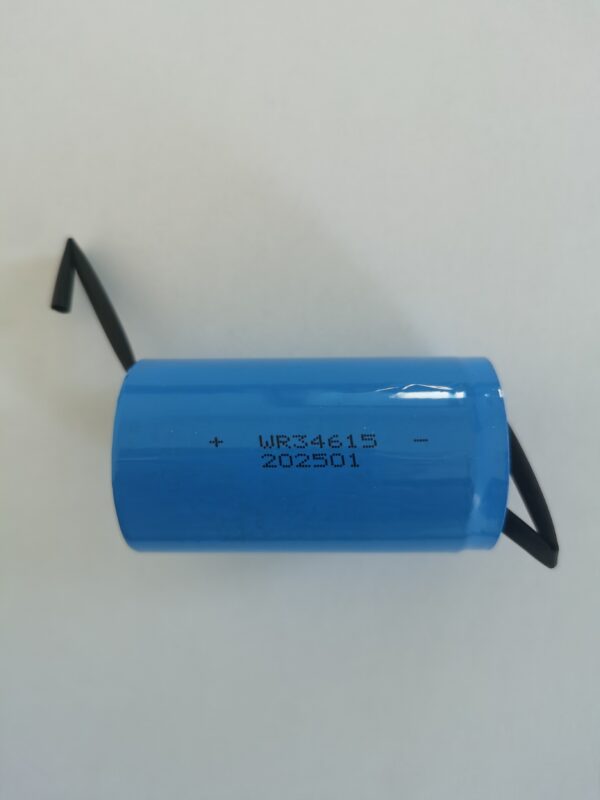
Why Li-MnO₂ Batteries Underperform in Thermostats: A Professional Analysis
In the world of industrial electronics, few issues are as frustrating as a smart thermostat failing unexpectedly. As a professional lithium battery manufacturer, we often receive inquiries regarding the premature failure of Lithium Manganese Dioxide (Li-MnO₂) batteries in thermostat applications. While Li-MnO₂ cells are excellent for low-drain devices like watches or memory backup, they are frequently a poor match for the complex power demands of modern digital thermostats. This mismatch leads to underperformance, customer dissatisfaction, and increased maintenance costs.
This article analyzes the technical reasons behind this incompatibility from the perspective of a primary battery expert, helping B2B clients understand why standard lithium cells may not be the right solution for their smart home hardware.
The Voltage Drop Challenge
One of the primary reasons Li-MnO₂ batteries underperform in thermostats is the phenomenon of voltage delay and drop under load.
Unlike Alkaline batteries, which maintain a relatively stable voltage until depletion, Lithium Manganese Dioxide cells exhibit a characteristic known as “voltage delay.” When a load is applied, the voltage of a Li-MnO₂ cell can drop significantly below the nominal 3.0V. For a smart thermostat, which requires consistent voltage to operate the display, Wi-Fi module, and relay switches, this voltage sag can be catastrophic.
Most electronic circuits are designed with a specific operating voltage window. If the battery voltage drops below the circuit’s cutoff threshold—even momentarily—the device will shut down or reset. This is often misinterpreted as a “dead battery” by the end-user, even though the cell may still retain a significant amount of stored energy. The high internal resistance of Li-MnO₂ cells under pulse loads makes them particularly susceptible to this issue, leading to the perception of underperformance.
Inability to Handle Pulse Loads
Modern smart thermostats are not simple resistive loads. They operate in a pulsed manner, drawing high current spikes when transmitting data via Wi-Fi, activating the compressor relay, or refreshing the LCD screen.
Li-MnO₂ batteries are designed for low, continuous current drains (typically less than 1mA). When subjected to the high pulse currents (often exceeding 100mA to 500mA) required by IoT communication protocols, these cells struggle. The internal chemical reaction cannot keep pace with the rapid electron flow demanded by the pulses. This results in a rapid voltage drop, causing the device to brown out or reset immediately after a transmission attempt.
From a technical standpoint, the polarization effect within the Li-MnO₂ cell is too severe to support these dynamic loads. The user experience is one of a battery that “dies” after only a few weeks or months of use, despite the theoretical energy density of lithium being much higher than alkaline alternatives.
Low-Temperature Performance Issues
Thermostats are often installed on interior walls, which can become surprisingly cold during winter months, especially in regions with extreme climates. While lithium batteries are generally praised for their wide temperature range, the specific chemistry of Li-MnO₂ has a critical weakness at low temperatures.
The electrolyte used in Li-MnO₂ cells has a higher freezing point compared to other lithium chemistries. As the temperature drops, the internal resistance of the cell increases exponentially. In a cold room, a Li-MnO₂ battery may appear completely dead, only to “recover” when brought back to room temperature. However, for a thermostat controlling a heating system, this temporary failure means the heating stops, leading to frozen pipes or discomfort.
For B2B clients designing hardware for global markets, relying on Li-MnO₂ chemistry introduces a significant reliability risk in cold environments. The battery may pass standard lab tests at 25°C but fail in real-world field applications where ambient temperatures fluctuate.
The Superior Alternative: Li-SOCl₂ (Lithium Thionyl Chloride)
To solve the issues of voltage drop, pulse loading, and low-temperature failure, professional battery engineers recommend switching to Lithium Thionyl Chloride (Li-SOCl₂) chemistry for smart thermostat applications.
Li-SOCl₂ batteries offer a nominal voltage of 3.6V, providing a higher headroom before the voltage drops below the device’s operating threshold. More importantly, they have an extremely low self-discharge rate and can operate reliably in temperatures as low as -55°C.
However, standard Li-SOCl₂ cells also have limitations with high pulse currents. This is where advanced engineering solutions come into play. By pairing a Li-SOCl₂ cell with a hybrid layer capacitor (HLC) or utilizing a bobbin-type construction designed for higher pulses, manufacturers can create a power source that delivers the long life of lithium without the voltage drop issues.
Conclusion and Recommendations
In conclusion, the underperformance of Li-MnO₂ batteries in thermostats is not a manufacturing defect but a fundamental mismatch of chemistry and application. The voltage delay, inability to handle pulse loads, and poor low-temperature conductivity make them an unreliable choice for modern smart thermostats.
For B2B clients seeking to improve the reliability of their smart home devices, we strongly recommend evaluating Lithium Thionyl Chloride solutions or specialized Lithium Iron Disulfide (Li-FeS₂) cells designed for higher drain applications. These alternatives provide the stable voltage and pulse power required for seamless Wi-Fi communication and relay operation.
If you are facing challenges with battery selection for your IoT or industrial devices, our R&D team specializes in custom primary battery solutions. We can help you navigate the complexities of battery chemistry to ensure your product performs reliably in the field.
Contact our engineering team today to discuss the right power solution for your application: Primary Battery CONTACT US.
Explore our range of industrial-grade primary batteries designed for mission-critical applications: Product Center.
