
Here is the SEO-optimized article crafted for your technical audience.
The Ultimate Guide to Primary Lithium Batteries for -40°C Operations
When the mercury plummets to -40°C, standard electrochemical systems fail. For engineers and technical procurement managers working on projects in Arctic environments, high-altitude aerospace, or deep underground oil & gas exploration, selecting the right power source is a matter of operational survival. Not all Primary Lithium Batteries are created equal when facing these extremes. While most Lithium-Ion (secondary) batteries lose capacity or refuse to charge below freezing, Primary Lithium chemistries offer a distinct advantage. However, within the family of primary lithium cells, specific chemistries are engineered to dominate at -40°C.
This guide cuts through the marketing noise to explain exactly which chemistry works best at these temperatures and why.
🔋 The Chemistry of Cold: Why Standard Batteries Fail
Before we identify the “best” battery, we must understand the physics of the failure.
Standard aqueous electrolyte batteries (like alkaline or lead-acid) suffer from two primary issues at -40°C:
- Freezing: The electrolyte turns to solid ice, halting ion movement.
- Viscosity: Even if the electrolyte doesn’t freeze, it thickens like molasses, drastically increasing internal resistance and preventing current flow.
Primary Lithium Batteries solve this by using organic, non-aqueous electrolytes. These electrolytes have freezing points far below -40°C and maintain fluidity in extreme cold. However, different lithium salts and solvents create different performance profiles.
⚔️ The Contenders: Lithium Thionyl Chloride vs. Lithium Manganese Dioxide
When sourcing a battery for -40°C operation, you will typically encounter two main chemistries. Understanding their strengths is critical to your project’s success.
1. Lithium Thionyl Chloride (Li-SOCl₂)
- The Specialist: This chemistry is the undisputed champion of ultra-low temperature performance and high energy density.
- The Catch: It suffers from “passivation.” When a Li-SOCl₂ cell sits idle, a film builds up on the lithium anode. If you try to draw high current immediately after storage, the voltage can drop significantly (voltage delay).
- Best For: Long-term, low-current applications like utility metering (AMR/AMI), tracking devices, or memory backup where the device sleeps for months and wakes briefly.
2. Lithium Manganese Dioxide (Li-MnO₂)
- The Generalist: This is the standard for consumer and industrial applications (coin cells, AA, C, D sizes).
- The Limitation: While it performs better than alkaline, its performance degrades significantly below -20°C to -30°C. At -40°C, the voltage drop under load is often too severe for reliable operation.
🏆 The Winner: Bobbin-Type Lithium Thionyl Chloride
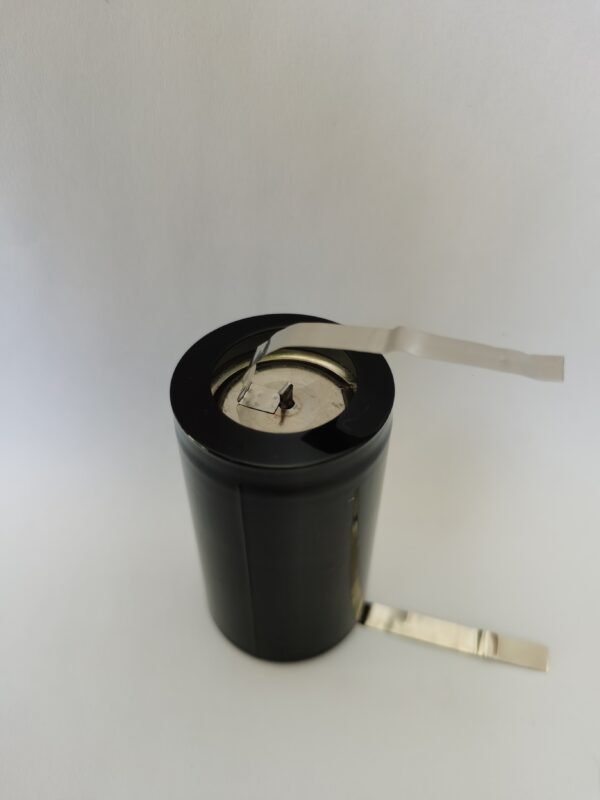
If your application demands reliable operation at -40°C, the answer is unequivocally a Bobbin-Type Lithium Thionyl Chloride cell.
Why Bobbin-Type Wins at -40°C:
- Lowest Freezing Point: The organic electrolyte mixture remains liquid and conductive well below -60°C.
- High Voltage Stability: It maintains a nominal voltage of 3.6V even at these extremes, whereas other chemistries sag to 2V or lower.
- High Energy Density: It offers the highest watt-hours per kilogram of any primary chemistry, crucial for remote deployments where battery swaps are difficult.
The “Pulse” Solution:
The primary challenge with Li-SOCl₂ at -40°C is the passivation layer. To overcome this, modern engineering dictates using a “hybrid” approach or designing the circuit to accommodate a “warm-up” period. However, for pure, unadulterated performance in the cold, the bobbin-type construction provides the most stable platform.
📊 Technical Comparison: Performance at -40°C
To visualize the difference, consider the following comparison of standard primary cells at -40°C.
| Battery Chemistry | Performance at -40°C | Primary Use Case | Voltage Stability |
|---|---|---|---|
| Lithium Thionyl Chloride | Excellent (Best Choice) | Remote Sensors, Military, Deep Sea | High (3.6V Nominal) |
| Lithium Manganese Dioxide | Poor (High Voltage Drop) | Cameras, Consumer Electronics | Low (Sags under load) |
| Alkaline | Failed (Electrolyte Frozen) | Toys, Flashlights | None |
🛠️ Designing for Reliability: Tips for Engineers
Selecting the right chemistry is only half the battle. To ensure your device functions flawlessly at -40°C, consider these engineering tips:
- Manage Passivation: If using Primary Lithium Thionyl Chloride, design your circuit to draw a small “pre-charge” current to break down the passivation layer before demanding full power.
- Pulse Capability: Ensure your battery supplier has optimized the carbon cathode structure. A robust cathode can handle the high current pulses required by modern IoT transmitters (e.g., LoRa, NB-IoT, or Satellite comms) even at -40°C.
- Hermetic Sealing: At these temperatures, thermal contraction is severe. Only batteries with true hermetic glass-to-metal seals will prevent electrolyte leakage or air ingress that ruins the cell.
🏭 Partnering with the Experts
While the technical specifications point to Lithium Thionyl Chloride as the clear winner for -40°C operations, the devil is in the manufacturing details. The purity of the electrolyte, the precision of the electrode winding, and the quality of the seal determine whether the battery performs for 5 years or fails in 6 months.
CNS Battery specializes in engineering Primary Lithium solutions for the harshest environments. Whether you need a standard bobbin cell or a custom-designed power pack for a sub-zero application, our R&D team focuses on delivering “a masterpiece of craftsmanship” for your specific needs.
Ready to power your project in the extreme cold?
Explore our full range of Primary Lithium solutions designed for durability and performance.
👉 View Our Primary Lithium Battery Product Line
For specific engineering inquiries regarding -40°C applications, our technical sales team is standing by to assist with custom requirements.
