
Here is the SEO-optimized article tailored for your requirements.
The Ultimate Guide to Lithium-Thionyl Chloride (Li-S) Batteries for Aerospace & Satellite Applications
When it comes to powering critical systems in the unforgiving environment of space and high-altitude aerospace missions, reliability is non-negotiable. Engineers and project managers face the daunting task of selecting a power source that can withstand extreme temperatures, intense vibration, and prolonged periods of inactivity while delivering consistent performance. In this high-stakes arena, Lithium-Thionyl Chloride (Li-SOCl₂) batteries have emerged as the undisputed champion for non-rechargeable (primary) power solutions.
As a technical expert in primary battery systems, I have analyzed countless energy storage solutions. While Lithium-Ion dominates the rechargeable market, the unique electrochemistry of Lithium-Thionyl Chloride offers distinct advantages that make it the “best” choice for specific aerospace and satellite use cases. This article dissects the science behind these batteries and explains why they are the preferred solution for space-rated applications.
Understanding the Chemistry: Why Lithium-Thionyl Chloride?
To appreciate why Li-SOCl₂ batteries are superior for aerospace, we must first understand their chemical makeup.
Unlike aqueous electrolyte batteries (like alkaline), Lithium-Thionyl Chloride uses a non-aqueous solvent. The anode is lithium metal, and the cathode is thionyl chloride (SOCl₂). This combination results in an energy density that is significantly higher than any other primary battery chemistry available today.
Key Technical Advantages:
- Highest Energy Density: Li-S batteries can store up to 10 times more energy per unit weight than traditional alkaline batteries. This is critical in aerospace, where every gram adds to launch costs.
- Extreme Temperature Tolerance: These batteries can operate reliably in temperatures ranging from -55°C to +85°C, and some specialized variants can function even lower. This allows them to survive the freezing vacuum of space and the heat generated during atmospheric re-entry or satellite operation.
- Low Self-Discharge: A premium Li-SOCl₂ cell loses less than 1% of its charge per year. This means a satellite battery installed today could theoretically power a backup system decades later without degradation.
Critical Applications in Aerospace and Satellites
The aerospace industry does not have the luxury of “battery replacement.” Once a component is launched, it must function until the mission’s end. Here is where Li-S batteries prove their worth.
1. Telemetry and Tracking Systems
During the launch and early orbit phases, satellites and rockets rely on telemetry to communicate their status. Lithium-Thionyl Chloride batteries are often used as the primary or backup power source for these transmitters because they can handle the intense G-forces and vibrations of launch without failing.
2. Deep Space Probes and Sensors
For missions exploring the outer solar system (where solar power is insufficient), or for long-term environmental sensors on satellites, the long shelf life and wide temperature range of Li-S batteries are essential. They ensure that scientific instruments remain powered even in the shadow of a planet or during long lunar nights.
3. Emergency Beacons and Black Boxes
In commercial and military aerospace, “black box” flight recorders utilize Lithium batteries due to their ability to survive crashes and extreme heat. The non-flammable nature of the electrolyte (compared to some Lithium-Ion variants) adds an extra layer of safety.
Technical Challenges and Solutions
While Li-SOCl₂ batteries are powerful, they are not without their quirks. A common issue with standard Li-S cells is voltage delay. When a load is first applied, there is a temporary drop in voltage before the battery reaches its nominal 3.6V. In a satellite application, this could mean a critical system failing to boot.
The Solution: Bobbin vs. Spirally Wound
- Spirally Wound Cells: These offer high capacity but suffer from significant voltage delay and higher self-discharge. They are generally unsuitable for long-term aerospace storage.
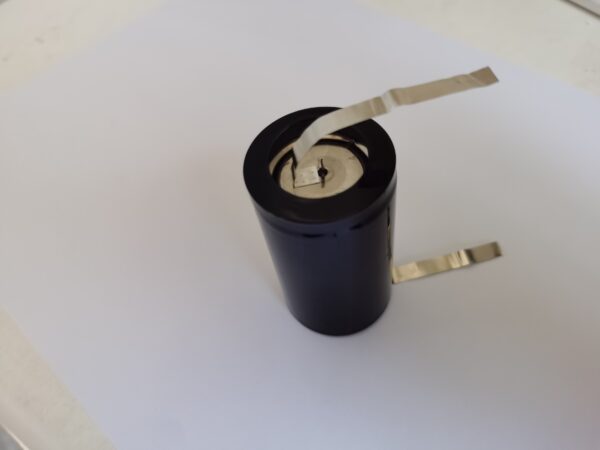
- Bobbin-Type Cells: This is the gold standard for aerospace. The bobbin construction minimizes voltage delay and reduces self-discharge to negligible levels. For aerospace applications, you must specify bobbin-type Lithium-Thionyl Chloride cells to ensure instant power delivery when needed.
Why Choose CNS BATTERY for Your Space Projects?
When you are designing a satellite or an aerospace component, you need a partner, not just a supplier. At CNS BATTERY, we specialize in custom-engineered primary battery solutions designed to meet the rigorous standards of the aerospace industry.
We understand that “off-the-shelf” rarely works in space. Our engineering team works closely with R&D departments to develop cells that fit specific form factors and performance requirements. Whether you need a battery to withstand the vibration of a rocket launch or the thermal cycling of low Earth orbit, our R&D Capability ensures a solution that meets your exact voltage, capacity, and environmental specifications.
Key Benefits of Partnering with CNS:
- Customization: We offer tailored shapes, sizes, and connectors to integrate seamlessly into your aerospace hardware.
- Quality Management: Our manufacturing processes adhere to international standards to ensure zero defects—a critical factor when your product is millions of miles away.
- Global Supply Chain: Based in Zhengzhou, China, we serve clients worldwide, ensuring reliable delivery for your mission-critical projects.
Powering the Future of Space Exploration
Selecting the right Lithium-Thionyl Chloride battery is not just about choosing a power source; it is about ensuring the success of your entire mission. The combination of high energy density, extreme temperature resilience, and long-term reliability makes it the best choice for aerospace and satellite applications.
If you are working on a project that demands the ultimate in primary battery performance, do not compromise. Explore our range of advanced solutions designed for the rigors of space.
Ready to find the perfect power solution for your aerospace application? Contact our engineering team today for a consultation.
Explore our Primary Battery Solutions
Contact Us for Aerospace Inquiries
CNS BATTERY
No.53, Science Avenue, Zhengzhou, China
Powering Innovation in Aerospace and Beyond
