
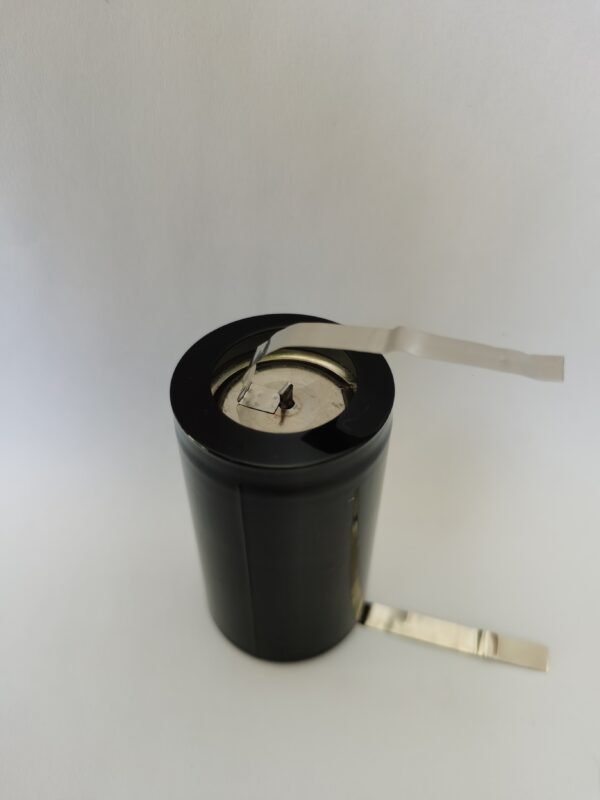
Minimum Order Quantity (MOQ) Requirements for Lithium Battery Private Label Services
In the competitive landscape of industrial and consumer electronics, establishing a distinct brand identity is paramount. For Original Equipment Manufacturers (OEMs) and resellers, partnering with a reliable manufacturer for private label services is a strategic move to offer tailored power solutions under their own brand name.
However, one of the most frequently asked questions we encounter at industry trade shows and in client inquiries revolves around the Minimum Order Quantity (MOQ). Specifically, what are the MOQ requirements for custom-branded lithium batteries, particularly for specialized chemistries like Lithium-Manganese Dioxide (Li-MnO2) used in high-reliability applications?
This article aims to demystify the MOQ landscape for lithium battery private labeling. We will delve into the technical and logistical factors that influence these requirements, provide a realistic expectation for B2B clients, and explain how a technically advanced manufacturer can offer flexible solutions without compromising on quality.
What is a Private Label Service in the Battery Industry?
Before discussing specific quantities, it is essential to define what “Private Label” entails in the context of primary (non-rechargeable) lithium batteries.
Private labeling, often confused with Original Design Manufacturing (ODM), typically refers to a scenario where the manufacturer produces a standard product using their existing design and technology, but the client applies their own brand logo, packaging, and labeling. This is distinct from a full custom design, which involves altering the cell chemistry, size, or internal structure.
For lithium battery manufacturers, offering a private label service means adapting the “face” of the product—the casing, the label, and the packaging—while maintaining the integrity of the internal electrochemical system.
The Technical Foundation: Lithium-Manganese Dioxide (Li-MnO2)
To understand the MOQ, one must first understand the product. Our focus on Lithium-Manganese Dioxide (Li-MnO2) cells is not arbitrary. This chemistry is the industry standard for applications requiring long life, high energy density, and reliability in extreme temperatures.
Why Li-MnO2 Dominates Industrial Applications
Unlike consumer-grade alkaline batteries, Li-MnO2 cells operate on a fundamentally different electrochemical principle. The anode is made of metallic lithium, while the cathode consists of heat-treated electrolytic manganese dioxide. This combination results in a nominal voltage of 3.0V (compared to 1.5V for alkaline), providing double the voltage in a similar footprint.
From a technical perspective, the manufacturing process for these cells is highly automated and occurs in a strictly controlled dry room environment. The “footprint” of production—meaning the setup cost and time required to adjust machinery for a new label—is significantly lower than altering the internal chemistry. This is why private labeling is a feasible service: we are changing the external graphics, not the internal physics.
Decoding the MOQ: Factors That Influence the Numbers
When clients ask, “What is your MOQ?”, the answer is rarely a single static number. It is a calculation based on engineering constraints, material procurement, and economic viability. Here are the primary factors that determine the MOQ for a private label lithium battery service:
1. The Production Line Setup (Changeover Cost)
Every time a production line switches from one SKU to another, there is a “changeover” cost. This involves stopping the line, cleaning machinery, loading new label reels, and running test batches to ensure the print is aligned and the seal is perfect. For a highly automated factory, this downtime has a financial cost. Therefore, the MOQ must cover this setup to ensure the production run is economically sustainable for the manufacturer.
2. Minimum Viable Purchase for Raw Materials
While the cell chemistry remains standard, the labels and packaging are custom. Labels are typically printed on large reels. The printing houses that produce these reels have their own MOQs, often ranging from 5,000 to 10,000 meters of material. If a client orders only 1,000 units, it would result in massive waste of label material. Hence, the battery MOQ is often tied to the label printer’s MOQ to avoid material obsolescence.
3. Technical Complexity of the Label
Not all labels are created equal. A simple monochrome label has different requirements than a full-color, multi-layer holographic label.
- Standard Labels: These usually have lower MOQ thresholds as they utilize standard printing plates and processes.
- Complex Labels: If the private label requires specific Pantone colors, anti-counterfeit holograms, or unique die-cut shapes, the tooling cost increases, subsequently raising the MOQ to amortize these specific tooling expenses.
4. Regulatory Compliance and Testing
For B2B clients, especially those exporting to the EU, North America, or Australia, compliance is non-negotiable. Every new SKU (including a new label) must undergo safety and environmental testing to ensure the adhesive does not outgas or that the label material does not interfere with thermal management. Running a small batch through a $5,000 safety test is economically irrational. Therefore, the MOQ must justify the investment in third-party certification for that specific SKU.
Typical MOQ Ranges for Lithium Battery Private Labeling
Based on the factors above, here is a general guideline for what B2B clients can expect when engaging with a professional manufacturer like CNS BATTERY.
| Service Type | Typical MOQ Range | Rationale |
|---|---|---|
| Standard Private Label (Label Change Only) | 10,000 – 50,000 units | Covers label reel printing costs and production changeover. Ideal for established Li-MnO2 chemistries. |
| Custom Packaging (Blister Cards, Boxes) | 5,000 – 10,000 units | Driven by the printing house MOQ for cartons and blister molds. |
| Full Custom Design (Size/Shape Change) | 100,000+ units | Requires new tooling, engineering validation, and full safety testing. |
Note: These figures are industry standards. However, strategic partners with advanced manufacturing capabilities can sometimes offer lower trial MOQs for established clients.
Why MOQ Flexibility Matters for Your Business
As a B2B client, understanding the MOQ is not just about budgeting; it is about inventory management and market testing.
A common misconception is that a high MOQ is a barrier. In reality, for industrial-grade lithium batteries, a larger order often translates to a lower Cost of Goods Sold (COGS). This allows you to offer a more competitive price point in your market.
However, flexibility is key. A rigid MOQ system can stifle innovation for startups or niche market players. This is where the expertise of the manufacturer comes into play. A manufacturer that invests in agile production lines can reduce the “setup friction,” thereby offering lower MOQs without sacrificing the quality associated with high-volume production.
CNS BATTERY: Bridging the Gap Between Quality and Flexibility
At CNS BATTERY, we understand that your brand is your most valuable asset. We also understand that the lithium battery market requires both technical rigor and commercial flexibility.
Advanced Manufacturing for Agile Production
Unlike traditional factories burdened by legacy equipment, CNS BATTERY utilizes Advanced Manufacturing techniques. Our automated production lines are designed for rapid changeover. This technological edge allows us to minimize the downtime associated with switching labels, which in turn allows us to offer some of the most competitive MOQs in the industry for high-quality Li-MnO2 cells.
Tailored Solutions, Not One-Size-Fits-All
We do not believe in arbitrary numbers. Our MOQ is often determined by the specific technical requirements of your project. If you are looking to private label our standard Prismatic Battery Cell or Cylindrical Battery Cell range, we can often accommodate trial orders to help you validate the market before committing to a full production run.
Global Compliance and Local Expertise
Located in Zhengzhou, China, we are a global player with a deep understanding of regional compliance. Whether your market is in North America, Europe, or Australia, our Quality Management systems are designed to meet local regulations from the outset. This means when you place your order, you are not just buying cells; you are buying peace of mind that your private label product meets international safety standards.
Conclusion: Partnering for Success
The MOQ for lithium battery private labeling is not merely a hurdle to jump over; it is a parameter of a partnership. It represents the point at which your branding vision meets our manufacturing capability.
If you are an OEM or a reseller looking to enter the high-reliability battery market, do not let the fear of MOQs hold you back. Instead, focus on finding a partner who understands the technical nuances of Lithium-Manganese Dioxide chemistry and possesses the manufacturing agility to support your business goals.
For more information on our Primary Battery solutions and how we can tailor an MOQ to fit your specific needs, explore our product range or contact our sales team directly.
Explore our Primary Battery Product Range: Primary Battery Product Page
Contact Our Sales Team for a Custom Quotation: Contact Us
