
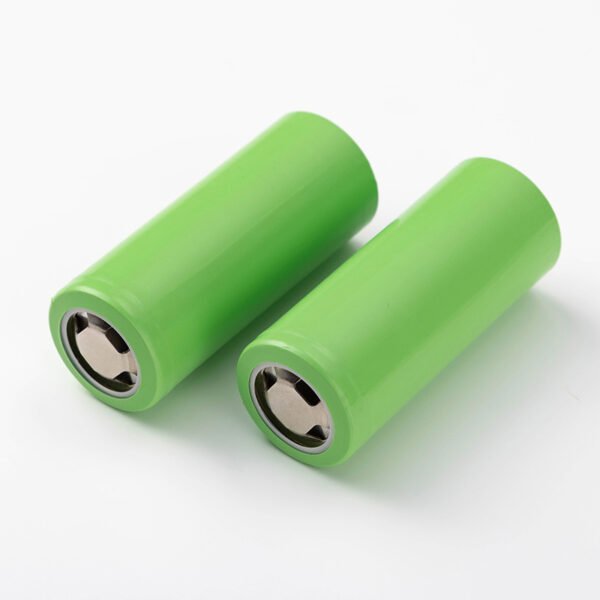
The Critical Intersection of WEEE Compliance and Lithium Primary Battery Design
In the global marketplace for industrial electronics, navigating the Waste Electrical and Electronic Equipment (WEEE) Directive is no longer optional—it is a prerequisite for market entry. For engineers and procurement managers sourcing power solutions, the distinction between a standard lithium battery and a WEEE Compliant Lithium Battery is defined by rigorous design parameters and end-of-life management protocols. As a professional manufacturer specializing in primary lithium cells, CNS Battery understands that compliance is not merely a regulatory hurdle but a testament to engineering integrity. This article delves into the technical specifications required for WEEE adherence, specifically focusing on Lithium-Manganese Dioxide (Li-MnO₂) and Lithium-Thionyl Chloride (Li-SOCl₂) chemistries, and how these standards ensure the safety and sustainability of your electronic systems.
Understanding the Technical Scope of WEEE for Primary Cells
The WEEE Directive fundamentally alters the lifecycle management of electronic components. For lithium primary batteries, this translates into strict requirements regarding material declaration, marking, and the facilitation of recycling. Unlike secondary (rechargeable) batteries, primary lithium cells are designed for singular, long-duration discharge, making their chemical stability and hermetic sealing paramount.
From a technical standpoint, a WEEE compliant lithium battery must adhere to the following specifications to ensure EU regulation alignment:
- Material Transparency: Full declaration of hazardous substances (RoHS compliance is often a subset of this requirement).
- Mechanical Design: The housing must be designed to prevent electrolyte leakage during handling and disposal.
- Marking Standards: The “Crossed-out Wheelie Bin” symbol must be present on the packaging and, where feasible, the product itself.
At CNS Battery, our design philosophy integrates these requirements at the cellular level. We utilize advanced laser welding techniques for our steel casings to ensure hermetic seals that meet the highest standards of leak prevention, a critical factor in waste management safety.
The Chemistry Behind Longevity and Safety
To fully appreciate the engineering behind a WEEE Compliant Lithium Battery, one must understand the electrochemical systems involved. Our product line focuses on chemistries that offer the highest energy density and operational stability, which are essential for applications ranging from smart meters to medical devices.
1. Lithium-Manganese Dioxide (Li-MnO₂): The Standard for High Voltage
This chemistry is the workhorse of the industry, providing a nominal voltage of 3.0V—double that of traditional alkaline cells. This high voltage allows for fewer cells in a battery pack, simplifying the mechanical design and reducing the overall waste footprint.
- Technical Advantage: The Li-MnO₂ system offers a flat discharge curve, ensuring consistent power delivery. Its thermal stability is superior to aqueous systems, making it safer for disposal and recycling.
2. Lithium-Thionyl Chloride (Li-SOCl₂): The Ultimate in Energy Density
For applications requiring decades of service, such as utility meters or remote sensors, the Li-SOCl₂ chemistry is unmatched. With an energy density exceeding 600 Wh/kg, these cells can operate for 10 to 20 years without maintenance.
- Technical Challenge & Solution: The high reactivity of the electrolyte requires specialized safety mechanisms. We incorporate PTC (Positive Temperature Coefficient) devices and CID (Current Interrupt Devices) directly into the cell design. This ensures that in the rare event of an internal short, the cell is rendered inert, satisfying the safety criteria of the EU Waste Electrical Regulation.
Engineering for the Future: Designing Out Waste
WEEE compliance is shifting the focus from “end-of-pipe” treatment to “design-for-environment” (DfE) strategies. As a manufacturer, we are acutely aware that the way a battery is constructed today dictates how easily it can be recycled tomorrow.
Modular Design and Disassembly
One of the key technical requirements of the directive is the ease of disassembly. Our engineering team designs battery packs with this in mind. By minimizing the use of adhesives and utilizing standardized mechanical fasteners, we ensure that the lithium cells can be separated from the Battery Management System (BMS) and housing with minimal effort. This not only facilitates recycling but also reduces the labor costs associated with waste processing for our clients.
Robustness in Extreme Conditions
A WEEE compliant lithium battery must remain stable under a variety of environmental conditions to prevent hazardous leakage during storage or transport to recycling facilities. Our cells undergo rigorous testing, including:
- Vibration and Shock Testing: To simulate transport conditions.
- Temperature Cycling: From -55°C to +85°C, ensuring the seals remain intact.
The CNS Battery Difference
When you select CNS Battery as your partner, you are choosing a manufacturer that views WEEE compliance not as a burden, but as an opportunity to demonstrate technical excellence. We provide comprehensive technical documentation, including Safety Data Sheets (SDS) and material declarations, to ensure your products meet the stringent requirements of the EU market.
Our commitment to quality is reflected in every cell we produce. We understand that for our B2B clients, reliability is non-negotiable. Whether you require a standard cylindrical cell or a custom prismatic solution, our engineering team is dedicated to delivering a product that meets your specific voltage, capacity, and environmental requirements.
Ensuring Your Supply Chain Meets EU Standards
Navigating the complexities of the EU Waste Electrical Regulation requires a partner with deep technical knowledge and a commitment to compliance. If you are currently sourcing batteries for a new product line or looking to upgrade your existing supply chain, it is crucial to verify that your manufacturer adheres to the highest standards of quality and safety.
We invite you to explore our full range of primary lithium battery solutions, designed with the engineer’s precision and the regulator’s requirements in mind.
For technical inquiries or to discuss your specific project requirements, please visit our product center or contact our sales team directly to ensure your next project is fully compliant.
