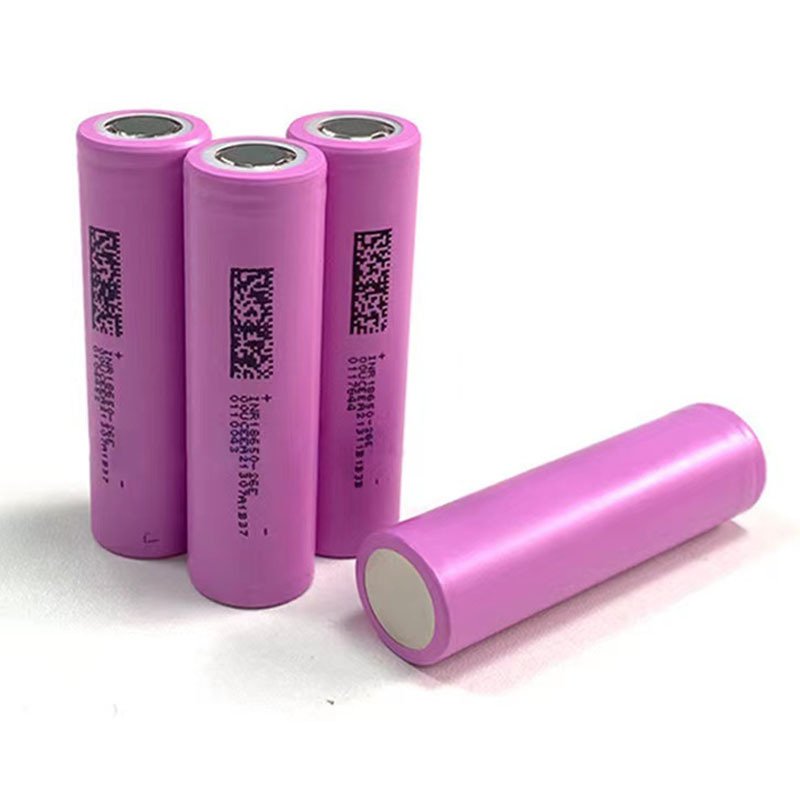
UN38.3 UL CE Certified 18650 LFP Cells for EV – Factory Direct: A Technical Deep Dive for Global Engineers
Introduction
In the rapidly evolving electric vehicle (EV) battery landscape, UN38.3 UL CE Certified 18650 LFP Cells represent a critical intersection of safety compliance, performance reliability, and cost efficiency. For engineering teams and technical procurement specialists sourcing battery solutions globally, understanding the certification framework and technical specifications is paramount. This analysis provides a comprehensive breakdown of factory-direct 18650 LFP cell offerings, with specific attention to regional compliance requirements across EU, US, and international markets.
Core Certification Framework: UN38.3, UL, and CE
UN38.3 Transportation Safety Standard
UN38.3 constitutes the United Nations testing standard for lithium battery transportation safety. This certification encompasses eight mandatory test categories:
- T1-T2: Altitude simulation and thermal testing
- T3-T4: Vibration and shock resistance
- T5-T6: External short circuit and impact/crush testing
- T7-T8: Overcharge and forced discharge protocols
For EV manufacturers exporting battery packs internationally, UN38.3 certification is non-negotiable. Factory-direct sourcing from certified manufacturers ensures documentation completeness for customs clearance across North American, European, and Asian jurisdictions.
UL Certification (US Market Compliance)
UL standards, particularly UL 1642 for cells and UL 2580 for EV battery systems, represent the gold standard for North American market access. UL certification validates:
- Cell-level safety under abnormal operating conditions
- Thermal runaway propagation resistance
- Electrical isolation integrity under fault conditions
Technical procurement teams targeting US EV markets should prioritize suppliers with active UL certification portfolios. Detailed manufacturer credentials can be verified through established channels like battery manufacturers in China.
CE Marking (European Conformity)
CE certification demonstrates compliance with EU directives including:
- EMC Directive 2014/30/EU: Electromagnetic compatibility
- Low Voltage Directive 2014/35/EU: Electrical safety boundaries
- RoHS Directive 2011/65/EU: Hazardous substance restrictions
For European EV OEMs, CE marking is legally mandatory. Factory-direct suppliers must provide Declaration of Conformity documentation with traceable test reports from notified bodies.
18650 LFP Cell Technical Advantages
Lithium Iron Phosphate Chemistry Benefits
LFP (LiFePO₄) chemistry offers distinct advantages over NMC alternatives for specific EV applications:
| Parameter | LFP Advantage | Engineering Impact |
|---|---|---|
| Thermal Stability | Decomposition >270°C | Reduced thermal management complexity |
| Cycle Life | 2000-5000 cycles | Extended warranty periods |
| Safety Profile | No oxygen release | Lower fire suppression requirements |
| Cost Structure | No cobalt/nickel | Supply chain stability |
18650 Form Factor Considerations
The 18650 cylindrical format (18mm diameter × 65mm length) provides:
- Manufacturing Maturity: Decades of production optimization
- Thermal Management: Efficient cooling through cylindrical surface area
- Module Flexibility: Scalable pack configurations from 48V to 800V architectures
- Replacement Ecosystem: Global availability for service networks
For detailed product specifications, engineering teams can reference cylindrical battery cell offerings.
Testing Methodologies and Quality Assurance
Incoming Quality Control (IQC) Protocols
Reputable factory-direct suppliers implement multi-stage testing:
- Capacity Grading: ±2% tolerance within batch groups
- Internal Resistance Matching: <3mΩ variation for parallel configurations
- Self-Discharge Verification: <3% monthly loss at 25°C storage
- Dimensional Inspection: Automated optical measurement systems
Performance Validation Testing
Engineering validation should encompass:
- Rate Capability Testing: C/3 to 3C discharge profiles
- Temperature Cycling: -20°C to 60°C operational envelope verification
- Calendar Life Testing: Accelerated aging at elevated temperatures
- Abuse Testing: Nail penetration, overcharge, external short circuit
Regional Compliance and Technical Barriers
Geographic-Specific Requirements
Global EV battery deployment requires navigation of distinct regional frameworks:
North America: UL certification plus DOT UN38.3 transportation documentation. State-level regulations (California Title 20) may impose additional efficiency requirements.
European Union: CE marking mandatory, with emerging EU Battery Regulation 2023/1542 introducing carbon footprint declarations and recycled content thresholds by 2027.
Asia-Pacific: Varying national standards (GB/T for China, JIS for Japan, KC for Korea) require market-specific certification pathways.
CNS Product Technical Adaptability
Factory-direct suppliers with established certification infrastructure offer significant advantages for multi-regional deployment. Technical teams should verify supplier capabilities across all target markets before commitment. Direct manufacturer engagement ensures accurate technical documentation and responsive engineering support throughout product lifecycle.
For procurement teams evaluating supplier partnerships, direct communication channels facilitate technical clarification and customization discussions. Professional inquiries can be directed through established contact channels.
Conclusion
UN38.3 UL CE Certified 18650 LFP Cells represent a technically sound foundation for EV battery systems requiring balanced performance, safety, and regulatory compliance. Factory-direct sourcing from certified manufacturers reduces supply chain complexity while ensuring documentation integrity for global market access. Engineering teams should prioritize suppliers demonstrating active certification portfolios, transparent testing methodologies, and regional compliance expertise. As EV battery regulations continue evolving, particularly in EU and North American markets, established manufacturer partnerships provide critical advantages for long-term product viability and market expansion.
Technical specifications and certification status should be verified directly with manufacturers prior to procurement commitment. Regional regulatory requirements may change; engineering teams should maintain current compliance awareness through official regulatory channels.