

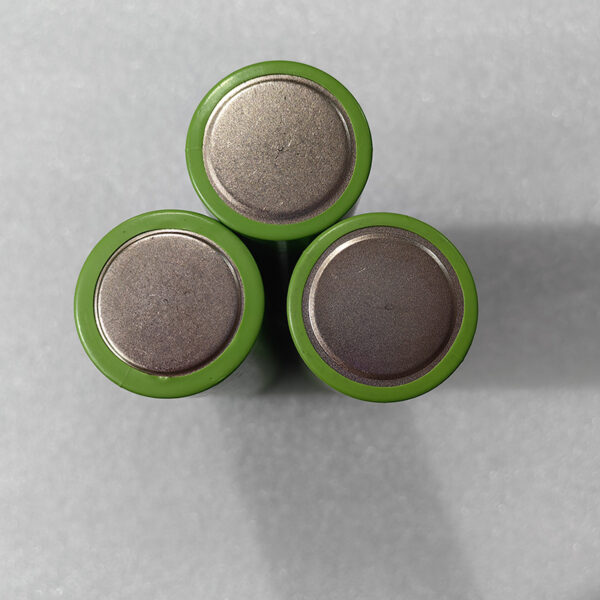
UN38.3 Certified 21700 Battery Cell | CNS BATTERY
In the rapidly evolving landscape of lithium-ion battery technology, the 21700 battery cell has emerged as the industry standard for high-energy-density applications. For engineers and technical procurement professionals sourcing cylindrical cells from China, UN38.3 certification represents the critical gateway to global market access. This comprehensive analysis examines the technical specifications, testing protocols, and regional compliance frameworks that define CNS BATTERY’s UN38.3 certified 21700 cells.
Understanding UN38.3 Certification: The Global Transport Safety Standard
UN38.3, derived from Section 38.3 of Part III of the UN Manual of Tests and Criteria, establishes mandatory safety testing requirements for lithium batteries during transportation. This certification is not optional—it is the fundamental “passport” for air, sea, and land freight of lithium cells worldwide. Without valid UN38.3 documentation, shipments face customs detention, carrier rejection, and significant financial losses.
The certification encompasses eight mandatory tests that simulate extreme transportation conditions:
- T1: Altitude Simulation – Cells withstand 11.6 kPa low-pressure environments for 6 hours, verifying seal integrity and electrolyte leakage resistance.
- T2: Thermal Testing – Temperature cycling between -40°C and +75°C with 30-minute transitions, repeated 10 times to assess thermal stability.
- T3: Vibration – Sinusoidal vibration across 7Hz-200Hz frequency ranges simulates road and air transport conditions.
- T4: Shock – 150g peak acceleration shock testing evaluates mechanical robustness.
- T5: External Short Circuit – Cells undergo short-circuit conditions at 55°C to verify thermal runaway prevention.
- T6: Impact/Crush – Mechanical deformation testing ensures structural integrity under compression.
- T7: Overcharge – Charging at 2x recommended voltage assesses BMS and cell chemistry stability.
- T8: Forced Discharge – Reverse current testing validates protection against polarity reversal.
21700 Cell Technical Architecture and Performance Parameters
The 21700 form factor (21mm diameter × 70mm length) represents an optimized balance between energy density and thermal management. Compared to the legacy 18650 standard, the 21700 cell delivers approximately 30-50% higher capacity while reducing pack complexity by minimizing cell count requirements.
Typical CNS BATTERY 21700 Specifications:
| Parameter | Specification |
|---|---|
| Nominal Voltage | 3.6V / 3.7V |
| Capacity Range | 2,500mAh – 5,000mAh |
| Charging Voltage | 4.2V ±0.05V |
| Discharge Cut-off | 2.5V – 3.0V |
| Operating Temperature | -20°C to +60°C |
| Energy Density | 250–280 Wh/kg |
| Cycle Life | 500–1,000 cycles (80% DOD) |
The underlying electrochemistry typically employs NMC (Nickel-Manganese-Cobalt) or LFP (Lithium Iron Phosphate) cathode materials. NMC variants prioritize energy density for consumer electronics and EVs, while LFP chemistry emphasizes safety and cycle longevity for stationary storage applications.
Testing Methodology and Quality Assurance Protocols
CNS BATTERY implements rigorous in-house testing before third-party UN38.3 validation. Each production batch undergoes:
- Incoming Material Inspection – Cathode/anode materials verified against supplier certificates of analysis.
- Cell Formation Testing – Initial charge-discharge cycles establish stable SEI (Solid Electrolyte Interphase) layers.
- Aging and Sorting – 72-hour rest periods identify early-life failures; cells sorted by capacity and internal resistance.
- Final Performance Validation – Capacity, impedance, and self-discharge rates measured against specification tolerances.
Third-party UN38.3 testing occurs at ILAC-accredited laboratories with CNAS recognition, ensuring test reports are accepted by customs authorities in the EU, US, and Asia-Pacific regions. Test summaries include detailed failure mode analysis and pass/fail determinations for each T1-T8 protocol.
Regional Compliance: EU and US Market Access Requirements
For technical buyers evaluating Chinese battery manufacturers, understanding regional regulatory frameworks is essential for supply chain risk mitigation.
European Union Compliance
The EU Battery Regulation (Regulation (EU) 2023/1542), fully effective from August 2025, extends beyond UN38.3 transport safety to encompass:
- Carbon Footprint Declaration – Lifecycle GHG emissions tracking from raw material extraction through recycling.
- Battery Passport (DPP) – Digital product passports providing traceability data for each cell batch.
- Extended Producer Responsibility (EPR) – Manufacturer obligations for end-of-life collection and recycling.
- Restricted Substances – Compliance with REACH and RoHS chemical restrictions.
CNS BATTERY’s UN38.3 certified 21700 cells are engineered to align with these requirements, providing documentation packages that support EU market entry. For detailed compliance inquiries, visit https://cnsbattery.com/contact-2/
United States Regulatory Framework
US imports require adherence to:
- DOT 49 CFR 173.185 – Department of Transportation hazardous materials regulations aligned with UN38.3.
- UL 1642 / UL 2054 – Underwriters Laboratories safety standards for cell and pack-level certification.
- California Proposition 65 – Chemical exposure warning requirements for consumer products.
- State-Specific Recycling Mandates – New York, California, and Washington impose additional EPR obligations.
CNS BATTERY maintains production facilities and quality systems compatible with these standards, enabling seamless distribution across North American markets. Explore our cylindrical cell portfolio at https://cnsbattery.com/products-3/cylindrical-battery-cell/
Technical Barriers and Competitive Advantages
Chinese battery manufacturers face increasing scrutiny regarding quality consistency, intellectual property, and supply chain transparency. CNS BATTERY addresses these concerns through:
- Automated Production Lines – Industry 4.0 manufacturing reduces human error and ensures batch-to-batch consistency.
- Traceability Systems – QR-code tracking links each cell to production parameters, test results, and material sources.
- Dual-Certification Strategy – Simultaneous UN38.3 and regional certifications (CE, UL, KC) accelerate time-to-market.
- Localized Technical Support – Engineering teams provide application-specific guidance for pack integration and BMS compatibility.
For procurement professionals evaluating battery manufacturers in China, these capabilities represent critical differentiators beyond price considerations. Learn more about our manufacturing credentials at https://cnsbattery.com/battery-manufacturers-in-china/
Conclusion: Strategic Sourcing for Global Deployment
UN38.3 certification is the baseline requirement—not the ceiling—for 21700 battery cell procurement. Technical buyers must evaluate manufacturers on their ability to navigate evolving regional regulations, maintain production consistency, and provide comprehensive documentation packages. CNS BATTERY’s commitment to certified quality, transparent testing, and regulatory alignment positions their 21700 cells as reliable components for applications spanning consumer electronics, electric mobility, and stationary energy storage.
For engineers designing battery packs and procurement teams managing global supply chains, partnering with a UN38.3-certified manufacturer like CNS BATTERY reduces compliance risk while ensuring product performance meets application demands across EU, US, and Asian markets.


