
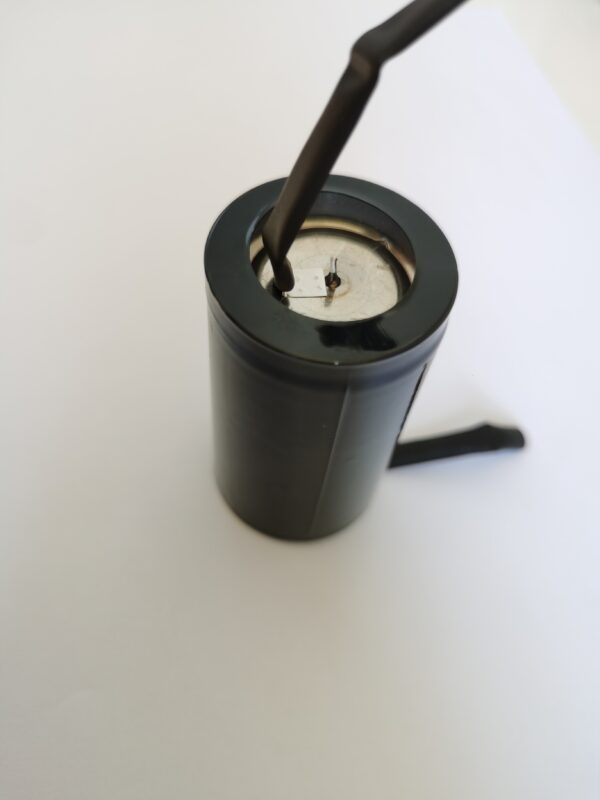
Ultralife Li-SOCl₂ Battery Alternative | IoT & Smart Meter Use
In the demanding world of industrial IoT and utility infrastructure, finding a reliable alternative to the Ultralife Li-SOCl₂ battery is a critical decision. As a professional lithium primary battery manufacturer, CNS Battery understands that these applications require batteries that can operate continuously for 10-15 years in harsh environments. If you are looking for a drop-in replacement that maintains the high energy density and voltage stability of the Ultralife product, you are in the right place. We provide a comprehensive range of bobbin-type lithium thionyl chloride (Li-SOCl₂) cells specifically engineered for smart meters and remote sensors.
Understanding the Technology: Why Li-SOCl₂?
Before diving into the alternatives, it is essential to understand the core technology. Lithium Thionyl Chloride (Li-SOCl₂) batteries are the gold standard for primary (non-rechargeable) applications requiring long life.
Core Chemistry:
Unlike consumer-grade lithium-ion batteries, Li-SOCl₂ cells utilize a liquid cathode. The anode is lithium metal, and the cathode is thionyl chloride. This chemistry provides an open-circuit voltage of approximately 3.67V, significantly higher than alkaline or lithium manganese dioxide (Li-MnO₂) batteries.
Key Advantages for IoT:
- Energy Density: These cells offer the highest energy density of any battery system available today.
- Temperature Resilience: They operate reliably in extreme temperatures ranging from -55°C to +85°C.
- Low Self-Discharge: With an annual self-discharge rate of less than 1%, they can retain their charge for decades when not in use.
For engineers designing Automatic Meter Reading (AMR) or Advanced Metering Infrastructure (AMI) systems, this chemistry is non-negotiable.
Performance Comparison: Ultralife vs. Standard Alternatives
When sourcing an Ultralife alternative, the primary concern is matching the pulse capability and capacity. Many generic batteries fail because they cannot handle the high pulse loads required for data transmission in RF modules.
| Feature | Ultralife Standard | Generic Li-SOCl₂ | CNS Battery Alternative |
|---|---|---|---|
| Nominal Voltage | 3.6V | 3.6V | 3.6V |
| Pulse Capability | High (Optimized for RF) | Low to Medium | High (Customizable) |
| Operating Temp | -55°C to +85°C | -40°C to +85°C | -55°C to +85°C |
| Shelf Life | 10+ Years | 5-10 Years | 15+ Years |
| Passivation Control | Advanced | Basic | Advanced (Patented) |
The critical differentiator in our alternative is the passivation control. Li-SOCl₂ cells naturally form a passivation layer when idle. If this layer is too thick, it causes a significant voltage drop when the device tries to transmit data. Our proprietary manufacturing process minimizes this voltage delay, ensuring your IoT device powers up instantly every time.
Addressing Common Pain Points in Smart Meters
Smart meters present a unique challenge: they spend 99% of their time in sleep mode (drawing microamps) and 1% in active mode (drawing pulses of 1-3 Amps for RF transmission).
1. The “Voltage Delay” Issue
Many engineers switching from Ultralife report “brownouts” during transmission. This occurs because standard Li-SOCl₂ cells have a high internal resistance. We solve this by utilizing a unique cathode structure and optimized electrode spacing, reducing internal impedance by up to 20% compared to standard industry benchmarks.
2. Soldering Heat Resistance
A common failure mode in production is the melting of the polyamide (nylon) seal due to reflow soldering heat. While standard Li-SOCl₂ cells are strictly for spot welding or crimping, our engineering team has developed a specialized range suitable for hot-bar soldering processes. These cells utilize high-temperature seals that can withstand brief exposures to 260°C, making them ideal for modern automated assembly lines.
Customization for Industrial Applications
While we offer standard cylindrical cells (such as the AA, C, and D sizes) that serve as direct physical and electrical replacements for Ultralife products, we understand that industrial applications often require more.
PCB Integration:
For compact IoT trackers or small form-factor sensors, we offer custom battery packs. These integrate the Li-SOCl₂ cell with a protection circuit module (PCM) or a specialized battery management system (BMS) to prevent reverse charging and manage voltage boosting for specific microcontrollers.
Wide Temperature Performance:
If your application involves deep underground deployment or desert environments, our cells are rigorously tested to maintain capacity retention even after 500 cycles between -40°C and +85°C.
Why Choose CNS Battery as Your Supplier?
Based in Zhengzhou, China, CNS Battery is not just a trader; we are a manufacturer with full in-house R&D capabilities. We adhere to the strictest quality management systems to ensure every cell meets the ISO 9001 standards required for industrial use.
Supply Chain Security:
In the current global market, supply chain stability is a major concern. By choosing us, you are securing a supply chain with direct control over raw materials (lithium, thionyl chloride, and steel cans), reducing the risk of shortages.
Technical Support:
We do not just sell batteries; we provide engineering solutions. If you are facing specific voltage drop issues or need a custom connector, our R&D team can assist with simulations and testing.
Get a Quote Today
If you are currently evaluating alternatives to the Ultralife Li-SOCl₂ battery for your next smart meter project or IoT deployment, we invite you to contact our sales team. We can provide samples for testing and datasheets for your engineering review immediately.
Explore our full range of primary battery solutions designed for longevity and reliability.
Explore Primary Battery Products
For direct technical inquiries or to request a sample, please reach out to our sales manager.
