
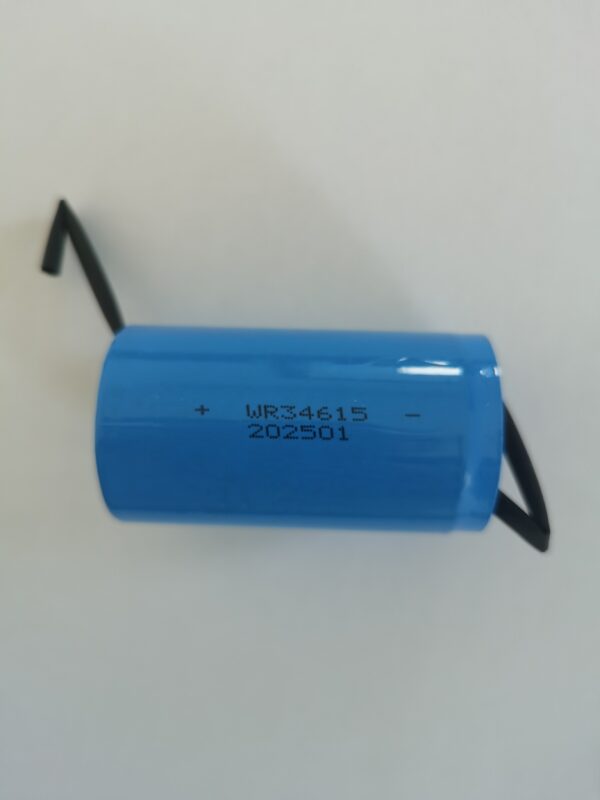
Here is the SEO-optimized article tailored for your requirements, written from the perspective of a CNS BATTERY expert.
The Definitive Guide to Ultra Low Power Li-MnO₂ Batteries for Standby Applications
In the world of industrial electronics and IoT, “standby” does not mean “inactive.” It signifies a state of readiness where a device must maintain memory, real-time clocks (RTC), or low-power sensors for years, sometimes decades, without human intervention. For these critical applications, standard Lithium-Ion (Li-ion) rechargeable batteries often fall short due to self-discharge issues. This is where Ultra Low Power Li-MnO₂ Batteries reign supreme. As a primary (non-rechargeable) battery technology, Lithium Manganese Dioxide offers a unique blend of high energy density, stable voltage, and an incredibly low self-discharge rate—making it the gold standard for long-term standby power.
At CNS Battery, we understand that reliability in standby mode is not just about capacity; it is about chemistry. If you are looking for a solution that guarantees “Always On” performance for your metering, medical, or industrial backup systems, you need to understand the technical nuances of this chemistry.
Why Li-MnO₂ is the Optimal Choice for Standby
When designing for standby applications, engineers face a paradox: the device must consume minimal power but still have enough energy to function reliably after sitting dormant for years.
1. The Voltage Advantage
Unlike alkaline batteries that start at 1.5V but drop quickly, or Lithium Thionyl Chloride (Li-SOCl₂) which operates at 3.6V (often too high for sensitive logic), Li-MnO₂ operates at a stable 3.0V. This matches perfectly with the input requirements of most modern 3.3V logic circuits and SRAM chips, eliminating the need for complex voltage regulation in many backup scenarios.
2. The Self-Discharge Myth
One of the biggest challenges in standby power is the battery losing charge when the device is off. Standard rechargeable batteries can lose 10-20% of their charge per month. In contrast, a high-quality Ultra Low Power Li-MnO₂ Battery loses less than 1% per year. This translates to a shelf life of 10 to 15 years, ensuring that when the power grid fails or the device needs to wake up, the battery is ready.
3. Wide Temperature Resilience
Standby devices are often deployed in harsh environments—smart meters on exterior walls, sensors in unheated warehouses, or medical devices in refrigerated storage. Li-Mn0₂ chemistry operates effectively from -40°C to +85°C, a range that most aqueous chemistries (like alkaline or zinc-carbon) simply cannot match.
Technical Deep Dive: Core Specifications
To help you select the right component for your BOM (Bill of Materials), here is a breakdown of the standard specifications for our primary Li-MnO₂ cells.
| Feature | Specification | Benefit |
|---|---|---|
| Nominal Voltage | 3.0 V | Compatible with 3.3V logic circuits. |
| Open Circuit Voltage | 3.45 V | High initial potential. |
| Cut-off Voltage | 2.0 V | Ensures maximum energy extraction. |
| Operating Temp. | -40°C to +85°C | Suitable for extreme environments. |
| Shelf Life | > 10 Years | Minimal maintenance; “Fit and Forget.” |
Common Applications & Use Cases
The versatility of the Ultra Low Power Li-MnO₂ Battery makes it indispensable across several high-growth sectors:
- Smart Metering (AMI): In water, gas, and electricity meters, these batteries power the display, memory, and communication modules during power outages. Their wide temperature range ensures accuracy even in freezing conditions.
- Memory Backup (SRAM/RTC): In industrial PLCs (Programmable Logic Controllers) and motherboards, they act as the “black box,” preserving critical system settings and time stamps for over a decade.
- Medical Devices: For portable diagnostic equipment and infusion pumps, the stable voltage ensures that calibration data is never lost, which is critical for patient safety.
- IoT & M2M: In remote asset trackers or environmental sensors that “sleep” for months and only “wake” to transmit data, the low self-discharge rate maximizes the device’s operational lifespan.
Design Considerations for Engineers
While Li-MnO₂ is robust, there are specific engineering considerations to maximize performance in Standby Applications:
- Pulse Current Limitations: While these batteries excel at providing continuous low current (ideal for standby), they have limitations regarding high pulse currents. If your application requires a sudden high burst (e.g., transmitting a GSM signal), you must design with a capacitor or a hybrid solution to buffer the pulse.
- Passivation Effect: Lithium batteries develop a thin passivation layer (Li₂CO₃) on the anode over time. When the device is first activated, there might be a brief voltage delay as this layer dissolves. Good circuit design should account for this initial voltage dip.
- Welding vs. Soldering: Due to the high reactivity of lithium, direct soldering to the cell is strictly prohibited. Always use spot welding for tab attachment to prevent internal leakage or explosion.
Why Choose CNS Battery?
At CNS Battery, we don’t just sell cells; we provide power solutions for mission-critical standby applications. Based in Zhengzhou, China, our manufacturing adheres to the strictest quality management standards. We understand that a failure in a standby battery can mean a failure of the entire system, leading to costly recalls or data loss.
Our Primary Battery product line is engineered for durability and consistency. Whether you are developing the next generation of smart meters or industrial backup systems, our team is ready to support your project with custom specifications and rigorous testing data.
If you are ready to ensure your device has the most reliable power source for standby operations, contact us today. For technical inquiries or to request samples, please visit our Contact Us page.
