

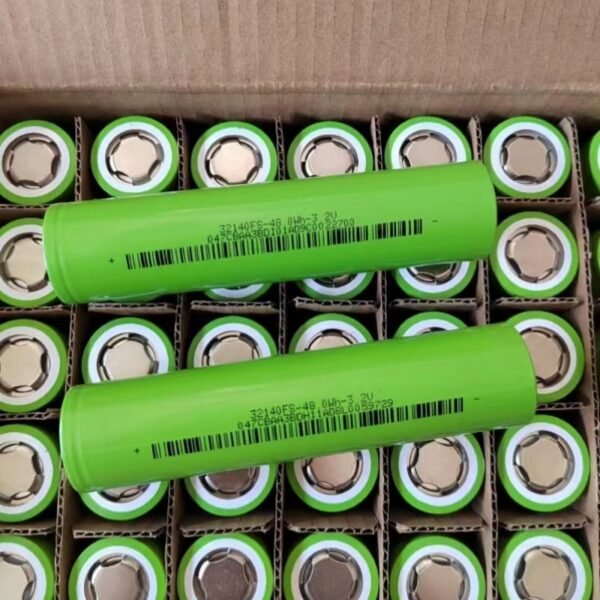
Ultimate Guide to 18650 LFP Cells for Solar Storage 2026 – Complete High Discharge Rate Focus
Introduction
As the global renewable energy market accelerates into 2026, lithium iron phosphate (LFP) chemistry has emerged as the dominant solution for solar energy storage systems. Among various form factors, 18650 cylindrical cells continue to demonstrate exceptional value for distributed solar applications requiring high discharge rates and extended cycle life. This technical guide provides engineers and procurement specialists with comprehensive insights into 18650 LFP cell specifications, performance characteristics, and integration considerations for solar storage deployments.
Technical Specifications and Performance Parameters
Voltage Characteristics and Capacity Range
18650 LFP cells feature a nominal voltage of 3.2V, with charging cutoff voltage at 3.6V and minimum discharge cutoff typically at 2.5V. Current production cells offer capacity ranges between 1500mAh to 3500mAh, with premium grades achieving energy densities approaching 180 Wh/kg. The flat discharge voltage curve of LFP chemistry (approximately 3.2V throughout 80% of discharge) simplifies battery management system (BMS) design while providing predictable power delivery for solar inverter compatibility.
High Discharge Rate Capabilities
For solar storage applications requiring rapid power delivery during peak demand or grid stabilization, discharge C-rate becomes critical. Modern 18650 LFP cells support continuous discharge rates of 1C to 3C, with pulse discharge capabilities reaching 5C for short durations. Engineers must consider that higher discharge rates increase internal resistance heating, requiring thermal management considerations in pack design. Cells with internal resistance below 35 milliohms demonstrate optimal performance for high-power solar applications.
Cycle Life and Degradation Characteristics
LFP chemistry delivers exceptional longevity, with premium 18650 cells achieving 6,000+ cycles at 90% depth of discharge (DOD) while maintaining 80% state of health (SOH). This translates to 15-20 year operational lifespans in residential solar storage systems. Temperature significantly impacts degradation rates—operating cells between 15°C to 35°C maximizes cycle life, while sustained operation above 45°C accelerates capacity fade by approximately 2-3% annually.
System Integration Considerations
Battery Management System Requirements
Proper BMS implementation is essential for 18650 LFP pack safety and performance. Key protection parameters include:
- Cell balancing: Passive or active balancing maintains cell voltage within 50mV tolerance
- Temperature monitoring: Multiple NTC sensors prevent thermal runaway conditions
- Current protection: Over-current disconnect at 3C continuous, 5C pulse thresholds
- SOC estimation: Coulomb counting combined with voltage lookup tables achieves ±3% accuracy
Thermal Management Strategies
High discharge rate applications generate significant heat. Engineers should implement:
- Air cooling: Sufficient for discharge rates below 2C with adequate cell spacing
- Liquid cooling: Required for continuous 3C+ discharge in commercial installations
- Phase change materials: Emerging solution for peak shaving applications
Series-Parallel Configuration Optimization
For 48V solar storage systems, typical configurations employ 15S (15 cells in series) arrangements. Parallel groups increase capacity while maintaining voltage. Engineers must match cells within 50mAh capacity tolerance and 30mΩ resistance tolerance to prevent imbalance during high-rate cycling.
Quality Standards and Certification
When sourcing 18650 LFP cells for solar applications, verify compliance with international standards:
- IEC 62620: Secondary lithium cells for industrial applications
- UL 1642: Lithium battery safety certification
- UN 38.3: Transportation safety requirements
- CE/ROHS: European market compliance
Reputable manufacturers provide comprehensive test reports including cycle life data, thermal abuse testing, and electrical performance validation across temperature ranges.
Economic Considerations for B2B Procurement
Total cost of ownership (TCO) analysis should extend beyond initial cell pricing. Factor in:
- Cycle life value: Higher-grade cells at 20% premium may deliver 50% longer operational life
- Warranty terms: Industry standard ranges from 5-10 years with 70-80% capacity retention guarantees
- Supply chain stability: Diversified sourcing reduces disruption risks
- Technical support: Manufacturer engineering assistance accelerates integration timelines
Conclusion and Product Resources
18650 LFP cells represent a mature, cost-effective solution for 2026 solar storage deployments requiring high discharge rates and extended service life. Proper cell selection, BMS implementation, and thermal management enable reliable operation across residential, commercial, and utility-scale applications.
For detailed technical specifications on cylindrical battery cells suitable for solar storage systems, explore our comprehensive product catalog. Our engineering team provides application-specific recommendations based on discharge rate requirements, operating temperature ranges, and system voltage configurations.
Working with experienced battery manufacturers ensures access to graded cells with matched performance characteristics and full certification documentation. Learn more about partnering with qualified battery manufacturers in China for your solar storage projects.
For technical consultations, customization requirements, or volume pricing inquiries, please contact our team directly. Our specialists support B2B clients with sample evaluation, pack design assistance, and supply chain coordination for projects ranging from 10kWh residential systems to multi-MWh commercial installations.
This technical guide reflects industry standards and performance data available in Q1 2026. Specifications may vary by manufacturer and production batch. Always request current datasheets and certification documentation before finalizing procurement decisions.

