

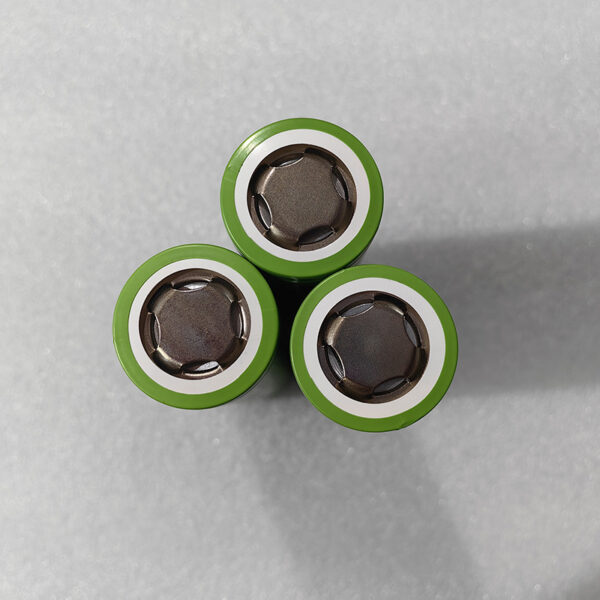
Ultimate Guide to 18650 LFP Cells for ESS 2026 – Complete UN38.3 UL CE Certified Focus
Introduction
As the global energy storage system (ESS) market continues its exponential growth trajectory into 2026, the demand for reliable, safe, and certified battery solutions has never been more critical. Among various lithium-ion chemistries, Lithium Iron Phosphate (LFP) 18650 cylindrical cells have emerged as the preferred choice for commercial and industrial ESS applications. This comprehensive guide examines the technical specifications, certification requirements, and selection criteria that overseas engineers and technical procurement specialists must consider when sourcing 18650 LFP cells for ESS deployments.
Technical Advantages of 18650 LFP Chemistry
Thermal Stability and Safety Profile
LFP chemistry offers superior thermal stability compared to NMC or NCA alternatives. The olivine crystal structure provides a strong P-O bond that remains stable at temperatures exceeding 270°C, significantly reducing thermal runaway risks. For ESS installations requiring UL 9540A compliance, this inherent safety characteristic simplifies system-level certification processes.
Cycle Life Performance
Quality 18650 LFP cells deliver 3,000-5,000 full cycles at 80% depth of discharge (DOD) while maintaining 80% capacity retention. This translates to 10-15 years of operational life in stationary storage applications, making them economically viable for long-term ESS projects. The flat discharge voltage curve (3.2V nominal) ensures consistent power delivery throughout the discharge cycle.
Energy Density Considerations
While LFP cells offer lower gravimetric energy density (90-120 Wh/kg) compared to NMC variants, the volumetric efficiency in cylindrical 18650 format provides excellent pack design flexibility. For stationary ESS where weight constraints are minimal, the trade-off favors safety and longevity over maximum energy density.
Critical Certification Requirements for 2026
UN38.3 Transportation Compliance
All 18650 LFP cells intended for international ESS projects must pass UN38.3 testing, covering eight sub-tests including altitude simulation, thermal cycling, vibration, shock, external short circuit, impact, overcharge, and forced discharge. Documentation must include test summaries per UN Manual of Tests and Criteria Part III, subsection 38.3.
UL Certification Standards
For North American markets, UL 1642 (cell level) and UL 1973 (stationary application) certifications are mandatory. UL 2580 covers batteries for electric vehicles but shares relevant testing protocols for ESS applications. Third-party certification from recognized NRTLs ensures market acceptance and insurance compliance.
CE Marking and European Regulations
European ESS deployments require CE marking under the EU Battery Regulation 2023/1542. This includes carbon footprint declarations, recycled content requirements, and due diligence obligations for supply chain transparency. RoHS and REACH compliance remain essential for environmental conformity.
Selection Criteria for Technical Procurement
Cell Consistency and Matching
Professional ESS integrators must verify cell-to-cell voltage consistency (±10mV), capacity matching (±2%), and internal resistance uniformity (±5mΩ). Poor matching accelerates pack degradation and compromises BMS functionality. Request detailed binning specifications from manufacturers.
Manufacturing Quality Control
ISO 9001 and IATF 16949 certifications indicate robust quality management systems. Automated production lines with 100% cell testing, traceability systems, and statistical process control demonstrate manufacturing maturity essential for large-scale ESS projects.
Supply Chain Verification
Established manufacturers with vertical integration capabilities offer better supply security. Verify raw material sourcing, production capacity, and lead time commitments. Consider geopolitical factors affecting battery material supply chains when planning multi-year ESS deployments.
Integration Best Practices
BMS Compatibility
Ensure battery management systems support LFP-specific charging profiles (CC-CV with 3.65V charge termination). Temperature compensation, cell balancing algorithms, and state-of-health estimation must be optimized for LFP chemistry characteristics.
Thermal Management Design
While LFP cells tolerate wider temperature ranges (-20°C to 60°C), optimal performance occurs between 15°C-35°C. Design passive or active thermal management systems based on installation environment and duty cycle requirements.
System-Level Testing
Conduct comprehensive validation including capacity verification, cycle testing, safety abuse testing, and grid compliance verification before commercial deployment. Document all test results for warranty and certification purposes.
Conclusion
The 18650 LFP cell represents a mature, certified, and economically viable solution for 2026 ESS applications. Technical procurement professionals must prioritize UN38.3, UL, and CE certifications while evaluating manufacturing quality and supply chain reliability. For qualified partners offering comprehensive certification documentation and technical support, explore our cylindrical battery cell solutions designed specifically for ESS applications.
Manufacturers seeking verified production partners in China can review our battery manufacturers in China directory for pre-qualified suppliers meeting international standards. Technical teams requiring detailed specifications or customization consultations should contact our engineering team for project-specific support and certification documentation.
Selecting the right 18650 LFP cells requires balancing technical specifications, certification compliance, and supply chain reliability. With proper due diligence and qualified manufacturing partners, ESS integrators can deploy safe, efficient, and long-lasting energy storage systems that meet 2026 regulatory requirements and performance expectations.


