

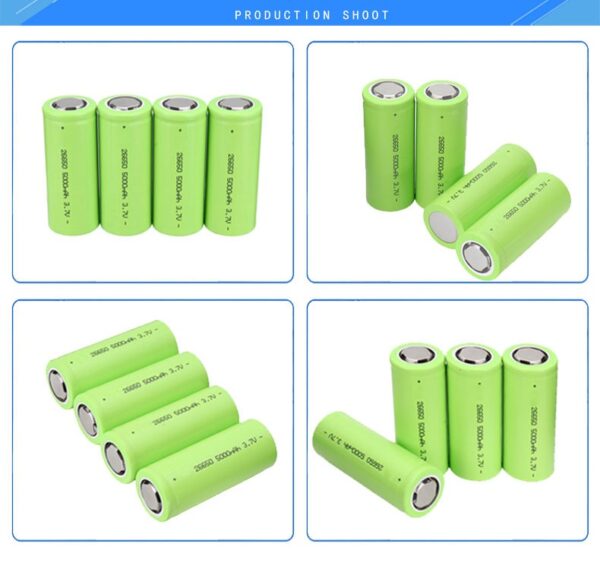
Ultimate Guide to 18650 LFP Cells for E-bike 2026 – Complete High Discharge Rate Focus
The electric mobility revolution continues accelerating into 2026, with 18650 LFP (Lithium Iron Phosphate) cells emerging as the preferred chemistry for e-bike battery packs worldwide. This comprehensive guide delivers technical insights for engineers and procurement specialists seeking high-discharge-rate solutions that meet stringent international compliance standards.
Why 18650 LFP Dominates E-bike Applications in 2026
LFP chemistry offers exceptional thermal stability, extended cycle life exceeding 3,000 charges, and superior safety characteristics compared to NMC alternatives. For e-bike manufacturers targeting North American and European markets, these attributes translate directly into reduced warranty claims and enhanced brand reputation. The 18650 form factor provides optimal balance between energy density and manufacturing scalability, making it ideal for modular battery pack designs.
Critical Performance Parameters for High Discharge Rates
Continuous Discharge Capability: Premium 18650 LFP cells now support 3C-5C continuous discharge rates, enabling peak power delivery during acceleration and hill-climbing scenarios. Engineers must verify manufacturer specifications against actual application demands, considering ambient temperature variations across different geographic regions.
Internal Resistance (IR): Low IR values below 35mΩ minimize heat generation during high-current operations. This parameter directly impacts efficiency losses and thermal management requirements in compact e-bike battery housings.
Temperature Performance: Quality LFP cells maintain 90% capacity retention between -10°C to 45°C operating ranges. For markets experiencing extreme climates—from Scandinavian winters to Middle Eastern summers—this thermal tolerance becomes a critical selection criterion.
Standardized Testing Methodologies
Professional procurement teams should demand comprehensive test documentation including:
- IEC 62660 Compliance: Essential for European market access, covering safety and performance validation
- UL 2271 Certification: Required for North American e-bike battery systems
- Cycle Life Testing: Minimum 2,000 cycles at 80% depth-of-discharge under controlled laboratory conditions
- Abuse Testing: Including overcharge, short-circuit, and crush resistance evaluations
Reputable manufacturers provide third-party testing certificates from recognized laboratories such as TÜV, SGS, or Intertek. Always verify certificate authenticity through direct laboratory confirmation.
Regional Compliance and Technical Barriers
Understanding geographic regulatory requirements prevents costly market entry failures. The European Union’s Battery Regulation 2023/1542 introduces enhanced traceability and carbon footprint declarations effective 2026. North American markets require UN 38.3 transportation certification alongside state-specific regulations like California’s Title 20 efficiency standards.
Manufacturers serving global markets must design battery packs with regional adaptability in mind. This includes configurable BMS parameters, localized labeling requirements, and documentation in multiple languages. Supply chain transparency has become equally important, with buyers increasingly requesting raw material sourcing disclosures.
Selecting the Right Manufacturing Partner
Partner selection extends beyond unit pricing considerations. Evaluate potential suppliers against these criteria:
- Production Capacity: Minimum 50MWh annual output ensures supply stability
- Quality Management: ISO 9001 and IATF 16949 certifications demonstrate systematic quality control
- R&D Investment: Companies allocating 5%+ revenue to research indicate long-term innovation commitment
- After-Sales Support: Technical assistance availability across multiple time zones
For detailed product specifications and technical documentation, visit our cylindrical battery cell portfolio to explore available 18650 LFP options optimized for e-bike applications.
Future-Proofing Your E-bike Battery Strategy
The 2026 landscape demands forward-thinking procurement strategies. Consider these emerging trends:
- Second-Life Applications: Design packs facilitating eventual energy storage repurposing
- Recyclability: Ensure component separation aligns with evolving circular economy mandates
- Smart BMS Integration: IoT-enabled monitoring supports predictive maintenance and warranty validation
Manufacturers demonstrating compliance expertise across multiple jurisdictions provide significant competitive advantages. For comprehensive manufacturer verification and facility audit information, explore resources at battery manufacturers in China to understand production capabilities and quality assurance protocols.
Conclusion
18650 LFP cells represent the optimal balance of safety, performance, and regulatory compliance for 2026 e-bike applications. Success requires thorough technical evaluation, verified certification documentation, and strategic manufacturing partnerships capable of supporting global market ambitions.
For technical consultations and customized battery solutions, connect with our engineering team through our contact page to discuss your specific application requirements and regional compliance needs.
This guide reflects current industry standards as of March 2026. Regulations and technical specifications continue evolving—always verify latest requirements before finalizing procurement decisions.

