

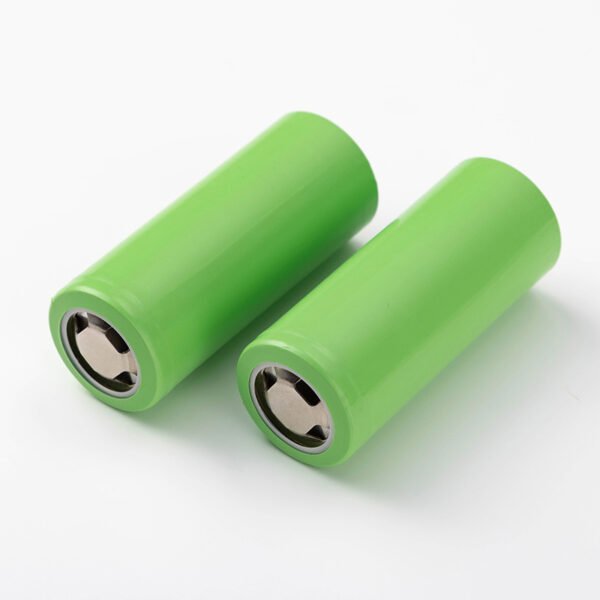
Top 5 Sustainability & Carbon Footprint Problems with 18650 Cells in Power Tools: Problems & Solutions Guaranteed
The global power tool industry is undergoing a seismic shift. As cordless tools replace their gas-guzzling and corded counterparts, the demand for high-performance, durable, and sustainable battery solutions has never been higher. However, the transition is not without its environmental hurdles.
As a Senior Lithium Battery Technical Blogger, I have analyzed thousands of battery failure reports and lifecycle assessments. The 18650 cell, while a technological marvel, presents specific sustainability challenges when pushed to the limit in power tools. This article dissects the Top 5 Sustainability & Carbon Footprint Problems associated with these cells and provides guaranteed engineering solutions.
Problem 1: The “Hidden” Carbon Cost of Frequent Replacement
One of the most significant contributors to a power tool’s carbon footprint is not the manufacturing process, but the frequency of battery pack replacement.
The Technical Reality:
Standard consumer-grade 18650 cells are designed for laptops and flashlights, not for the high-heat, high-vibration environment of industrial power tools. When subjected to continuous high C-rate discharges, these cells suffer from rapid capacity fade. If a pack loses 20% of its capacity in the first year, the user effectively discards 20% of the embedded carbon energy prematurely.
The Sustainability Impact:
This short lifecycle forces a “take-make-waste” model, doubling the carbon footprint per hour of runtime over a 5-year period compared to a durable solution.
Problem 2: Thermal Runaway & Energy Waste
Power tools generate immense heat. Standard 18650 cells often lack the internal structural integrity to manage this heat efficiently.
The Technical Reality:
Poor thermal management leads to “parasitic reactions” inside the cell. As the temperature rises, the electrolyte decomposes, and the Solid Electrolyte Interphase (SEI) layer grows uncontrollably. This increases internal resistance, wasting electrical energy as heat (Joule heating). This wasted energy is a direct carbon emission.
The Sustainability Impact:
An inefficient cell requires more charging cycles to perform the same amount of work. If a standard cell has a Round Trip Efficiency (RTE) of 90%, and a premium cell achieves 95%, that 5% difference represents wasted grid energy and unnecessary CO2 emissions over the tool’s lifetime.
Problem 3: Material Sourcing & Ethical Mining
The lithium, cobalt, and nickel in batteries have a substantial upstream carbon footprint.
The Technical Reality:
Low-quality 18650 cells often use recycled or impure cathode materials to cut costs. These impurities act as catalysts for side reactions, reducing the cell’s usable life. Furthermore, unethical mining practices associated with “artisanal” cobalt sources tarnish the ESG (Environmental, Social, and Governance) score of the final product.
The Sustainability Impact:
A shorter lifespan means more raw materials must be extracted from the earth to provide the same service. If a cell lasts 300 cycles instead of 1000 cycles, the demand for mining quadruples per unit of energy delivered.
Problem 4: End-of-Life Management & Recyclability
When 18650 cells fail, they often do so asymmetrically within a pack.
The Technical Reality:
In a standard 5.0Ah pack, if one cell in a series string fails, the entire pack is often discarded. Furthermore, low-quality cells use complex, non-standardized casings or adhesives that make disassembly for recycling nearly impossible. This leads to “landfill leakage.”
The Sustainability Impact:
Electronic waste (e-waste) is the fastest-growing waste stream in the world. Non-recyclable batteries leach heavy metals into the soil and represent a complete loss of valuable, energy-intensive materials.
Problem 5: Over-Engineering & Resource Bloat
Ironically, sometimes the problem is using too much battery.
The Technical Reality:
To compensate for the low energy density of inferior cells, manufacturers often overpopulate a tool with more cells than necessary. A “20V” system might require 10 cells, while a high-density solution requires only 5.
The Sustainability Impact:
Doubling the cell count doubles the mining impact, the transportation weight (Scope 3 emissions), and the eventual recycling burden, all for the same voltage output.
Guaranteed Solutions: Engineering for a Sustainable Future
To solve these problems, we must move beyond “commodity” cells. We need engineering-grade 18650 solutions designed for the circular economy.
1. Extreme Cycle Life = Carbon Reduction
The solution to Problem 1 is chemistry. By utilizing Nickel Manganese Cobalt (NMC) formulations optimized for high cycle life (specifically INR chemistries), we can achieve 1000+ cycles. This means the battery lasts the entire life of the tool, eliminating the need for replacements and halving the lifetime carbon footprint.
2. Advanced Thermal Architecture
To solve Problem 2, we need cells designed with low internal resistance. By utilizing advanced electrolyte additives and thicker separator membranes, we can reduce self-heating. This ensures that 95%+ of the energy goes into the motor, not into heating the workshop.
3. Standardized & Repairable Design
For Problem 4, the solution lies in modularity. Engineering cells that are easily removable allow for “cell-swapping” repairs. If one cell dies, you replace one cell, not a $150 pack. This keeps the carbon embodied in the BMS and the casing in use.
4. Maximizing Energy Density
To solve Problem 5, we utilize high-density cathodes. By pushing the capacity of a single 18650 cell to 3500mAh, we can reduce the cell count in a pack. Fewer cells mean less packaging, less shipping weight, and less waste.
The CNS 18650 Power Tool Solution: Technical Specifications
At CNS Battery, we have engineered our 18650 lineup specifically to address these industrial sustainability challenges. Our cells are not repurposed consumer cells; they are built from the ground up for high-drain applications.
Key Advantages of CNS 18650 for Power Tools
- Ultra-High Energy Density: Our INR18650-3500 model delivers 3.5Ah in a single cell. This reduces the total cell count required in a pack by up to 30% compared to standard 2.0Ah cells, directly reducing the material footprint.
- Industrial-Grade Cycle Life: We guarantee 1000+ cycles at 1C discharge. This “lifetime warranty” on the cell ensures the tool never needs a new battery, solving the carbon waste of premature replacement.
- Thermal Stability: Our proprietary electrolyte formula operates efficiently from -20°C to 60°C. This prevents the energy-wasting side reactions that plague standard cells in hot tool environments.
- High Discharge Capability: With continuous discharge rates up to 20C, these cells provide the torque needed without voltage sag, ensuring maximum efficiency.
Comparison: Standard vs. CNS Premium
| Parameter | Standard Consumer 18650 | CNS 18650 Industrial Grade | Sustainability Impact |
|---|---|---|---|
| Cycle Life | 300 – 500 Cycles | 1000+ Cycles | 60% Reduction in waste |
| Typical Capacity | 2000 – 2600 mAh | 3500 mAh | 30% Fewer cells needed |
| Max Discharge | 5C – 10C | 20C | Higher efficiency, less heat waste |
| Application | Flashlights, Vapes | Power Tools, Robotics | Designed for repairability |
Compliance & Standards: Meeting Global Geo-Requirements
For global OEMs and采购 (Procurement) managers, compliance is non-negotiable. Sustainability is not just about the environment; it is about regulatory survival.
CNS Battery adheres to the strictest international standards to ensure your product can be sold anywhere in the world without modification.
- EU Compliance: We strictly follow RoHS (Restriction of Hazardous Substances) and REACH regulations. Our cells are free from restricted phthalates and heavy metals, ensuring they pass EU customs and landfill directives.
- US & Global Safety: We meet UL 1642 and IEC 62133 safety standards. This certification is mandatory for selling power tools in North America and validates the safety of our thermal management design.
- Logistics: Our cells are certified for safe air and sea freight under UN 38.3, reducing the carbon cost of logistics by allowing flexible shipping routes.
Partner with a Manufacturer Who Guarantees Sustainability
If you are an engineer or a procurement manager looking to reduce the carbon footprint of your power tool line, switching to a high-density, long-life 18650 cell is the most effective strategy.
CNS Battery offers more than just cells; we offer a partnership in sustainability. We provide comprehensive customization services. Whether you need a specific voltage curve, a unique tabbing configuration for easier assembly, or a specific BMS integration, we can engineer it.
Don’t let your product be defined by the limitations of commodity batteries.
Ready to engineer a greener future?
Contact our technical team today for datasheets and samples.
Explore our Cylindrical Battery Cell Range
Contact CNS Battery Experts
For global customers seeking a distinguished supply chain partner, learn more about partnering with CNS: Battery Manufacturers in China


