

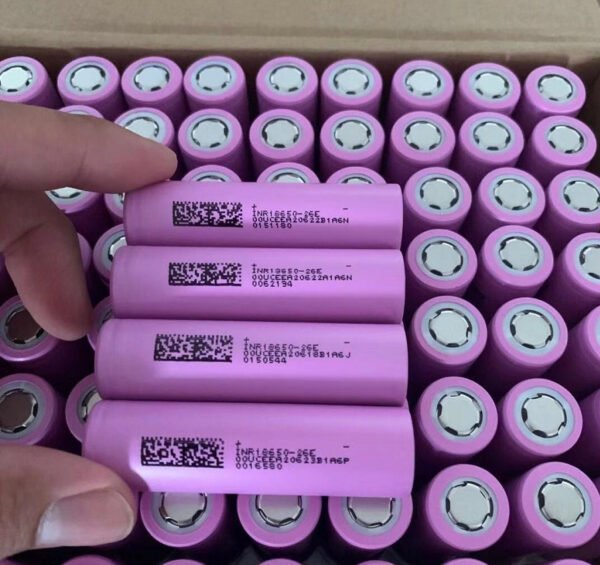
Top 5 Sample Test Report Problems with 21700 Cells in ESS Applications & Solutions 2026 Buyer’s Guide
Introduction
As energy storage systems (ESS) continue to dominate the renewable energy landscape in 2026, 21700 cylindrical lithium-ion cells have emerged as a preferred choice for medium-scale deployments. However, procurement teams and engineering specialists frequently encounter critical discrepancies in sample test reports that can compromise system reliability and safety. This buyer’s guide identifies the top 5 testing report problems encountered with 21700 cells in ESS applications and provides actionable solutions for informed decision-making.
Understanding 21700 Cell Fundamentals
Before diving into testing challenges, it’s essential to understand the technical foundation. The 21700 format (21mm diameter, 70mm length) offers approximately 20% higher energy density compared to legacy 18650 cells, thanks to optimized electrode surface area and reduced internal resistance. In ESS applications, these cells typically operate within 2.5V-4.2V voltage ranges with NMC or LFP chemistry configurations. Understanding these parameters is crucial when evaluating test report accuracy.
Top 5 Sample Test Report Problems
1. Inconsistent Capacity Rating Documentation
Problem: Many suppliers report nominal capacity under ideal laboratory conditions (25°C, 0.2C discharge) that don’t reflect real-world ESS operating environments. Test reports often omit temperature variance data, leading to 15-20% capacity overestimation in field deployments.
Solution: Require multi-temperature capacity testing documentation (-10°C to 45°C range). Verify that reports include cycle-life degradation curves at various C-rates. Cross-reference claimed specifications with independent third-party validation certificates.
2. Incomplete Cycle Life Testing Data
Problem: Sample test reports frequently display cycle life data based on partial discharge cycles (80% DOD) without clarifying this limitation. ESS applications typically require 6,000-10,000 full equivalent cycles, yet reports show inflated numbers from shallow cycling protocols.
Solution: Demand full depth-of-discharge (100% DOD) cycle testing documentation. Request calendar aging data alongside cycle life metrics. Ensure test reports specify end-of-life criteria (typically 80% capacity retention) clearly. For verified cylindrical battery cell specifications, visit https://cnsbattery.com/products-3/cylindrical-battery-cell/
3. Thermal Runaway Safety Test Gaps
Problem: Critical safety tests including nail penetration, overcharge tolerance, and thermal abuse scenarios are often excluded from standard sample reports. This creates significant risk assessment blind spots for ESS integrators.
Solution: Mandate comprehensive UN38.3, IEC62619, and UL1973 compliance documentation. Request thermal propagation test results showing cell-to-cell failure isolation capabilities. Verify that test reports include BMS integration compatibility assessments.
4. Impedance Measurement Variability
Problem: Internal resistance (impedance) measurements vary significantly between suppliers due to inconsistent testing frequencies (1kHz vs. 0.1Hz AC impedance). This affects pack-level thermal management calculations and efficiency projections.
Solution: Standardize impedance testing protocols across all supplier evaluations. Require both DC resistance and AC impedance data at multiple frequencies. Compare impedance growth rates after 1,000 cycles to assess long-term performance stability.
5. Batch Consistency Verification Absence
Problem: Sample test reports represent single-batch performance without statistical variance data across production lots. ESS deployments require thousands of cells, making batch-to-batch consistency critical for pack balancing and longevity.
Solution: Request statistical process control (SPC) data showing capacity and impedance distribution across minimum 5 production batches. Verify coefficient of variation (CV) remains below 3% for capacity and 5% for impedance. Consider manufacturers with automated quality control systems. Learn more about reliable battery manufacturers in China at https://cnsbattery.com/battery-manufacturers-in-china/
2026 Procurement Best Practices
When evaluating 21700 cells for ESS projects, implement these verification protocols:
- Third-Party Validation: Engage independent testing laboratories (TÜV, UL, Intertek) for critical project deployments
- Sample Size Requirements: Test minimum 30 cells per batch for statistical significance
- Environmental Stress Testing: Include humidity, vibration, and thermal cycling in validation protocols
- Documentation Audit: Verify test equipment calibration certificates and testing laboratory accreditations
Technical Considerations for ESS Integration
Cell matching tolerance directly impacts pack performance. For 21700 configurations in ESS applications, maintain voltage matching within ±10mV and capacity matching within ±2% before pack assembly. Consider passive versus active balancing strategies based on impedance variance data from test reports.
The nominal voltage of 3.6V-3.7V per cell requires careful series-parallel configuration planning. A typical 48V ESS system utilizes 13-14 cells in series, making individual cell consistency paramount for overall system reliability.
Conclusion
Navigating 21700 cell procurement for ESS applications requires rigorous test report validation and technical due diligence. By addressing these 5 common testing documentation problems, engineering teams and procurement specialists can mitigate deployment risks and ensure long-term system performance. Always prioritize transparency, third-party validation, and comprehensive testing protocols when selecting cell suppliers for critical energy storage projects.
For detailed technical consultations and verified product specifications, contact our engineering team at https://cnsbattery.com/contact-2/
This 2026 Buyer’s Guide reflects current industry standards and testing protocols for 21700 cylindrical cells in stationary energy storage applications. Specifications and requirements may vary based on regional regulations and project-specific demands.

