

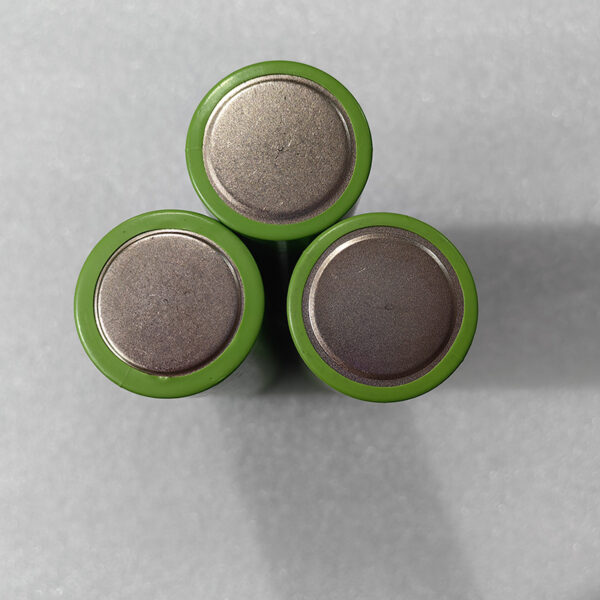
Top 5 Sample Test Report Problems with 18650 Cells in Power Tools Applications & Solutions
The global power tool industry continues to rely heavily on 18650 lithium-ion cells for their proven performance, cost-effectiveness, and mature supply chain. However, engineering teams and technical purchasers frequently encounter critical issues in battery test reports that can delay product launches, compromise safety certifications, and increase manufacturing costs. This article examines the top five sample test report problems encountered with 1860 cells in power tool applications and provides actionable solutions based on current industry standards including UN38.3 and IEC 62133.
1. Inconsistent Capacity Discharge Rate Documentation
One of the most common discrepancies in test reports involves capacity verification under varying discharge rates. Power tools demand high-current discharge profiles, often exceeding 10C rates during peak operation. Many test reports fail to document capacity retention at these elevated discharge rates, showing only standard 0.5C or 1C test conditions.
Technical Analysis: The 18650 cell’s internal resistance increases significantly under high-load conditions, causing voltage sag and reduced effective capacity. Test reports must include discharge curves at multiple C-rates matching actual power tool operating profiles.
Solution: Require comprehensive discharge testing at 1C, 3C, 5C, and 10C rates. Verify that capacity retention remains above 85% at 5C discharge. Manufacturers should provide detailed internal resistance specifications measured at 1kHz AC frequency. For premium cylindrical battery options, visit CNS Battery’s cylindrical cell product line.
2. Thermal Management Test Gaps
Power tool applications generate substantial heat during continuous operation. Test reports frequently lack adequate thermal cycling data and temperature rise documentation under sustained load conditions.
Technical Analysis: When internal cell temperature exceeds 60°C consistently, electrolyte decomposition accelerates, leading to premature capacity fade. At 130°C, separator materials begin melting, potentially causing internal short circuits and thermal runaway.
Solution: Implement thermal imaging during discharge testing. Document temperature rise at 5C continuous discharge for 30 minutes. Require cells to maintain surface temperature below 55°C under rated load. Include thermal shock testing per IEC 62133 standards with temperature cycling between -20°C and +60°C for 30 cycles minimum.
3. UN38.3 Transportation Certification Incompleteness
Many sample test reports lack complete UN38.3 certification documentation, creating significant logistics barriers for international shipments. This is particularly problematic for power tool manufacturers distributing globally.
Technical Analysis: UN38.3 requires eight mandatory tests including altitude simulation, thermal testing, vibration, shock, external short circuit, impact/crush, overcharge, and forced discharge. Missing any test invalidates the entire certification for air and sea transport.
Solution: Verify all eight UN38.3 test items are completed with passing results. Ensure test reports include sample identification, testing laboratory accreditation, and valid certification dates. For manufacturers seeking reliable battery manufacturers in China with complete UN38.3 documentation, proper verification is essential before procurement.
4. Cycle Life Testing Methodology Variations
Test reports often show cycle life claims without standardized testing methodology, making comparisons between different 18650 cell suppliers unreliable. Power tools typically require 500-1000 full cycles with less than 20% capacity degradation.
Technical Analysis: Cycle life varies significantly based on discharge depth, charge rate, temperature, and rest periods between cycles. Reports showing 1000 cycles at 25°C with 0.5C discharge do not reflect actual power tool operating conditions.
Solution: Demand cycle testing at 45°C ambient temperature with 80% depth of discharge at 2C charge and 5C discharge rates. Require capacity measurement every 50 cycles with detailed degradation curves. Accept cells maintaining above 80% initial capacity after 500 cycles under these conditions.
5. BMS Integration and Protection Circuit Validation
Sample test reports frequently omit battery management system integration testing. Power tool battery packs require sophisticated protection circuits for overcharge, over-discharge, short circuit, and temperature monitoring.
Technical Analysis: Individual cell testing does not validate pack-level safety. Without proper BMS validation, cells may operate outside safe parameters during actual tool usage, leading to premature failure or safety incidents.
Solution: Include pack-level testing in validation protocols. Verify protection circuit activation at specified thresholds: overcharge at 4.25V±0.05V per cell, over-discharge at 2.5V±0.1V, and temperature cutoff at 65°C±5°C. Test short circuit protection response time should be under 100 microseconds.
Conclusion
Addressing these five common test report problems requires close collaboration between power tool manufacturers and battery suppliers. Comprehensive testing documentation, adherence to international standards, and realistic operating condition simulation are essential for successful product development. Technical teams should establish clear testing protocols before sample evaluation begins.
For further technical consultation on 18650 cell selection and testing requirements, engineering teams can contact CNS Battery’s technical support team for detailed specifications and customization options. Proper validation today prevents costly failures tomorrow, ensuring power tool batteries deliver reliable performance throughout their intended service life.
The power tool industry’s transition toward higher voltage platforms and faster charging capabilities makes rigorous cell testing more critical than ever. By addressing these common test report deficiencies proactively, manufacturers can accelerate time-to-market while maintaining the highest safety and performance standards expected by professional end users worldwide.


