

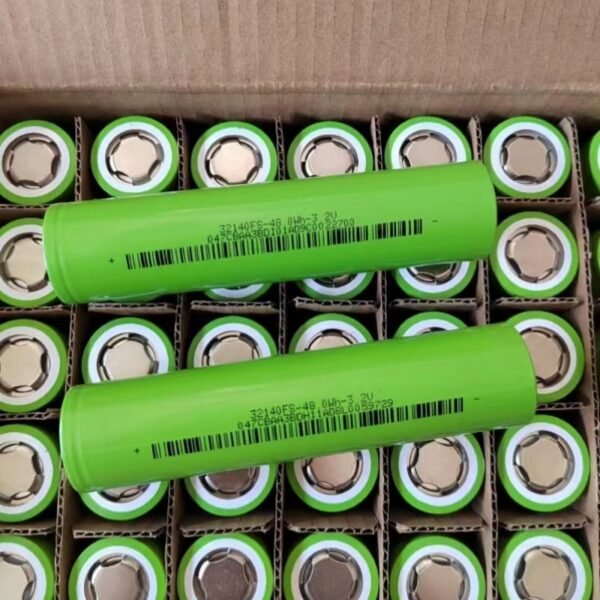
Top 5 Perfect Cell Matching Problems with 18650 Cells in E-bike Applications & Solutions Ideal for Manufacturers
The rapid expansion of the global e-bike market has placed unprecedented demands on battery pack reliability and performance. For manufacturers utilizing 18650 cylindrical cells, achieving optimal cell matching remains one of the most critical challenges in production. Poor cell matching directly impacts pack longevity, safety, and overall system efficiency. This article dissects the top five cell matching problems encountered in e-bike applications and provides actionable solutions for manufacturers seeking competitive advantage in regulated markets.
1. Capacity Variance Across Production Batches
Problem: Even cells from the same manufacturer exhibit capacity variations of ±50-100mAh across different production batches. When mismatched cells are assembled in series configurations, the weakest cell determines overall pack capacity, leading to premature degradation.
Technical Principle: Capacity variance stems from inconsistencies in electrode coating thickness, electrolyte filling volume, and formation cycling parameters during manufacturing.
Solution: Implement multi-stage capacity grading using precision testing equipment at 0.5C discharge rates. Manufacturers should establish capacity tolerance bands within ±30mAh for premium e-bike applications. Advanced statistical process control (SPC) systems can track batch-to-batch variations and enable predictive sorting algorithms.
2. Internal Resistance Mismatch
Problem: Internal resistance variations cause uneven heat distribution during high-current discharge cycles typical in e-bike acceleration scenarios. Cells with higher resistance generate more heat, accelerating degradation and creating thermal runaway risks.
Technical Principle: Internal resistance is influenced by electrode material conductivity, separator quality, and electrolyte composition. AC impedance spectroscopy at 1kHz provides accurate resistance measurements.
Solution: Conduct internal resistance testing at multiple temperatures (25°C, 45°C) to identify cells with abnormal thermal behavior. Match cells within ±5mΩ resistance tolerance for parallel groups. Explore our cylindrical battery cell specifications for detailed technical parameters suitable for e-bike applications.
3. Voltage Profile Inconsistency During Charge-Discharge Cycles
Problem: Cells with different voltage profiles reach charge/discharge cutoff points at different times, causing BMS imbalance and reducing usable capacity. This is particularly critical in 36V and 48V e-bike systems with 10S-14S configurations.
Technical Principle: Voltage profile differences result from variations in cathode/anode material composition and SEI layer formation during initial cycling.
Solution: Perform voltage curve mapping across 3.0V-4.2V range using automated testing systems. Group cells with similar voltage-capacity curves rather than relying solely on nominal capacity ratings. Implement active balancing circuits capable of 200mA+ equalization current for long-term maintenance.
4. Self-Discharge Rate Discrepancies
Problem: Cells with elevated self-discharge rates create voltage drift during storage periods, complicating pack assembly and requiring additional pre-shipment conditioning. This affects inventory management and increases warranty claim risks.
Technical Principle: Self-discharge is caused by internal micro-shorts, electrolyte decomposition, and impurity-induced side reactions within the cell chemistry.
Solution: Conduct 7-day and 30-day open-circuit voltage (OCV) monitoring to identify high self-discharge cells. Reject cells showing voltage drop exceeding 50mV over 30 days at 25°C. Establish climate-controlled storage facilities maintaining 15-25°C temperature ranges for inventory preservation.
5. Thermal Characteristic Variations
Problem: Different thermal responses among cells lead to uneven aging rates, particularly in e-bike packs with limited active cooling. Hot spots develop around cells with poor thermal conductivity, accelerating localized degradation.
Technical Principle: Thermal characteristics depend on cell construction, jellyroll density, and casing material properties. Infrared thermography reveals temperature distribution patterns during operation.
Solution: Integrate thermal imaging during high-rate discharge testing (2C-3C) to identify outliers. Design pack configurations with uniform airflow distribution and thermal interface materials. Consider cells with aluminum casing for improved heat dissipation in high-power e-bike applications.
Regional Compliance & Technical Barriers for Global Markets
Manufacturers targeting international markets must navigate complex regulatory landscapes. European Union requirements under EN 15194 and the new EU Battery Regulation (2023/1542) mandate comprehensive cell traceability, carbon footprint documentation, and recycled content thresholds by 2027. United States standards including UL 2849 and UL 2271 require rigorous safety testing for e-bike battery systems, with particular emphasis on cell matching consistency and BMS functionality.
CNS Battery has established comprehensive technical barriers aligned with these regional requirements. Our manufacturing processes incorporate automated cell sorting systems achieving ±20mAh capacity tolerance and ±3mΩ resistance matching—exceeding typical industry standards. All production batches undergo UN 38.3, IEC 62133, and CE certification testing, ensuring seamless market entry across EU and North American territories.
For manufacturers seeking partnership with verified suppliers meeting international compliance standards, connect with our technical team to discuss custom cell matching specifications. Our facility maintains ISO 9001:2015 certification with full traceability from raw material sourcing through final pack assembly.
Understanding battery manufacturers in China landscape helps global procurement teams identify suppliers with genuine technical capabilities versus trading companies. CNS Battery operates integrated production lines with in-house cell testing laboratories, enabling rapid prototyping and volume scaling for e-bike OEM requirements.
Conclusion
Perfect cell matching in 18650 e-bike applications requires systematic approach encompassing capacity grading, resistance matching, voltage profiling, self-discharge monitoring, and thermal characterization. Manufacturers investing in advanced testing infrastructure and statistical process control gain significant competitive advantages in reliability-focused markets. Regional compliance requirements continue tightening, making supplier selection based on technical capability and certification status increasingly critical for long-term success in the global e-bike industry.

