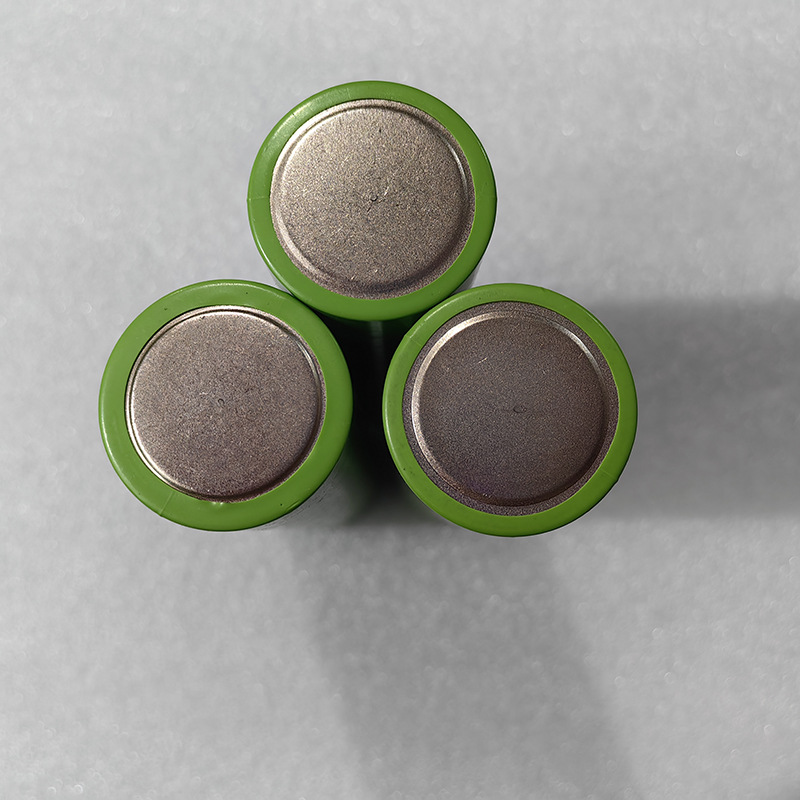
Top 5 OEM Customization Problems with 18650 Cells in EV Applications & Solutions B2B Export
The global electric vehicle (EV) market continues its exponential growth trajectory, with lithium-ion battery demand projected to reach 22.2 million tonnes by 2036. Among various cell formats, 18650 cylindrical batteries remain a cornerstone for OEMs seeking reliable, cost-effective power solutions. However, B2B exporters and manufacturers face significant customization challenges when integrating 18650 cells into EV applications across different regions. This article examines the top five OEM customization problems and provides actionable solutions for international battery procurement.
1. Thermal Management Compatibility Across Climate Zones
Problem: 18650 cells generate substantial heat during high-current discharge cycles. OEMs operating in extreme climates—from Middle Eastern heat to Northern European cold—struggle with thermal runaway risks. When internal temperatures exceed 130°C, separator materials melt, causing short circuits and potential safety hazards.
Technical Insight: The cylindrical geometry of 18650 cells (18mm diameter × 65mm length) creates unique thermal distribution patterns. Unlike prismatic cells, heat dissipates radially, requiring specialized cooling channel designs.
Solution: Partner with manufacturers offering region-specific thermal management configurations. Advanced BMS (Battery Management Systems) with temperature monitoring at individual cell levels enable proactive thermal regulation. Look for suppliers providing cells with enhanced electrolyte formulations stable across -40°C to +55°C operating ranges.
2. Regulatory Compliance & Certification Variations
Problem: Different markets enforce distinct safety standards—UN38.3 for transportation, IEC 62619 for industrial applications, UL 1642 for North America, and CE marking for Europe. OEMs exporting EVs globally face complex certification landscapes that delay market entry.
Solution: Select battery manufacturers with comprehensive international certification portfolios. Reputable battery manufacturers in China maintain multi-standard compliance facilities, reducing duplicate testing costs. Ensure your supplier provides complete documentation packages including MSDS, transportation declarations, and region-specific conformity certificates.
3. Capacity & Discharge Rate Customization Limitations
Problem: Standard 18650 cells offer capacities between 2200-3350mAh with nominal voltages of 3.6V-3.7V. However, EV applications require specific C-rate capabilities—high-power variants for acceleration versus high-energy configurations for extended range. Many suppliers cannot accommodate custom discharge profiles without significant MOQ increases.
Technical Insight: The cathode chemistry determines performance characteristics. NMC (Nickel Manganese Cobalt) formulations prioritize energy density, while LFP (Lithium Iron Phosphate) emphasizes safety and cycle life. Custom electrolyte additives can enhance specific performance metrics.
Solution: Work with flexible manufacturers offering chemistry customization without prohibitive minimum orders. Request detailed specification sheets confirming continuous discharge ratings, pulse current capabilities, and cycle life expectations under your specific operating conditions. Explore cylindrical battery cell options with verified performance data.
4. Supply Chain Consistency & Counterfeit Risk
Problem: The 18650 market experiences significant counterfeit infiltration, particularly from unauthorized distributors. OEMs report capacity discrepancies, inconsistent internal resistance, and premature failure rates when sourcing from unverified channels. Supply chain disruptions further complicate long-term production planning.
Solution: Implement rigorous supplier verification protocols. Request factory audit reports, traceability documentation, and batch testing certificates. Establish direct relationships with certified manufacturers rather than intermediaries. Maintain buffer inventory agreements to mitigate supply disruptions. Consider suppliers offering blockchain-based cell tracking for enhanced transparency.
5. Integration & Pack Design Compatibility
Problem: 18650 cells require precise mechanical integration within battery packs. Variations in terminal configurations, dimensional tolerances, and welding compatibility create assembly challenges. OEMs report increased rejection rates when cell specifications don’t match automated production equipment.
Technical Insight: Cell-to-cell voltage matching within ±10mV and internal resistance variation below 5mΩ ensures balanced pack performance. Poor matching accelerates degradation and reduces overall system efficiency.
Solution: Choose manufacturers providing pre-matched cell groups with documented electrical characteristics. Request CAD files for terminal configurations and mechanical drawings before production commitment. Verify welding compatibility with your existing production lines through sample testing programs.
Why CNS BATTERY Stands Out for Global OEM Partnerships
CNS BATTERY addresses these five critical challenges through comprehensive B2B export solutions designed for international OEM requirements. Our cylindrical 18650 cell portfolio features region-compliant certifications, customizable thermal specifications, and verified supply chain integrity. We support EV manufacturers across Europe, North America, Southeast Asia, and emerging markets with localized compliance documentation and technical support.
Our manufacturing facilities maintain ISO 9001, IATF 16949, and multi-regional safety certifications, ensuring seamless market entry for your EV products. With flexible MOQ structures and dedicated account management, we enable scalable procurement aligned with your production timelines.
Ready to optimize your 18650 cell sourcing strategy? Contact our international sales team today to discuss your specific EV application requirements and receive customized quotations with complete technical documentation. Visit our contact page to initiate your partnership inquiry.
For OEMs seeking reliable 18650 battery solutions with global compliance support, CNS BATTERY delivers verified quality, technical expertise, and responsive B2B service across all major EV markets.