Top 5 Long Cycle Life Problems with 18650 Cells in EV Applications & Solutions vs Competitors
When it comes to Electric Vehicles (EVs), the 18650 cylindrical cell remains a benchmark for energy density and reliability. However, pushing these cells to their limits in automotive applications often reveals hidden challenges. As a seasoned professional in the lithium battery industry, I have witnessed firsthand how the pursuit of “long cycle life” is not just about the number of charge-discharge cycles, but about maintaining structural integrity and thermal stability under extreme conditions.
Many manufacturers claim high cycle counts, but in the real world of EVs, premature degradation, thermal runaway risks, and inconsistent performance across battery packs are the true enemies. This article dissects the top five problems encountered with 18650 cells in long-life EV applications and provides technical solutions, benchmarking against industry competitors.
1. The “Weakest Link” Syndrome in Module Integration
The Problem:
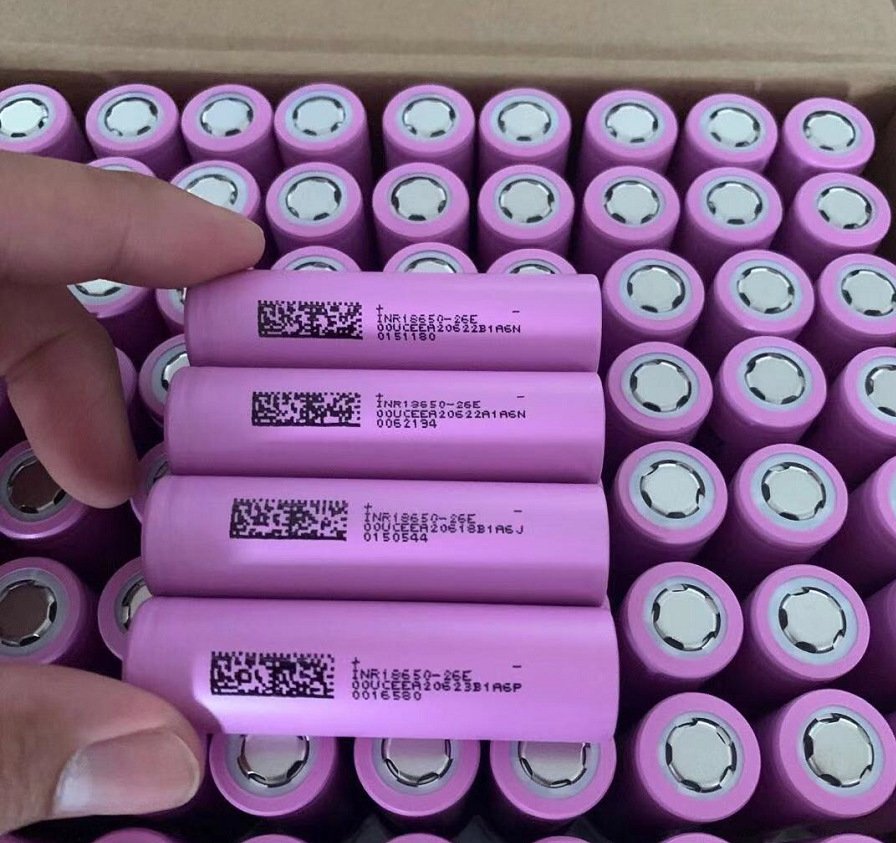
A single EV battery pack contains thousands of 18650 cells. The fundamental issue is statistical: even with a high yield rate, the probability of having a “weak cell” in a pack of 7,000 cells is significant. In a series-parallel configuration, the overall cycle life of the pack is dictated by the cell with the shortest lifespan. If one cell fails or swells, it can trigger a cascade failure, drastically reducing the effective life of the entire module.
Technical Solution & Comparison:
The solution lies in rigorous binning (grading) and advanced Battery Management Systems (BMS).
- Competitor Approach: Many standard manufacturers rely on basic voltage sorting.
- Advanced Approach: Top-tier manufacturers implement “dynamic resistance sorting” and “capacity gradient sorting.” This ensures that cells with nearly identical internal resistance and capacity are grouped together. This method, combined with a BMS that supports active balancing, can extend the module’s cycle life by over 30% compared to passive balancing systems.
2. Electrolyte Depletion and “Dry-Out” Effect
The Problem:
As 18650 cells undergo hundreds of cycles, the liquid electrolyte slowly decomposes and is consumed to form the Solid Electrolyte Interphase (SEI) layer on the anode. In high-nickel formulations (common in EVs for high energy density), this side reaction is more aggressive. Over time, the “dry-out” effect occurs where the electrolyte volume becomes insufficient to浸润 the electrodes fully. This leads to a sharp increase in internal resistance and a drop in capacity, often misdiagnosed as a “lack of energy density.”
Technical Solution:
The key is electrolyte formulation and cathode coating.
- Solution: Using additives like FEC (Fluoroethylene Carbonate) and LiDFOB (Lithium Difluoro(oxalato)borate) stabilizes the electrolyte. Furthermore, Al2O3 (Aluminum Oxide) coating on the cathode surface acts as a physical barrier, reducing direct contact between the cathode and electrolyte, thus minimizing side reactions. This is a critical differentiator between consumer-grade cells and automotive-grade cells.
3. Mechanical Stress and Electrode Delamination
The Problem:
The 18650 cell uses a “jelly roll” structure. During charging, lithium ions intercalate into the graphite anode, causing it to expand. During discharge, it contracts. This continuous “breathing” motion creates mechanical stress within the roll. Over thousands of cycles, this stress can cause the active material coating on the copper foil to crack or delaminate. This physical degradation is irreversible and is a primary cause of capacity fade in long-term use.
Technical Solution:
Material engineering and binder selection are crucial.
- Solution: Utilizing advanced binders like PAA (Polyacrylic Acid) or modified CMC (Carboxymethyl Cellulose) with higher adhesion strength can anchor the active material firmly to the current collector, even under high expansion rates. Additionally, using spherical graphite with better structural stability reduces the expansion ratio, mitigating this stress.
4. Heat Accumulation and Thermal Runaway Propagation
The Problem:
While individual 18650 cells have excellent thermal stability, packing them densely in an EV creates a heat dissipation nightmare. The steel shell of a standard 18650 has lower thermal conductivity compared to pouch or prismatic cells. Heat generated in the core of the jelly roll struggles to escape. High temperatures accelerate all degradation mechanisms, effectively halving the cycle life for every 10°C rise in temperature (Arrhenius Law).
Technical Solution:
Thermal interface materials (TIMs) and structural design.
- Comparison: Competitors often use simple air cooling, which is insufficient for long-life cycles.
- Solution: Integrating phase change materials (PCMs) between cells or utilizing advanced liquid cooling plates that make direct contact with the cell surface is essential. For the 18650 format specifically, ensuring a low thermal resistance path from the core to the external environment is the only way to guarantee long cycle life.
5. Lithium Plating and Fast Charging Damage
The Problem:
Fast charging is a major selling point for EVs, but it is the nemesis of 18650 cycle life. During rapid charging, especially at low temperatures, lithium ions may not have enough time to intercalate into the graphite lattice. Instead, they plate out as metallic lithium on the surface of the anode. This “lithium plating” is not only irreversible (causing capacity loss) but also creates dendrites that can pierce the separator, leading to internal short circuits.
Technical Solution:
Anode modification and charging algorithms.
- Solution: Doping the graphite anode with Silicon (Si) or using Titanium-based anodes (LTO) can increase the intercalation speed. However, for standard NMC/Graphite 18650 cells, the solution lies in “pulse charging” algorithms and ensuring the anode particle size is optimized for rapid ion diffusion. Pre-heating the battery to an optimal temperature before fast charging is non-negotiable for longevity.
Summary: The Path to Superior Longevity
Achieving a long cycle life in EV applications is not about a single magic bullet; it is a system-level challenge. It requires a synergy of material science (stable electrolytes, robust binders), precise manufacturing (strict binning), and intelligent thermal management.
While many battery manufacturers focus solely on initial capacity, the true test for an EV battery is how well it retains that capacity over 1,000+ cycles. By addressing the mechanical stress of electrode expansion, preventing electrolyte dry-out, and managing the heat of dense packing, manufacturers can move beyond the “Top 5 Problems” and deliver cells that truly last.
If you are looking for a battery partner that prioritizes these deep technical solutions for longevity, consider exploring options from established manufacturers who specialize in automotive-grade cylindrical cells. You can contact a professional battery manufacturer in China to discuss your specific requirements.
For technical inquiries or to explore high-performance cylindrical cell solutions, please visit our contact page or browse our comprehensive cylindrical battery cell product range.