

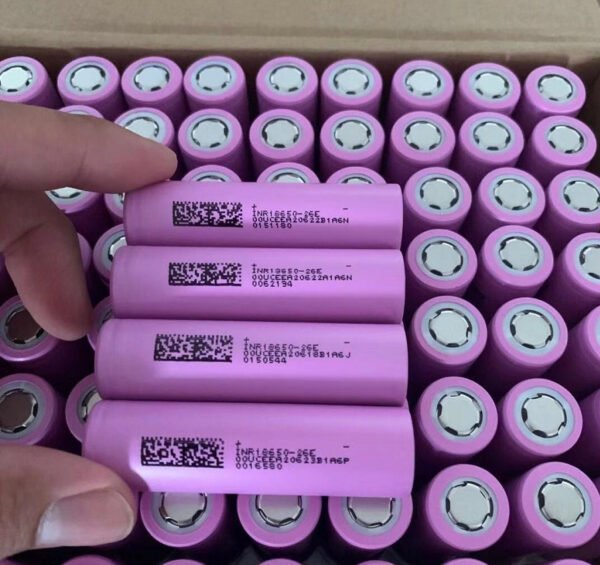
Top 5 High Reliability Problems with 18650 Cells in ESS Applications & Solutions Solve Today
Energy Storage Systems (ESS) have become the backbone of renewable energy infrastructure across Europe, North America, and Asia-Pacific markets. Among various battery configurations, 18650 cylindrical lithium-ion cells remain a popular choice for residential and commercial ESS deployments. However, system integrators and EPC contractors face significant reliability challenges that can compromise performance, safety, and ROI. This article examines the top five high-reliability problems with 18650 cells in ESS applications and provides actionable solutions for industry professionals.
1. Thermal Runaway Risk and Heat Management
Technical Analysis: 18650 cells utilize liquid electrolytes and polymer separators that become unstable above 130°C. When internal temperature exceeds this threshold, separator melting causes internal short circuits, triggering exponential heat generation through exothermic reactions. In densely packed ESS configurations, thermal propagation between adjacent cells creates cascading failure risks.
Solution: Implement multi-layer thermal management systems combining active cooling (liquid or forced air) with passive thermal barriers between cell modules. Advanced Battery Management Systems (BMS) should monitor individual cell temperatures with ±1°C accuracy and trigger preemptive discharge reduction at 45°C ambient conditions. For compliance with EU Battery Regulation 2023 and UL 9540A standards, thermal runaway propagation testing is mandatory for commercial ESS deployments.
2. Cell Voltage Imbalance and Capacity Mismatch
Technical Analysis: Manufacturing tolerances cause initial capacity variations of 3-5% among 18650 cells. During cycling, these differences amplify through uneven aging rates. Voltage delta (ΔV) exceeding 50mV between parallel strings reduces usable capacity by 15-20% and accelerates degradation in weaker cells.
Solution: Deploy active cell balancing circuits with 100mA+ balancing current capacity, significantly superior to passive 50mA resistive balancing. Pre-screening cells within 2% capacity matching before pack assembly extends system lifespan. Real-time BMS monitoring should visualize voltage delta across all strings, enabling predictive maintenance before imbalance reaches critical thresholds.
3. Cycle Life Degradation in High-Temperature Environments
Technical Analysis: 18650 NCM chemistry experiences accelerated SEI (Solid Electrolyte Interphase) layer growth at temperatures above 35°C. Each 10°C increase doubles degradation rate, reducing cycle life from 2000+ cycles at 25°C to under 800 cycles at 45°C continuous operation. This directly impacts LCOE (Levelized Cost of Energy) calculations for ESS projects.
Solution: Specify LFP (LiFePO4) variant 18650 cells for hot-climate installations in Middle East, Southeast Asia, and Southern Europe regions. LFP chemistry maintains 90% capacity retention after 4000+ cycles even at 40°C ambient. Implement temperature-compensated charging algorithms that reduce charge voltage by 3mV/°C above 25°C reference temperature.
4. BMS Communication Failures and Protection Latency
Technical Analysis: ESS installations require coordinated protection across hundreds of series-connected cells. Communication latency exceeding 100ms between BMS master and slave units delays overvoltage/undervoltage protection responses. CAN bus interference in electrically noisy environments causes data packet loss, creating blind spots in cell monitoring.
Solution: Utilize redundant communication architectures with dual CAN bus topology and isolated DC-DC converters for noise immunity. Implement watchdog timers with 50ms response thresholds for critical protection functions. For grid-tied ESS systems complying with IEEE 1547-2018, BMS must provide sub-cycle fault response within 16.7ms (60Hz) or 20ms (50Hz) grid cycles.
5. Quality Consistency and Supply Chain Traceability
Technical Analysis: Grade B or recycled 18650 cells enter ESS supply chains through unauthorized distributors, creating unpredictable failure patterns. Without proper UN 38.3, IEC 62619, and CE certification documentation, insurance coverage and bankability for ESS projects become compromised. Regional compliance requirements vary significantly across markets.
Solution: Partner with certified battery manufacturers providing full traceability from raw materials to finished cells. Require batch-level testing reports including capacity distribution, internal resistance mapping, and self-discharge rates. For North American projects, ensure UL 1973 certification; European deployments require CE marking with EU Battery Passport compliance by 2027.
CNS BATTERY: Your Trusted 18650 Cell Partner for ESS Projects
CNS BATTERY delivers Grade-A 18650 cylindrical battery cells engineered specifically for energy storage applications. Our manufacturing facility implements ISO 9001:2015 quality management with 100% cell testing before shipment. All products carry UN 38.3, IEC 62619, CE, and UL certifications for seamless global deployment.
Key Advantages:
- Capacity Matching: Cells sorted within 1% capacity tolerance for optimal pack performance
- Thermal Stability: LFP chemistry options rated for -20°C to 60°C operating range
- BMS Integration: Compatible with major BMS platforms including Daly, JBD, and Seplos
- Regional Compliance: Documentation packages tailored for EU, North America, and APAC regulatory requirements
- Technical Support: Engineering team available for system design consultation and failure analysis
For ESS project specifications, technical datasheets, or customized OEM/ODM solutions, visit our cylindrical battery cell product page or explore our comprehensive capabilities as leading battery manufacturers in China.
Our global distribution network serves system integrators across Germany, United Kingdom, United States, Australia, and UAE with localized inventory and rapid delivery. Contact our international sales team at https://cnsbattery.com/contact-2/ for project-specific quotations and technical consultations.
Conclusion: Addressing these five reliability challenges requires systematic approach combining proper cell selection, advanced BMS architecture, thermal management design, and certified supply chain partnerships. CNS BATTERY stands ready to support your ESS projects with reliable 18650 cells and comprehensive technical backing for bankable, long-term energy storage deployments worldwide.

