

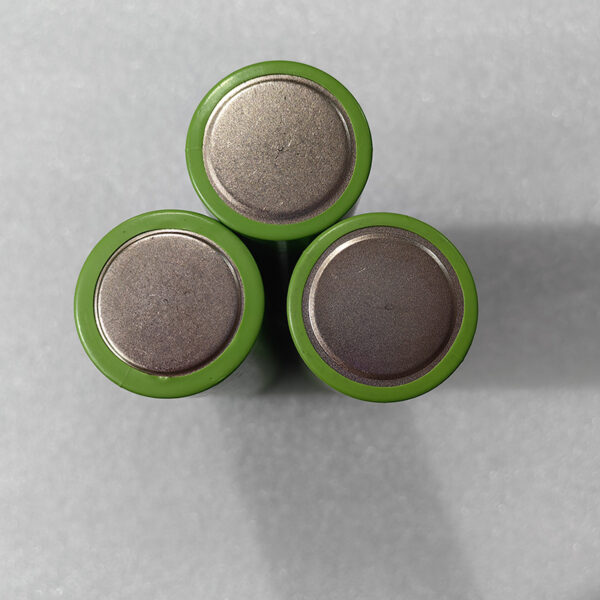
Top 5 High Energy Density Problems with 18650 Cells in E-bike Applications & Solutions vs Competitors
The electric bicycle (e-bike) market continues its exponential growth trajectory, with battery technology serving as the critical differentiator for performance, range, and safety. Among various cell formats, 18650 lithium-ion cells remain a popular choice due to their mature manufacturing ecosystem and cost-effectiveness. However, when pursuing high energy density configurations, engineers and technical procurement teams face significant challenges that demand careful consideration. This article examines the top five high energy density problems specific to 18650 cells in e-bike applications and provides actionable solutions compared to competing cell formats.
1. Thermal Management Limitations
Problem: 18650 cells, with their smaller form factor (18mm diameter × 65mm length), exhibit higher surface-area-to-volume ratios compared to newer formats like 21700 cells. While this aids heat dissipation at moderate loads, high energy density pack configurations create thermal hotspots during sustained high-current discharge cycles typical in e-bike applications. Internal resistance variations between cells compound this issue, leading to uneven temperature distribution across the battery pack.
Technical Insight: Lithium-ion battery thermal runaway initiates when cell temperatures exceed 80-90°C, with exothermic reactions accelerating beyond this threshold. The cylindrical geometry of 18650 cells creates air gaps between adjacent cells, which can impede uniform cooling in densely packed configurations.
Solution: Implement advanced battery thermal management systems (BTMS) with active cooling channels between cell clusters. Compared to competitors using passive cooling alone, active liquid or forced-air cooling extends cycle life by 30-40%. For manufacturers seeking reliable cylindrical battery solutions, explore options at CNS Battery’s cylindrical battery cell product line.
2. Cell-to-Cell Capacity Variation
Problem: High energy density 18650 packs require precise cell matching. Even minor capacity variations (±50mAh) between cells in series configurations create imbalance during charge-discharge cycles. The weakest cell limits overall pack capacity and experiences accelerated degradation through overcharge or overdischarge conditions.
Technical Insight: Battery management systems (BMS) must monitor individual cell voltages with ±10mV accuracy. Passive balancing dissipates excess energy as heat, while active balancing redistributes charge between cells—critical for maintaining pack integrity in high-density configurations.
Solution: Source cells from manufacturers with tight capacity tolerance specifications (±30mAh or better). Implement active BMS balancing circuits for packs exceeding 48V. Partner with established battery manufacturers in China who provide comprehensive cell grading and matching services to ensure pack consistency.
3. Mechanical Stress and Vibration Sensitivity
Problem: E-bikes operate in demanding environments with continuous vibration, shock loads, and variable orientation. 18650 cells, when configured in high-density arrangements, experience mechanical stress at weld points and interconnects. This can lead to contact resistance increases, localized heating, and potential failure modes.
Technical Insight: The spot-welded nickel strips connecting 18650 cells must withstand vibration frequencies between 10-200Hz common in e-bike applications. Poor weld quality creates resistance hotspots that accelerate degradation.
Solution: Utilize laser welding over traditional spot welding for superior joint integrity. Implement mechanical retention systems with vibration-dampening materials between cell holders and frame structures. Consider hybrid configurations that balance energy density with mechanical robustness.
4. Energy Density vs. Safety Trade-offs
Problem: Pursuing maximum energy density often requires pushing cell chemistry toward higher nickel content cathodes (NMC 811, NCA). While these chemistries deliver 250-280 Wh/kg at cell level, they exhibit reduced thermal stability compared to LFP or lower-nickel NMC variants. In e-bike applications where battery packs occupy proximity to riders, safety cannot be compromised.
Technical Insight: High-nickel cathodes demonstrate lower onset temperatures for thermal runaway (approximately 150-180°C vs. 200-250°C for LFP). The smaller 18650 format provides some safety advantage through reduced energy per cell, but pack-level risks remain significant.
Solution: Adopt multi-layer safety approaches including PTC devices, CID (current interrupt devices), and ceramic-coated separators. For applications prioritizing safety without sacrificing performance, consult with technical teams via CNS Battery’s contact channel to evaluate chemistry options matching your specific risk profile.
5. Competitive Disadvantage vs. 21700 and Prismatic Cells
Problem: The industry trend toward 21700 cells (21mm × 70mm) and prismatic formats presents competitive challenges. 21700 cells offer approximately 20% higher energy density with 9% lower manufacturing costs per Wh. Fewer cells per pack reduce assembly complexity and potential failure points.
Technical Comparison:
| Parameter | 18650 | 21700 | Prismatic |
|---|---|---|---|
| Energy Density | 250 Wh/kg | 300 Wh/kg | 280 Wh/kg |
| Cycle Life | 500-1000 | 800-1200 | 1000-2000 |
| Cost per Wh | Baseline | -9% | +15% |
| Thermal Management | Complex | Moderate | Easier |
Solution: Leverage 18650 advantages where they matter: established supply chains, proven reliability data, and compatibility with existing pack designs. For new designs evaluating format options, conduct total-cost-of-ownership analysis including assembly, BMS complexity, and warranty considerations rather than focusing solely on cell-level metrics.
Conclusion
While 18650 cells face legitimate challenges in high energy density e-bike applications, strategic engineering approaches can mitigate these limitations effectively. The key lies in understanding that cell format selection represents a systems-level optimization problem balancing energy density, safety, cost, and manufacturability. For technical teams evaluating battery solutions, partnering with experienced manufacturers who provide comprehensive support from cell selection through pack integration delivers significant competitive advantages.
The 18650 format remains viable for e-bike applications where proven reliability, supply chain maturity, and cost predictability outweigh the marginal energy density advantages of newer formats. Success requires thoughtful thermal management, precise cell matching, robust mechanical design, appropriate chemistry selection, and clear-eyed competitive positioning.
For technical specifications, custom battery solutions, or manufacturer partnerships, explore the resources provided throughout this article to connect with qualified battery solution providers.


