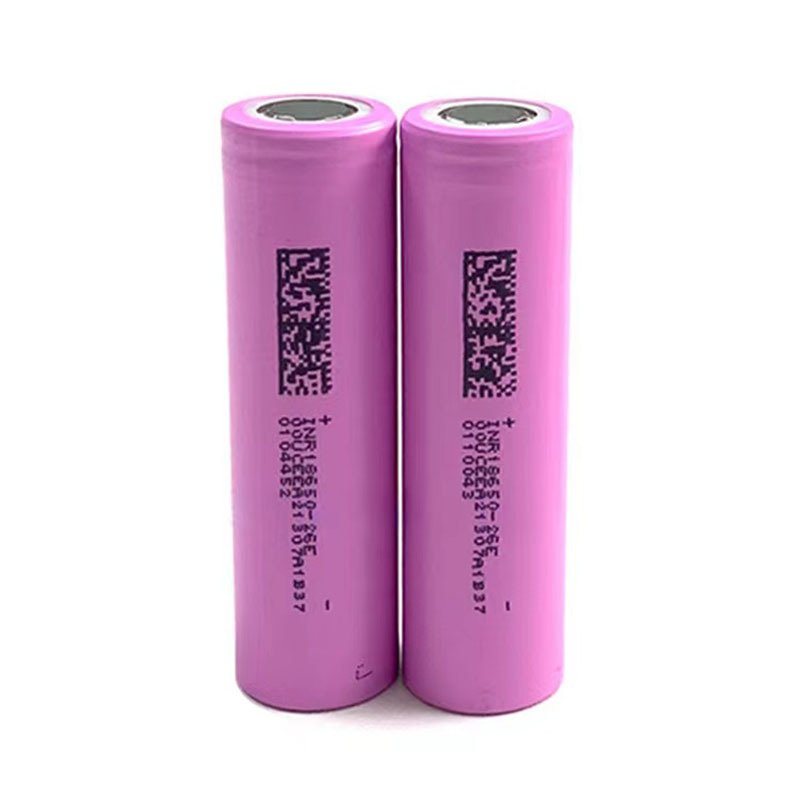
Top 5 High Discharge Rate Problems with 18650 Cells in Electric Motorcycle Applications & Solutions OEM Custom Solutions
The rapid expansion of the electric motorcycle market has intensified demand for reliable, high-performance battery systems. Among various lithium-ion configurations, 18650 cylindrical cells remain a preferred choice for OEMs due to their mature manufacturing processes, cost-effectiveness, and proven energy density. However, high discharge rate applications present unique engineering challenges that require comprehensive technical solutions. This article examines the top five high discharge rate problems encountered in electric motorcycle applications and provides actionable OEM custom solutions.
1. Thermal Runaway and Heat Management
Technical Challenge: During high-current discharge (typically 20A-35A continuous), 18650 cells generate significant internal heat due to ohmic resistance and electrochemical reactions. When cell temperature exceeds 130°C, separator materials begin to degrade, potentially triggering thermal runaway—a self-accelerating exothermic reaction that can lead to catastrophic failure.
Root Cause Analysis: The heat generation rate follows Q=I²R, where discharge current squared multiplies internal resistance. In densely packed motorcycle battery packs, inadequate thermal dissipation creates hot spots that accelerate cell degradation.
OEM Solutions:
- Implement advanced thermal management systems with phase-change materials (PCM)
- Design optimized cell spacing with minimum 3mm gaps for airflow
- Integrate temperature sensors at critical pack locations for real-time monitoring
- Utilize cells with ceramic-coated separators for enhanced thermal stability
2. Voltage Sag Under High Current Load
Technical Challenge: Electric motorcycles require instantaneous power delivery during acceleration. High discharge rates cause significant voltage sag, reducing available power and triggering premature low-voltage cutoffs.
Technical Specifications: A typical 18650 cell with 3.7V nominal voltage may drop to 3.2V under 30A load, representing a 13.5% voltage depression. In series configurations, this compounds across the pack.
OEM Solutions:
- Select high-power grade cells with low internal resistance (<15mΩ)
- Increase parallel cell count to distribute current load
- Implement predictive BMS algorithms that account for voltage sag characteristics
- Design pack architecture with appropriate voltage headroom for peak power demands
3. Cell Inconsistency in Parallel Configurations
Technical Challenge: Manufacturing tolerances create variations in capacity, internal resistance, and self-discharge rates among individual cells. In high-discharge applications, these inconsistencies amplify, causing current imbalance and accelerated degradation of weaker cells.
Technical Impact: A 5% capacity variance in parallel groups can result in 15-20% current imbalance during peak discharge, significantly reducing pack lifespan.
OEM Solutions:
- Implement rigorous cell matching protocols with <3% capacity tolerance
- Utilize active balancing BMS systems for continuous equalization
- Conduct pre-assembly cell grading using impedance spectroscopy
- Establish quality control procedures with statistical process control (SPC)
4. BMS Protection Limitations
Technical Challenge: Standard battery management systems may not respond quickly enough to protect cells during extreme discharge events. Over-current protection thresholds must balance safety with performance requirements.
Critical Parameters: BMS response time should be <100ms for over-current events, with accurate current sensing resolution of ±1% full scale.
OEM Solutions:
- Deploy multi-tier protection architecture with hardware and software safeguards
- Integrate high-precision shunt resistors or Hall-effect sensors
- Implement adaptive protection algorithms that adjust thresholds based on temperature
- Ensure ASIL-C or equivalent functional safety certification for automotive applications
5. Cycle Life Degradation at High C-Rates
Technical Challenge: Continuous high-rate discharge accelerates capacity fade through multiple degradation mechanisms including SEI layer growth, lithium plating, and active material loss.
Performance Data: Cells discharged at 3C rates typically achieve 500-800 cycles, compared to 1000-1500 cycles at 1C rates under identical conditions.
OEM Solutions:
- Specify cells optimized for high-power applications with reinforced electrode structures
- Implement thermal management to maintain optimal operating temperature (25-35°C)
- Design pack configurations that allow current distribution across multiple parallel paths
- Establish maintenance protocols including periodic capacity testing and cell replacement schedules
Partner with Professional Battery Manufacturers
Addressing these high discharge rate challenges requires collaboration with experienced battery manufacturers who understand the unique demands of electric motorcycle applications. Professional OEM partners provide comprehensive solutions from cell selection to pack integration, ensuring optimal performance and safety.
For engineers and technical procurement professionals seeking reliable 18650 battery solutions, working with established manufacturers offers significant advantages including custom cell matching, specialized BMS development, and comprehensive testing protocols. Quality cylindrical battery cells form the foundation of high-performance electric motorcycle battery packs.
Explore our range of cylindrical battery cell solutions designed for demanding high-discharge applications. Our manufacturing capabilities support custom OEM requirements with rigorous quality control and technical support throughout the development process.
To learn more about partnering with experienced battery manufacturers in China, we invite you to connect with our technical team. We provide comprehensive consultation on cell selection, pack design, and integration strategies tailored to your specific electric motorcycle applications.
For detailed technical discussions and custom solution development, please contact us to schedule a consultation with our engineering team. Our experts are ready to support your project from initial concept through production deployment.
This technical analysis reflects current industry best practices for 18650 battery integration in electric motorcycle applications. Specifications and recommendations should be validated against your specific use case requirements and local regulatory standards.