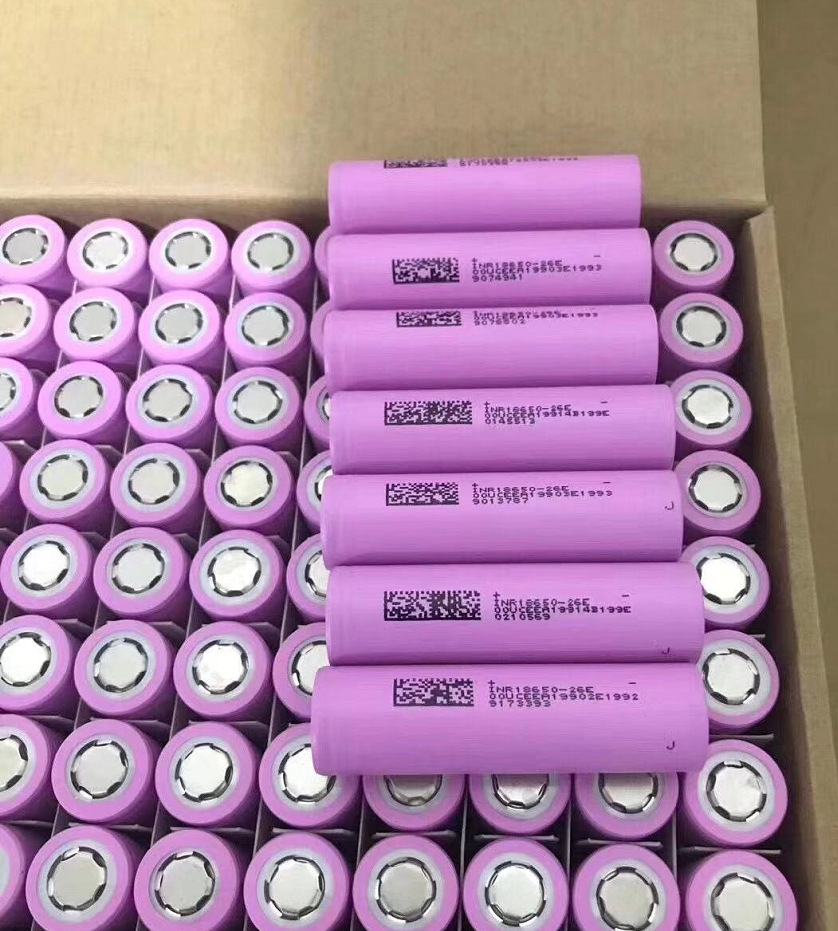
Top 5 Fast Charging Without Heat Problems with 18650 Cells in EV Applications & Solutions Fast Shipping Guaranteed
Introduction
The rapid expansion of electric vehicle (EV) markets has intensified demands for high-performance battery solutions. Among cylindrical lithium-ion cells, the 18650 format remains a cornerstone for EV applications due to its proven reliability, mature manufacturing processes, and cost-effectiveness. However, fast charging inevitably generates heat, which poses significant challenges to battery safety, longevity, and performance. This article examines the top five technical solutions for achieving fast charging without heat-related problems in 18650 cell EV applications, providing engineers and technical purchasers with actionable insights for optimal battery system design.
1. Advanced Thermal Management Systems with Liquid Cooling
Liquid cooling represents the most effective approach for managing heat generation during fast charging cycles. Modern thermal management systems utilize dielectric coolant fluids that directly contact battery cells or flow through cooling plates positioned between cell modules. According to recent industry developments, advanced cooling liquids can enable charging to 80% capacity within 10 minutes while maintaining cell temperatures below 45°C—the critical threshold for preventing thermal degradation.
The key technical parameters include coolant flow rate (typically 2-5 L/min per module), thermal conductivity (0.6-0.8 W/m·K), and temperature uniformity (±2°C across all cells). Engineers should prioritize systems with predictive AI-driven temperature control that adjusts cooling intensity based on real-time charging current and ambient conditions.
2. Intelligent Battery Management Systems (BMS) with Millisecond-Level Monitoring
Contemporary BMS technology has evolved to provide millisecond-level monitoring of individual cell voltage with accuracy of ±1mV. This precision enables dynamic current adjustment during charging cycles, preventing localized overheating before it becomes critical. Advanced BMS implementations incorporate thermal runaway prediction algorithms that analyze temperature gradients across cell groups.
Essential BMS features for heat-free fast charging include:
- Real-time temperature tracking with multiple sensors per module
- Adaptive charging current reduction when cell temperature exceeds 40°C
- Cell balancing protocols that minimize heat generation during equalization
- Communication interfaces for cloud-based battery health monitoring
3. Optimized Cell Chemistry with High-Nickel Cathode Materials
Cell chemistry fundamentally determines thermal behavior during fast charging. High-nickel NMC (Nickel-Manganese-Cobalt) formulations offer superior energy density while maintaining acceptable thermal stability. Recent advancements in cathode coating technologies reduce internal resistance, thereby decreasing heat generation during high-current charging.
Technical specifications to consider:
- Internal resistance below 35mΩ per cell
- Maximum continuous discharge current of 3C-5C
- Operating temperature range of -20°C to 60°C
- Cycle life exceeding 2000 cycles at 80% depth of discharge
Manufacturers specializing in cylindrical battery cells have developed proprietary electrolyte additives that form stable SEI (Solid Electrolyte Interphase) layers, further reducing heat generation during charging cycles.
4. Phase Change Materials (PCM) for Passive Thermal Regulation
Phase change materials provide passive thermal management by absorbing excess heat during charging and releasing it during discharge or rest periods. PCM integration between 18650 cells creates thermal buffers that maintain optimal operating temperatures without active cooling systems.
Key implementation considerations:
- PCM melting point should align with optimal battery operating temperature (35-45°C)
- Thermal conductivity enhancement through graphite or metal foam integration
- Volume expansion accommodation in module design
- Long-term stability over 10+ years of operation
This solution is particularly effective for applications where active cooling systems add unacceptable weight or complexity.
5. Modular Design with Optimized Cell Spacing and Airflow
Physical module architecture significantly impacts thermal performance. Optimized cell spacing (typically 2-5mm between cells) combined with directed airflow channels enables efficient heat dissipation during fast charging. Computational fluid dynamics (CFD) modeling should inform module design to ensure uniform cooling across all cells.
Design best practices include:
- Minimum 3mm spacing between adjacent cells
- Forced air cooling with flow rates of 10-20 CFM per module
- Thermal interface materials between cells and cooling structures
- Modular configurations allowing individual cell replacement
Conclusion and Product Integration
Achieving fast charging without heat problems in 18650 cell EV applications requires integrated solutions spanning cell chemistry, thermal management, BMS intelligence, and module design. Manufacturers and technical purchasers should prioritize suppliers offering comprehensive support across these technical domains.
For engineers seeking reliable 18650 cylindrical battery cells with optimized thermal characteristics, explore our comprehensive product range at Cylindrical Battery Cell. Our manufacturing facilities implement rigorous quality control protocols ensuring consistent performance across all production batches.
Technical teams requiring customized solutions or detailed specifications are encouraged to contact our engineering support team through our Contact Page. We provide comprehensive technical documentation, sample testing, and application engineering support for EV battery projects worldwide.
For additional information about our manufacturing capabilities and quality certifications, visit our Battery Manufacturers in China page to understand our production capacity, compliance standards, and global supply chain infrastructure.
The future of EV battery technology demands solutions that balance charging speed, thermal safety, and long-term reliability. By implementing the five technical approaches outlined above, engineers can design battery systems that meet stringent performance requirements while maintaining operational safety across diverse environmental conditions.