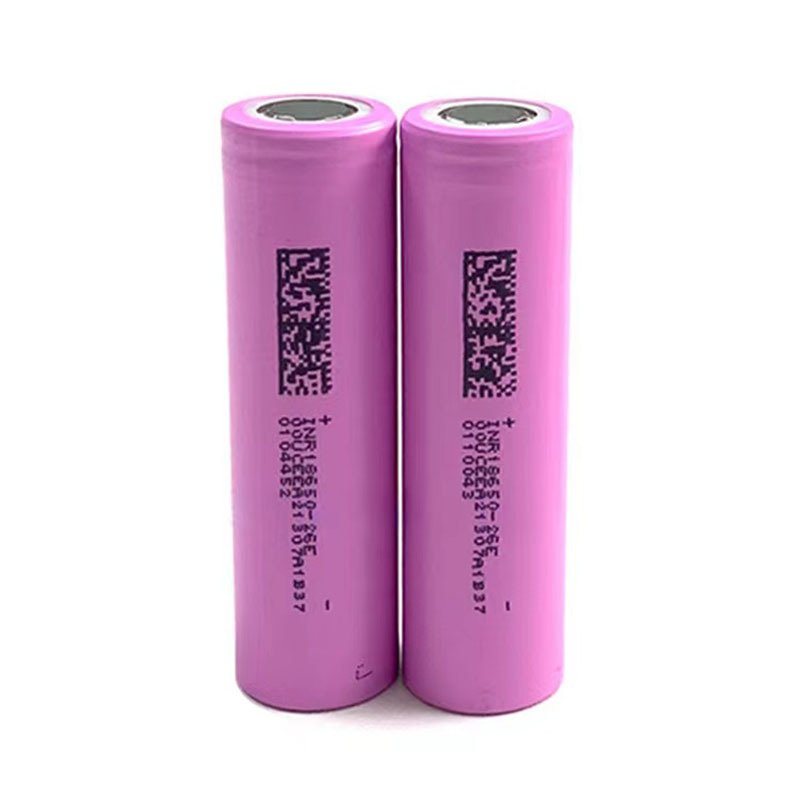
The Thermal Management Challenge in High-Discharge 18650 Packs
In the electric vehicle (E-bike) industry, the pursuit of speed and power is relentless. Riders demand immediate torque and long-range capabilities, pushing the limits of traditional battery technology. However, as discharge rates increase, so does the generation of heat. This thermal buildup is the nemesis of lithium-ion cells, leading to accelerated degradation, reduced cycle life, and in extreme cases, safety hazards.
For OEMs and battery pack designers, the challenge is clear: how do you deliver “Fast Charging Without Heat Problems”? The solution lies not just in the Battery Management System (BMS), but fundamentally in the electrochemical design of the 18650 cells themselves. A cell engineered for low internal resistance and high thermal stability is the first line of defense against thermal runaway.
1. The Science of Heat: Why Standard Cells Fail
Before diving into solutions, it is crucial to understand the physics of heat generation in a lithium-ion cell. Heat is primarily generated through two mechanisms during charge and discharge: Joule heating (I²R losses) and reaction heat from the electrochemical process.
- Joule Heating: This is directly proportional to the square of the current (I²) and the internal resistance (R) of the cell. When an E-bike draws high currents (often 20A-30A+), even a small increase in internal resistance results in a massive spike in heat.
- Internal Resistance (IR): Standard energy cells often have higher IR. When you force high currents through them, the energy lost as heat can exceed the cell’s ability to dissipate it.
The Solution: To achieve “Fast Charging Without Heat Problems,” we must select cells with ultra-low internal resistance. This requires advancements in electrode engineering, such as using thicker electrodes with optimized porosity and highly conductive additives, to minimize resistance pathways.
2. The 18650 Renaissance: Power vs. Energy
Many engineers assume that to solve heat issues, they must switch to larger form factors like the 21700. However, the 18650 remains the most cost-effective and mechanically robust solution for many mid-power E-bike applications. The key is selecting the right chemistry.
A. IMR (LiNiMnCoO2) vs. INR (LiNiCoMnAlO2)
While both are Nickel-based chemistries, the specific doping and structural stability differ. For E-bikes, INR and IMR chemistries are preferred over standard ICR (Cobalt) due to their superior thermal stability and tolerance to high currents.
B. The Power Cell Architecture
Standard “Energy” 18650 cells (e.g., 3500mAh) prioritize capacity. In contrast, “Power” cells (e.g., 2000mAh – 2500mAh variants) are designed with:
- Thicker Current Collectors: To handle high amperage without melting.
- High-Porosity Separators: To allow rapid ion flow, reducing concentration polarization and heat.
- Optimized Electrolyte Formulation: To maintain high ionic conductivity even at elevated temperatures.
3. Top 5 Fast Charging 18650 Cells for E-Bike Applications
Based on electrochemical performance and real-world application data, here are the top 5 cells engineered to minimize heat generation during high-load operations.
1. ISR18650-2200: The High-Current Specialist
This cell is specifically designed for applications where “Fast Charging Without Heat Problems” is a requirement. With a nominal capacity of 2200mAh, it sacrifices some energy density for massive power delivery.
- Key Specs: 2200mAh, 11A Max Continuous Discharge.
- Thermal Advantage: Engineered with a low-tortuosity electrode structure, it maintains a temperature rise of less than 15°C under 10A continuous discharge, making it ideal for high-performance E-bikes.
- Application: Heavy-duty E-bikes, high-speed scooters, and performance power tools.
2. INR18650-2000: The Rugged Workhorse
For standard E-bike applications, the 2000mAh variant offers the perfect balance. It is less prone to voltage sag under load compared to higher capacity cells.
- Key Specs: 2000mAh, 20C Discharge Rate (40A peak).
- Thermal Advantage: The 20C rating indicates it is built for high-speed reactions. Its internal resistance is typically below 25mΩ, ensuring minimal heat generation during rapid energy transfer.
- Application: Mid-range E-bikes, entry-level electric scooters, and commercial delivery bikes.
3. INR18650-2500: The Balanced Performer
Stepping up in capacity, the 2500mAh cell is a favorite for longer-range E-bikes that still require high power.
- Key Specs: 2500mAh, 15C Discharge Rate.
- Thermal Advantage: While holding more energy, it utilizes a modified nickel-manganese chemistry that reduces exothermic reaction rates. This allows for sustained high-current output without the thermal throttling often seen in standard cells.
- Application: Commuter E-bikes, folding E-scooters, and portable energy storage for E-bikes.
4. INR18650-3000: The Efficiency Optimized
Pushing the boundary of what a power cell can be, the 3000mAh variant is designed for efficiency.
- Key Specs: 3000mAh, 20A Max Continuous Discharge.
- Thermal Advantage: This cell uses advanced thermal interface materials within the electrode coating. This acts like a “heat sink” at the micro-level, spreading heat evenly and preventing hot spots that can damage the cell.
- Application: High-endurance E-bikes, cargo E-bikes, and high-performance drones.
5. INR18650-3300: The Smart Compromise
For applications needing extended range without sacrificing too much power, the 3300mAh is the optimal compromise.
- Key Specs: 3300mAh, 9.9A Max Continuous Discharge.
- Thermal Advantage: Featuring a thicker, heat-resistant ceramic separator, this cell provides a safety buffer. While its continuous current is lower than the 2000mAh variant, its thermal stability ensures it runs cooler than standard high-capacity cells under similar loads.
- Application: Smart home energy systems integrated with E-bikes, long-range personal transporters.
4. System-Level Solutions: Beyond the Cell
Selecting the right 18650 cell is only half the battle. To truly solve “Fast Charging Without Heat Problems,” a holistic system approach is necessary.
A. Thermal Interface Materials (TIMs)
Even with low-IR cells, pack-level heat management is vital. Using thermally conductive gap fillers between cells and the chassis can lower the overall pack temperature by up to 20%. This prevents heat from being trapped and fed back into the cells.
B. BMS Optimization
A Battery Management System (BMS) designed for high-power applications must have accurate current sensing and temperature monitoring. It should dynamically adjust the charge and discharge curves based on real-time cell temperature, not just voltage.
C. Airflow Design
The mechanical design of the E-bike frame plays a significant role. Passive cooling through strategic venting, or active cooling with small fans, can significantly extend the life of the cells selected from the list above.
5. The Future: 21700 and 32700 Integration
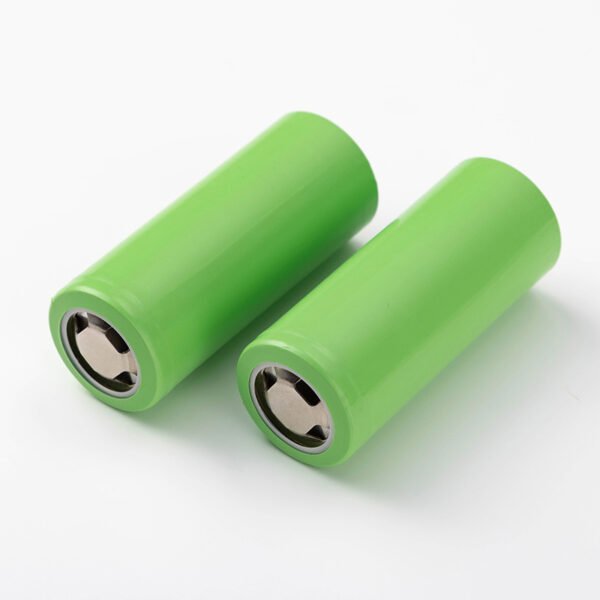
While the 18650 remains dominant, the future of “Fast Charging Without Heat Problems” lies in larger formats. The 21700 and 32700 cells offer even lower internal resistance due to their larger electrode surface area.
- 21700 Advantage: Higher energy density with lower resistance per Wh. A single 21700 cell can often replace a 3S or 4S configuration of 18650s, reducing the number of weld points (a major source of resistance and heat).
- 32700 Advantage: These are essentially “giant power cells” capable of handling massive currents with negligible heat rise, perfect for high-voltage E-bike systems.
6. Conclusion: Partnering for Performance
Solving the thermal challenge in E-bikes requires a partnership between the cell manufacturer and the pack integrator. By selecting the correct high-power 18650 chemistry—such as the ISR, INR, or IMR variants listed above—and combining it with intelligent thermal management, OEMs can deliver the performance riders demand without compromising safety or longevity.
At CNS Battery, we specialize in providing cylindrical battery cells engineered for the rigors of the electric vehicle market. Whether you need the compact power of the 18650, the balanced performance of the 21700, or the brute force of the 32700, our team is ready to assist you in finding the perfect solution.
Ready to optimize your E-bike battery for high performance and low heat? Explore our full range of cylindrical battery cells or contact our technical team today to discuss your specific requirements.
- Explore our Product Range: Cylindrical Battery Cell Products
- Contact Our Experts: Contact Us
- Learn more about our manufacturing capabilities: Battery Manufacturer in China