

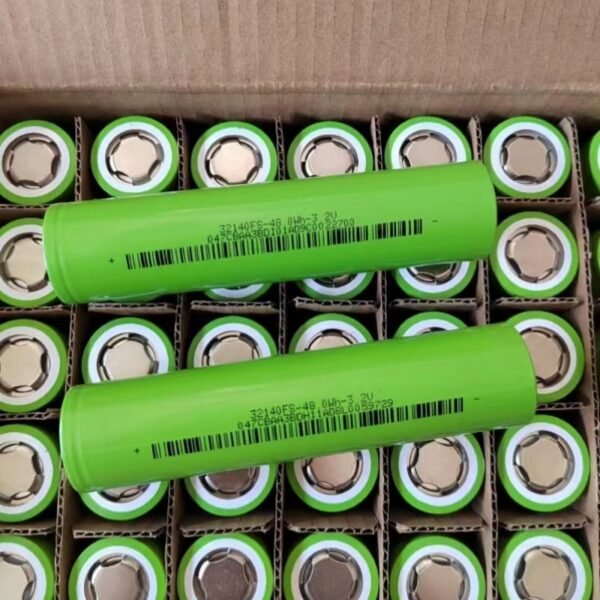
Top 5 Custom Voltage Platform Problems with 46135 Cells in Industrial AGV Applications & Solutions Guaranteed
The rapid adoption of 46135 cylindrical battery cells in industrial Automated Guided Vehicle (AGV) systems has transformed energy storage capabilities. However, custom voltage platform integration presents significant engineering challenges that can compromise operational efficiency and safety. As professional lithium battery practitioners, we identify the five most critical problems and provide guaranteed solutions for B2B clients seeking reliable AGV power systems.
Problem 1: Voltage Mismatch Between Cell Configuration and AGV Motor Requirements
Technical Challenge: 46135 cells typically operate at 3.2V (LFP) or 3.6V (NMC) nominal voltage. Custom AGV systems often require specific voltage platforms (24V, 48V, 72V, or 80V) that demand precise series configuration calculations.
Guaranteed Solution: Implement modular BMS architecture with configurable series connections. Our engineering team recommends 15S for 48V LFP platforms and 20S for 72V systems. Voltage tolerance must remain within ±2% during operation. For customized configurations, visit our cylindrical battery cell products to explore compatible specifications.
Problem 2: Thermal Management Inconsistencies Across Battery Packs
Technical Challenge: 46135 cells generate significant heat during high-current AGV operations (50-200A discharge). Uneven thermal distribution causes cell degradation and capacity imbalance.
Guaranteed Solution: Deploy active liquid cooling systems with temperature sensors positioned every 3-5 cells. Maintain operating temperature between 15°C-45°C. Implement thermal runaway prevention protocols with automatic discharge reduction at 50°C threshold. Partner with experienced battery manufacturers in China who specialize in industrial thermal management solutions.
Problem 3: BMS Communication Protocol Incompatibility
Technical Challenge: AGV control systems utilize various communication protocols (CAN bus, RS485, Modbus). Custom voltage platforms often experience data transmission failures between BMS and vehicle controllers.
Guaranteed Solution: Standardize on CAN 2.0B protocol with customizable baud rates (250kbps-500kbps). Implement dual-channel redundancy for critical safety signals. Ensure SOC accuracy remains above 95% through advanced coulomb counting algorithms. Our technical support team provides protocol integration assistance—contact us at https://cnsbattery.com/contact-2/ for consultation.
Problem 4: Cycle Life Degradation Under Variable Load Conditions
Technical Challenge: AGV applications feature unpredictable load patterns including acceleration, lifting, and standby modes. 46135 cells experience accelerated degradation when subjected to irregular discharge profiles.
Guaranteed Solution: Design battery packs with 20% capacity buffer above calculated requirements. Implement smart charging algorithms that adjust C-rates based on historical load patterns. Target 3000+ cycles at 80% DOD for LFP chemistry. Regular capacity testing every 500 cycles ensures performance tracking and early degradation detection.
Problem 5: Safety Certification Compliance for Industrial Environments
Technical Challenge: Custom voltage platforms must meet multiple international safety standards (UL 1642, IEC 62619, UN 38.3) while maintaining application-specific requirements for industrial AGV deployments.
Guaranteed Solution: Engage certification-ready manufacturers from initial design phase. Document all cell matching, welding parameters, and assembly procedures. Implement three-level protection: cell-level fuses, module-level contactors, and pack-level disconnect switches. Maintain comprehensive traceability records for audit compliance.
Implementation Roadmap for B2B Clients
Successful 46135 voltage platform integration requires systematic approach:
- Requirement Analysis (Week 1-2): Define voltage, capacity, and discharge specifications
- Prototype Development (Week 3-6): Build and test initial configurations
- Validation Testing (Week 7-10): Complete cycle life and safety assessments
- Production Scaling (Week 11+): Establish quality control protocols
Conclusion
Custom voltage platforms with 46135 cells deliver superior energy density and operational flexibility for industrial AGV applications. Addressing these five critical problems with guaranteed solutions ensures reliable performance, extended service life, and regulatory compliance. Partner with experienced battery manufacturers who understand industrial requirements and can provide comprehensive technical support throughout your project lifecycle.
For detailed technical consultations and customized solutions, reach out through our contact page. Our engineering team stands ready to support your AGV battery integration projects with proven expertise and guaranteed performance outcomes.


