

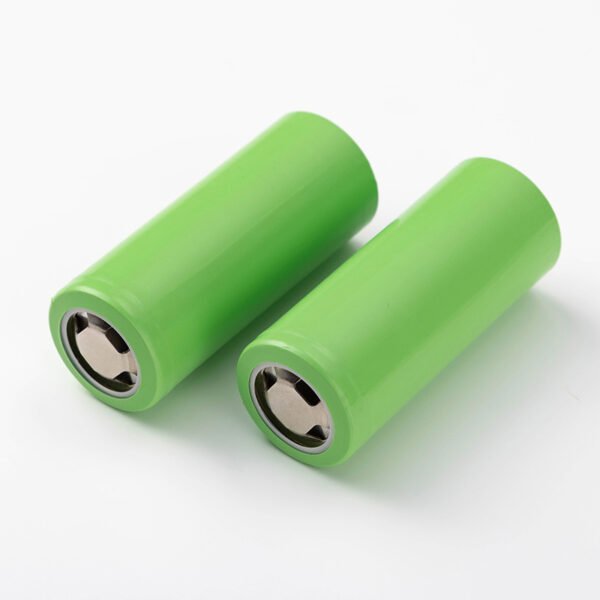
Top 21700 LFP Cells for AGV & Warehouse Robots 2026
The autonomous guided vehicle (AGV) and warehouse robotics industry is experiencing unprecedented growth in 2026, with lithium iron phosphate (LFP) 21700 cylindrical cells emerging as the preferred power solution. This comprehensive analysis examines why 21700 LFP cells dominate the material handling sector, delivering optimal balance between energy density, safety, and cycle life for demanding industrial applications.
Why 21700 LFP Cells Lead the AGV Market
The 21700 form factor represents a strategic evolution from the traditional 18650 standard, offering approximately 30-50% higher capacity while maintaining compatible manufacturing processes. For AGV and warehouse robot applications, this translates to extended operational runtime without significant redesign of battery compartments. LFP chemistry further enhances this advantage through superior thermal stability and extended cycle life exceeding 3,000-5,000 full charge cycles.
Key technical specifications driving adoption include nominal voltage of 3.2V, typical capacity ranging from 4,000-5,500mAh, and continuous discharge rates supporting 1C-3C depending on application requirements. The olivine crystal structure of LFP cathode materials provides inherent safety benefits, eliminating thermal runaway risks associated with nickel-based chemistries—a critical consideration for unmanned warehouse environments.
Critical Performance Parameters for Industrial Deployment
Energy Density vs. Power Density Trade-offs
Warehouse robots require balanced performance between energy storage and power delivery. 21700 LFP cells typically achieve 160-190 Wh/kg gravimetric energy density, sufficient for 8-12 hour shift operations. High-power variants support peak discharge currents up to 10A per cell, enabling rapid acceleration and incline navigation without voltage sag.
Temperature Performance Characteristics
Industrial facilities operate across diverse climate conditions. Quality 21700 LFP cells maintain 90%+ capacity retention between -10°C to 45°C ambient temperatures. Advanced battery management systems (BMS) integrate thermal monitoring to prevent operation outside safe parameters, ensuring consistent performance across global deployment locations from North American distribution centers to European logistics hubs.
Cycle Life and Total Cost of Ownership
The economic case for 21700 LFP extends beyond initial procurement costs. With proper charging protocols limiting depth of discharge to 80%, cells achieve 4,000+ cycles before reaching 80% initial capacity. This translates to 5-7 year operational lifespan in typical warehouse duty cycles, significantly reducing replacement frequency and total cost of ownership compared to alternative chemistries.
Manufacturing Quality and Supply Chain Considerations
Selecting reliable battery manufacturers remains paramount for AGV integrators. China has emerged as the dominant production hub, hosting vertically integrated supply chains from raw material processing through cell assembly. Established manufacturers implement ISO 9001 quality management systems, automated production lines achieving 99.5%+ consistency rates, and comprehensive testing protocols including capacity grading, internal resistance matching, and safety validation.
For procurement teams evaluating suppliers, critical verification points include UN38.3 transportation certification, IEC 62619 industrial battery safety compliance, and traceability systems enabling cell-level tracking throughout operational lifespan. Reputable manufacturers provide detailed specification sheets, test reports, and technical support for integration engineering.
Integration Best Practices for AGV Applications
Successful deployment requires systematic approach to battery pack design. Parallel configurations typically range from 4P-16P depending on current requirements, while series connections establish system voltage (commonly 24V, 48V, or 72V platforms). Cell matching within 50mV voltage tolerance and 5mΩ resistance tolerance minimizes balancing currents and extends pack longevity.
Charging infrastructure must align with cell characteristics. LFP chemistry benefits from constant current-constant voltage (CC-CV) charging profiles with termination at 3.65V per cell. Fast-charging capabilities support 0.5C-1C rates, enabling opportunity charging during scheduled breaks without accelerating degradation.
Future Outlook and Technology Evolution
The 2026 landscape continues evolving with manganese-doped LFP variants offering enhanced voltage characteristics, and silicon-composite anodes incrementally improving energy density. However, proven 21700 LFP technology maintains competitive position through manufacturing maturity, cost optimization, and extensive field validation across millions of deployed units globally.
For AGV manufacturers and warehouse automation integrators, partnering with established battery suppliers ensures access to consistent quality, technical documentation, and long-term supply continuity. Comprehensive evaluation should encompass cell performance data, manufacturer credentials, after-sales support capabilities, and geographic service coverage.
Conclusion
21700 LFP cells represent the optimal power solution for 2026 AGV and warehouse robot applications, balancing performance, safety, and economics. Success requires careful supplier selection, proper integration engineering, and adherence to charging best practices. For detailed product specifications and manufacturer qualification, explore comprehensive resources at https://cnsbattery.com/battery-manufacturers-in-china/ and review cylindrical cell offerings at https://cnsbattery.com/products-3/cylindrical-battery-cell/. Technical teams seeking direct consultation can connect through https://cnsbattery.com/contact-2/ for application-specific guidance and quotation support.
The transition to electrified material handling continues accelerating, with 21700 LFP technology positioned as the foundational power source enabling next-generation warehouse automation across global markets.


