

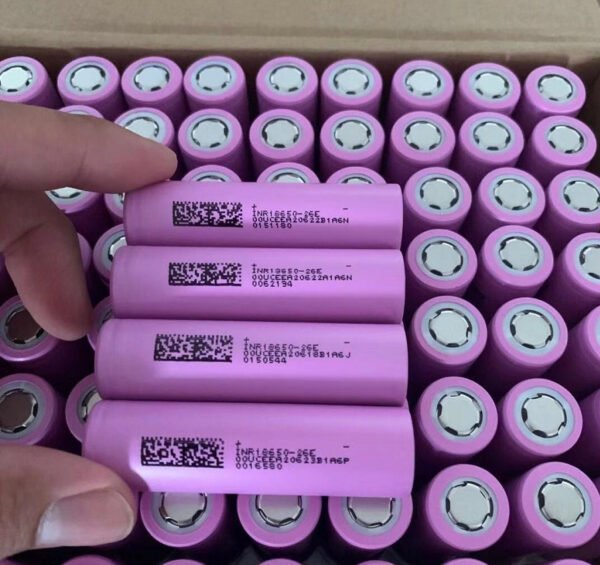
Test Report Attached Battery Cell: Ensuring Quality and Compliance for Industrial Applications
In the rapidly evolving landscape of lithium battery manufacturing, the phrase “Test Report Attached Battery Cell” has become a critical indicator of product reliability and transparency. For engineers, technical procurers, and B2B decision-makers sourcing battery cells from China, understanding what this designation means—and why it matters—is essential for mitigating risk and ensuring project success. At CNS BATTERY, every cylindrical battery cell shipped comes with comprehensive test documentation, providing verifiable data on performance, safety, and compliance.
Why Test Reports Matter in Battery Cell Procurement
A test report is not merely a formality; it is a technical document that validates the electrochemical integrity of each battery cell. For lithium-ion cells, key parameters include capacity, internal resistance, voltage stability, cycle life, and thermal behavior. These metrics directly impact the performance of end applications, whether in consumer electronics, energy storage systems, or electric mobility solutions.
When procuring from battery manufacturers in China, international buyers must verify that suppliers provide authentic, third-party validated test reports. This documentation serves as proof that cells meet declared specifications and comply with international safety standards such as UN38.3, IEC62133, and UL certifications.
Core Technical Parameters in Battery Cell Test Reports
1. Capacity and Energy Density
Capacity, measured in milliampere-hours (mAh) or ampere-hours (Ah), indicates the total charge a battery cell can deliver under specified conditions. Energy density (Wh/kg or Wh/L) reflects how much energy is stored per unit mass or volume. Test reports should detail capacity retention rates after defined charge-discharge cycles, typically at 0.5C or 1C rates. For cylindrical cells, consistent capacity across production batches is a hallmark of quality manufacturing. Explore our range of cylindrical battery cells for applications requiring high energy density and reliable performance.
2. Internal Resistance and Voltage Stability
Internal resistance (IR) affects power delivery efficiency and heat generation during operation. Lower IR values indicate better conductivity and reduced energy loss. Test reports should include IR measurements at multiple states of charge (SOC), as resistance varies with cell voltage. Voltage stability under load is equally critical; significant voltage drop during discharge suggests poor cell quality or aging.
3. Cycle Life and Degradation Analysis
Cycle life defines how many charge-discharge cycles a cell can endure before capacity falls below 80% of its initial value. Quality test reports include cycle life data under various temperature conditions and discharge rates. Degradation analysis helps engineers predict long-term performance and plan maintenance schedules accordingly.
4. Safety and Thermal Testing
Safety tests evaluate cell behavior under abuse conditions, including overcharge, over-discharge, short circuit, and thermal exposure. Reports should document results from nail penetration, crush, and thermal runaway tests. These assessments are vital for applications where safety is paramount, such as medical devices or aerospace systems.
Understanding Lithium Battery Chemistry Fundamentals
To interpret test reports effectively, engineers should understand basic lithium-ion cell operation. During charging, lithium ions migrate from the cathode to the anode through the electrolyte, storing energy chemically. During discharge, ions return to the cathode, releasing electrical energy. The cathode material (e.g., NMC, LFP, LCO) determines voltage characteristics, thermal stability, and cycle life. Anode materials, typically graphite or silicon-composite, affect capacity and charging speed.
Electrolyte composition influences ionic conductivity and operating temperature range. Separator quality prevents internal short circuits while allowing ion flow. Understanding these components helps engineers evaluate whether test report data aligns with expected cell chemistry behavior.
CNS BATTERY: Transparency Through Documentation
At CNS BATTERY, we recognize that trust is built through transparency. Every battery cell we manufacture undergoes rigorous in-house testing, with results compiled into detailed test reports attached to each shipment. This practice ensures that our global partners receive verifiable data supporting their quality assurance processes.
Our commitment extends beyond documentation. We maintain ISO-certified production facilities, implement strict quality control protocols, and welcome third-party audits. For technical inquiries or to request sample test reports, please contact us directly. Our engineering team is ready to support your project requirements with data-driven solutions.
Best Practices for Evaluating Battery Cell Test Reports
When reviewing test reports from potential suppliers, consider the following checklist:
- Report Authenticity: Verify that reports include test dates, equipment details, and technician signatures.
- Sample Size: Ensure testing was conducted on statistically significant sample sizes, not single units.
- Test Conditions: Confirm that test parameters (temperature, C-rate, voltage cutoffs) match your application requirements.
- Compliance Certifications: Check for references to international safety and transport standards.
- Traceability: Batch numbers and production dates should be clearly documented for traceability.
Conclusion: Making Informed Procurement Decisions
The designation “Test Report Attached Battery Cell” represents more than a marketing claim—it is a commitment to quality, transparency, and accountability. For engineers and procurers sourcing from China, demanding comprehensive test documentation is a fundamental risk mitigation strategy.
CNS BATTERY stands ready to support your battery procurement needs with fully documented, high-performance cylindrical cells. By prioritizing suppliers who provide authentic test reports, you ensure project reliability, regulatory compliance, and long-term partnership success.
For further information on our testing protocols or to discuss your specific application requirements, visit our contact page or explore our product catalog. Partner with a manufacturer who values data-driven quality assurance as much as you do.


