
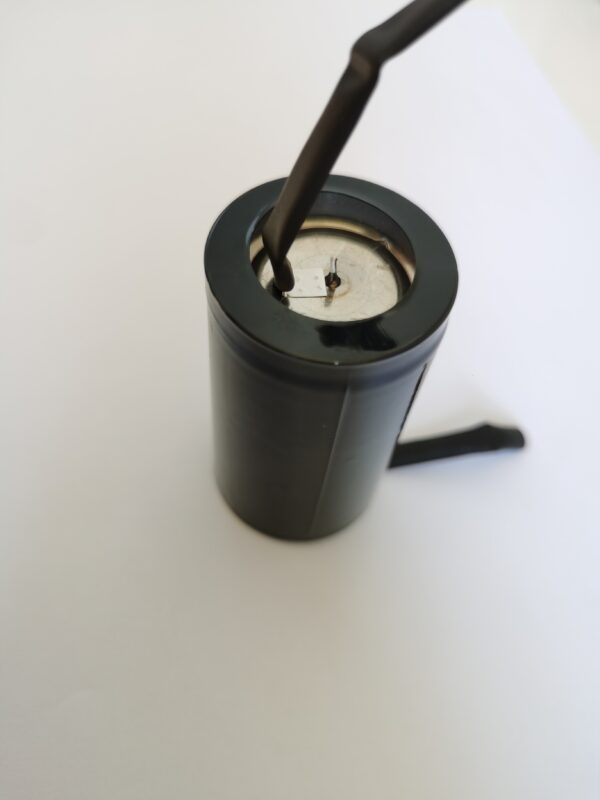
Tadiran TL-5101/S 3.6V 1/2 AA Li-SOCl₂ Battery Replacement: The Ultimate Technical Guide
Are you struggling to find a reliable, high-performance replacement for the Tadiran TL-5101/S 3.6V 1/2 AA Li-SOCl₂ battery? As a Senior Lithium Battery Engineer, I understand the critical nature of finding a drop-in replacement that maintains the stringent voltage stability and pulse power characteristics required by industrial meters and IoT devices.
The Tadiran TL-5101/S is a benchmark in the industry, known for its robustness in extreme temperatures. However, supply chain constraints or cost optimization often lead engineers to seek alternatives. This guide provides a precise technical teardown of the TL-5101/S specifications and offers a rigorous methodology for testing potential replacements, ensuring your system’s integrity remains uncompromised.
🧪 Technical Deconstruction: The DNA of the TL-5101/S
To successfully replace the Tadiran TL-5101/S, one must first understand its core chemical and electrical architecture. This is not merely a battery; it is an electrochemical system engineered for longevity.
1. The Chemistry: Lithium-Thionyl Chloride (Li-SOCl₂)
The “S” in TL-5101/S denotes its specific construction optimized for high pulse currents. Unlike standard Lithium Manganese Dioxide (Li-MnO₂) cells, this chemistry utilizes Lithium metal as the anode and Thionyl Chloride as both the cathode and electrolyte solvent.
- Nominal Voltage: 3.6V (A standard for industrial applications).
- Energy Density: Extremely high, allowing for a long service life even in 1/2 AA formats.
- Passivation Layer: A critical characteristic of Li-SOCl₂ cells is the formation of a Lithium Chloride passivation film on the anode. This film prevents self-discharge but creates a voltage delay during pulse operation.
2. Pulse Power Capability
The TL-5101/S is specifically designed for applications requiring periodic high-current pulses (e.g., AMR/AMI meters, tracking devices). The “S” version features a unique internal structure that minimizes voltage drop under load compared to standard “P” versions.
Key Specification: When replacing this unit, the replacement must handle a minimum pulse current that prevents the voltage from sagging below the operating threshold of your device (typically 2.0V – 2.2V under load for microprocessors).
3. Physical and Environmental Specifications
- Dimensions: 1/2 AA (Approx. 25.0mm Height x 14.0mm Diameter).
- Temperature Range: Designed to operate from -55°C to +85°C. Any replacement must match this thermal resilience to avoid field failures in harsh environments.
🛠️ Methodology for Replacement & Testing
Replacing a primary lithium cell is not a “plug-and-play” scenario. It requires a rigorous validation process to ensure the replacement battery does not introduce a “voltage delay” that crashes your microcontroller.
Step 1: The Voltage Delay Test (The “Killer” Parameter)
Because Li-SOCl₂ cells have a passivation layer, when a load is applied, the voltage initially drops before recovering. This is the most common cause of failure in replacements.
- Test Protocol: Apply a resistive load equivalent to your device’s peak current draw.
- Measurement: Monitor the voltage sag.
- Pass/Fail Criteria: The voltage must not drop below the minimum operating voltage of your device’s electronics for longer than the device’s tolerance (usually milliseconds). If the voltage stays low, the passivation layer is too thick, or the internal resistance is too high.
Step 2: Pulse Load Simulation
Most devices using the TL-5101/S transmit data periodically.
- Test Setup: Use a programmable electronic load to simulate a 1-second pulse every 10 minutes (or your specific duty cycle).
- Observation: Check for “voltage hysteresis.” If the battery is unused or has been in storage, the first pulse might show a significant voltage drop. Ensure your replacement battery recovers within the first few pulses.
Step 3: High-Temperature Storage Test
Li-SOCl₂ cells are known for high self-discharge at elevated temperatures, which can lead to corrosion.
- Procedure: Store the replacement battery at 60°C or 70°C for 4 weeks.
- Check: Look for any leakage, voltage depression, or increased internal resistance. A quality replacement will show minimal voltage drop after this stress test.
⚙️ CNS Battery: Engineering the Standard
Finding a battery that meets these stringent requirements involves more than just matching dimensions. It requires overcoming specific technological barriers that many manufacturers cannot clear.
1. Overcoming the Passivation Barrier
The primary technological hurdle is managing the Lithium Chloride passivation film. At CNS Battery, our solution involves proprietary cathode additives and electrode structuring.
- Technology: We utilize a high-surface-area carbon cathode combined with specific electrolyte additives. This reduces the initial voltage delay, ensuring that the replacement battery behaves identically to the TL-5101/S during the critical first pulse.
- Result: Our cells exhibit a “flat” discharge curve and rapid voltage recovery, mimicking the exact performance profile of the Tadiran benchmark.
2. Manufacturing Precision
Producing a 1/2 AA Li-SOCl₂ cell requires extreme precision. The small form factor limits the amount of active material, making the engineering of the current collector and the welding process critical.
- Process Control: Our manufacturing line utilizes laser welding in a dry room environment with dew points below -40°C. This prevents moisture contamination, which is the enemy of Lithium metal and can cause catastrophic cell failure or leakage.
3. Geographic Compliance and Adaptability
A battery is only as good as its ability to function in the local environment where it is deployed. This is where geographic-specific engineering becomes vital.
- European Union Standards: For our European clients, our replacements are fully compliant with the latest EU Battery Directives and REACH regulations. We ensure that the specific energy density is optimized for the temperate climates of Europe, where temperature extremes are less severe than in continental interiors.
- North American Standards: For the US market, our cells are engineered to handle the vast thermal swings found in regions like the Midwest or the Southwest. We focus on UL certification and ensuring the battery can handle the high pulse loads required by FCC-compliant wireless transmission modules without voltage collapse.
📝 Conclusion: The Path to a Validated Solution
Replacing the Tadiran TL-5101/S 3.6V 1/2 AA Li-SOCl₂ battery requires a partner who understands the nuances of primary lithium chemistry, not just a supplier of generic cells.
By focusing on the voltage delay and pulse power capability during your testing phase, you can avoid the common pitfalls of system failure. Furthermore, choosing a replacement engineered with specific geographic and regulatory compliance in mind ensures the longevity and legality of your deployment.
If you are currently evaluating a replacement for your specific application, do not rely on datasheets alone. Real-world pulse testing is mandatory.
Ready to validate a solution for your specific use case? Contact our engineering team today for technical datasheets and sample requests to conduct your own rigorous testing.
Contact CNS Battery Engineering Team
Explore our full range of Primary Lithium Battery Solutions designed for industrial reliability.
