
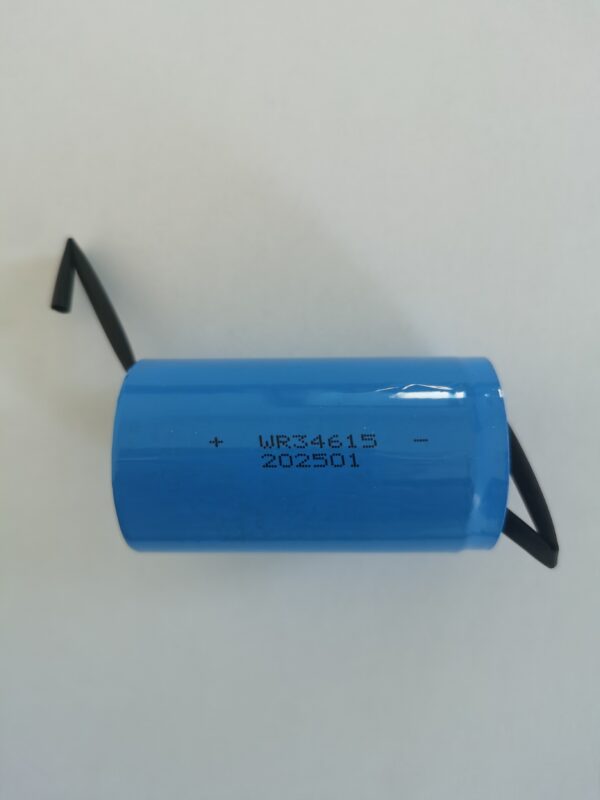
Navigating South Korea Customs: A Technical Guide to Importing Lithium Batteries
South Korea stands as a global leader in high-tech manufacturing and electric mobility. For B2B importers, this presents a massive opportunity. However, the Korean market is renowned for its stringent safety standards and complex customs procedures. Successfully entering this market requires more than just a product; it requires a deep understanding of the KC (Korea Certification) framework and the technical specifications that underpin it.
This guide is designed for procurement managers, engineers, and business owners looking to import lithium batteries into South Korea. We will dissect the compliance requirements, explore the technical data needed for customs clearance, and provide actionable steps for a smooth market entry.
1. The Regulatory Landscape: KC Certification and MSDS
Before your shipment clears customs, it must pass the regulatory gauntlet. South Korea mandates the KC Mark (Korea Certification) for electrical and electronic products, governed by the Korea Agency for Technology and Standards (KATS).
The Mandatory KC Mark
The KC Mark is not optional. It verifies that your lithium batteries meet Korean industrial standards (KS standards). Unlike some regions that accept foreign certifications (like UL or CE) on a temporary basis, Korea typically requires third-party testing conducted by a KATS-accredited laboratory.
- The Process: Application -> Sample Testing -> Factory Inspection -> KC Mark Issuance.
- The Data: To pass testing, your battery must have a robust technical dossier. This includes the Safety Data Sheet (SDS/MSDS) and detailed test reports on overcharge, short-circuit, and crush resistance.
The MSDS: Your Technical Passport
The Safety Data Sheet (SDS), often referred to as MSDS (Material Safety Data Sheet), is the single most important document for chemical and battery imports. It is the technical “passport” that tells Korean customs exactly what is inside your shipment.
- Language Requirement: While English is widely accepted in trade, having the SDS translated into Korean significantly speeds up the customs review process and reduces the risk of misinterpretation.
- Content Accuracy: The SDS must precisely match the technical specifications of your product. Any discrepancy between the SDS and the physical battery can result in immediate rejection at the border.
Expert Tip: Do not use generic SDS templates. Each battery chemistry (NMC, LFP, etc.) and form factor requires a specific, up-to-date SDS generated from actual test data.
2. Technical Specifications: Matching Product to Market Demand
South Korea’s industrial landscape is diverse, ranging from consumer electronics to heavy-duty logistics. Your technical specifications must align with the specific application to ensure not just compliance, but market fit.
Consumer Electronics: Compact Power
The Korean consumer market demands high energy density in a compact form. For products like power banks or portable devices, Cylindrical and Pouch Cells are the standard.
- Technical Focus: High discharge rates and thermal stability. The Battery Management System (BMS) is critical here to prevent swelling and ensure rapid charging safety.
Industrial & Logistics: Robust Performance
For the burgeoning logistics sector in cities like Incheon and Busan, Prismatic Cells are the workhorses. These are used in forklifts and automated guided vehicles (AGVs).
- Technical Focus: Cycle life and durability. Industrial batteries must withstand continuous charge/discharge cycles in warehouse environments. The structural integrity of the prismatic cell is superior for these high-vibration applications.
Electric Vehicles: Precision Engineering
Korea is home to major automotive players. If your import involves modules for EVs or LEVs (Light Electric Vehicles), the specifications become incredibly precise.
- Technical Focus: Module integration and thermal runaway prevention. You cannot simply import “cells”; you often need to import “systems” that are ready for integration into the Korean OEM’s design.
Product Selection Guide:
| Application | Recommended Form Factor | Key Technical Parameter |
|---|---|---|
| Consumer Electronics | Cylindrical / Pouch | High Energy Density (Wh/kg) |
| Industrial Equipment | Prismatic | Long Cycle Life (>3000 cycles) |
| EV/LEV Modules | Custom Module | Thermal Runaway Resistance |
3. Customs Clearance: The Documentation Hurdle
Even with the perfect product, a paperwork error can halt your shipment for weeks. Here is a checklist of the specific documents required by Korean customs for lithium battery imports.
The “Big Three” Documents
- Commercial Invoice: This must clearly state the Harmonized System (HS) Code. For lithium batteries, this is typically 8507.60. The value declared must include the cost of the battery and any intellectual property fees.
- Packing List: This must detail the net weight of the lithium content, not just the gross weight of the box.
- Bill of Lading (B/L) or Air Waybill (AWB): This must be consigned correctly to the Korean importer of record.
The Specialized Data Sheet
Beyond the standard paperwork, Korean customs officials are increasingly requesting the UN 38.3 Test Summary. This document proves that the battery has passed the UN Manual of Tests for the Transport of Dangerous Goods.
- The UN 38.3 Requirement: This test includes altitude simulation, thermal test, vibration, shock, external short circuit, impact/crush, overcharge, and forced discharge. Without this summary, your shipment may be flagged as “dangerous goods” and detained.
4. Case Study: Streamlining Import for a Seoul-Based E-Bike Manufacturer
To illustrate the practical application of these rules, let us examine a recent case involving a Seoul-based manufacturer of high-performance e-bikes.
The Challenge
The client needed a reliable supply of NMC (Nickel Manganese Cobalt) pouch cells. Their previous supplier in China provided generic cells with incomplete SDS documentation. This resulted in a 45-day delay at Incheon Customs, causing the manufacturer to miss their peak sales season.
The Technical Solution
Our engineering team collaborated with the client to define the exact specifications:
- Chemistry: NMC 811 (80% Nickel) for high power-to-weight ratio.
- Form Factor: Custom Pouch Cell to fit the e-bike frame design.
- Compliance: We provided a Korean-translated SDS and the full UN 38.3 Test Summary prior to shipment.
The Result
The new shipment cleared customs in under 72 hours. Furthermore, by providing the precise technical specifications (including the BMS communication protocol), the client was able to integrate the batteries into their production line without any re-tooling.
Key Takeaway: Compliance is not just about passing a test; it is about providing the right data (MSDS, UN 38.3) to the right people (Customs, Engineers) at the right time.
5. Why Partner with a Specialist Manufacturer?
Importing lithium batteries into South Korea is not a “one-size-fits-all” operation. It requires a manufacturer who understands the nuances of international trade and the specific demands of the Korean market.
The Value of Customization
A generic catalog product will rarely meet the exact voltage, dimension, or discharge requirements of your Korean application. You need a partner who offers customized requirements services.
The Assurance of Quality
Korean buyers expect perfection. You need a supplier with a Quality Management system certified to international standards (ISO 9001). This ensures that every batch of cells meets the exact specification stated on your SDS.
The Speed of Delivery
Time is money. A manufacturer with advanced logistics capabilities and experience shipping to Incheon or Busan can drastically reduce your lead times.
6. Moving Forward: Your Next Steps
Navigating the South Korean market requires a blend of technical expertise and regulatory knowledge. Whether you are looking for standard Cylindrical Battery Cells for a new power tool line or custom Battery System Development for an industrial application, the key is to start with the data.
- Verify Your Specs: Ensure your product meets KS standards.
- Prepare Your Docs: Have your SDS and UN 38.3 reports ready in English and Korean.
- Partner Wisely: Choose a manufacturer who provides not just cells, but technical support and compliant documentation.
If you are ready to bring your lithium battery project to the Korean market, we are here to help you with the technical specifications and compliant manufacturing you need.
Explore our full range of customizable lithium battery solutions and ensure your next import is seamless.
Need specific technical advice for your South Korea import? Contact our sales engineers today.
