

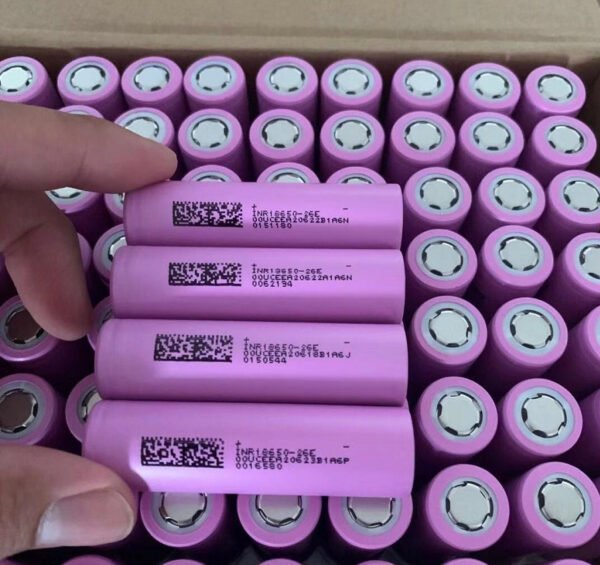
Solar Storage OEM Pain Points Solved by 18650 LiFePO4 Cylindrical Batteries: 2026 Buyer’s Guide
The solar energy storage market continues its rapid expansion in 2026, with OEM manufacturers facing increasingly complex challenges in battery selection, supply chain reliability, and performance optimization. Among various battery technologies, 18650 LiFePO4 cylindrical cells have emerged as a strategic solution addressing critical pain points for solar storage OEMs worldwide.
Core OEM Challenges in Solar Storage Manufacturing
Solar storage OEMs encounter five fundamental challenges that directly impact profitability and market competitiveness:
1. Supply Chain Instability
Fluctuating raw material costs and inconsistent cell availability create production bottlenecks. Many OEMs struggle with lead times exceeding 12-16 weeks, disrupting project timelines and customer commitments.
2. Safety Compliance Complexity
Meeting international safety standards (UN38.3, IEC62619, UL1973) requires extensive documentation and testing. Non-compliance risks shipment rejections and liability exposure.
3. Cycle Life Performance Gaps
Traditional lithium-ion chemistries deliver 2,000-3,000 cycles, insufficient for solar applications requiring 10+ year operational lifespans. Premature degradation increases total cost of ownership.
4. Thermal Management Limitations
High-temperature environments common in solar installations accelerate battery degradation. Inadequate thermal stability compromises system reliability.
5. Customization Constraints
Standard battery configurations rarely match specific OEM requirements for voltage, capacity, and form factor, forcing costly engineering compromises.
How 18650 LiFePO4 Cylindrical Cells Address These Pain Points
Extended Cycle Life & Durability
LiFePO4 chemistry delivers 4,000-6,000+ full cycles at 80% depth of discharge, significantly outperforming NCM alternatives. This translates to 10-15 year operational lifespans in solar storage applications, reducing replacement frequency and lifetime costs. The stable olivine crystal structure minimizes capacity fade even under demanding charge-discharge patterns typical of solar energy harvesting.
Enhanced Safety Profile
The intrinsic thermal stability of LiFePO4 chemistry eliminates thermal runaway risks associated with cobalt-based chemistries. Operating temperature ranges extend from -20°C to 60°C, accommodating diverse installation environments without complex cooling systems. This safety advantage simplifies certification processes and reduces insurance costs for OEM partners.
Supply Chain Reliability
Established manufacturing ecosystems for 18650 cylindrical cells ensure consistent availability. Standardized dimensions (18mm diameter × 65mm length) enable multi-vendor sourcing strategies, reducing single-supplier dependency. For OEMs seeking verified manufacturing partners, exploring options through battery manufacturers in China provides access to vetted production facilities with proven export capabilities.
Cost Optimization at Scale
Volume production of 18650 LiFePO4 cells achieves economies of scale unavailable in prismatic or pouch alternatives. Current market pricing ranges from $0.85-$1.20 per cell at 10,000+ unit quantities, delivering competitive $150-$200/kWh pack-level costs. This cost structure enables OEMs to maintain healthy margins while remaining price-competitive in tender scenarios.
Modular Design Flexibility
The cylindrical form factor enables flexible pack configurations through series-parallel arrangements. OEMs can customize voltage (12V/24V/48V) and capacity (50Ah-500Ah+) without retooling production lines. Standardized cell dimensions simplify mechanical design and thermal management integration.
Technical Selection Criteria for OEM Buyers
When evaluating 18650 LiFePO4 suppliers, prioritize these specifications:
| Parameter | Minimum Requirement | Optimal Target |
|---|---|---|
| Capacity | 2,000mAh | 2,500-3,000mAh |
| Continuous Discharge | 1C | 2-3C |
| Cycle Life | 4,000 cycles | 6,000+ cycles |
| Operating Temperature | -10°C to 55°C | -20°C to 60°C |
| Certifications | UN38.3 | UN38.3 + IEC62619 + UL1973 |
| Consistency (Capacity) | ±50mAh | ±30mAh |
Quality Assurance & Verification Protocols
Reputable manufacturers provide comprehensive documentation including:
- Batch traceability with unique cell identification codes
- Incoming quality control reports with statistical process control data
- Third-party certification from recognized testing laboratories
- Warranty terms clearly defining performance guarantees and replacement procedures
OEMs should request sample cells for independent validation before committing to volume orders. Performance testing should verify capacity, internal resistance, cycle life, and thermal behavior under application-specific conditions.
Strategic Partnership Considerations
Selecting the right battery cell supplier extends beyond product specifications. Evaluate potential partners on:
- Production capacity alignment with your scaling requirements
- Technical support availability for integration challenges
- Lead time consistency across order volumes
- After-sales service responsiveness and problem resolution
For OEMs seeking comprehensive product portfolios and technical collaboration, reviewing available cylindrical battery cell options enables informed comparison of specifications and customization capabilities.
2026 Market Outlook & Procurement Recommendations
The 18650 LiFePO4 market continues maturing with improved energy density (160-180 Wh/kg) and reduced pricing pressure from manufacturing scale expansion. OEMs should:
- Secure multi-year supply agreements to lock in favorable pricing
- Diversify supplier base across 2-3 qualified manufacturers
- Invest in incoming quality testing capabilities
- Maintain buffer inventory equivalent to 8-12 weeks production
- Establish direct communication channels with manufacturer technical teams
Conclusion
18650 LiFePO4 cylindrical batteries represent a proven solution addressing the core pain points facing solar storage OEMs in 2026. Extended cycle life, enhanced safety, supply chain stability, and cost competitiveness position this technology as the optimal choice for residential and commercial solar storage applications.
OEM manufacturers prioritizing long-term partnerships with qualified cell suppliers will gain sustainable competitive advantages in the expanding global solar storage market. For detailed technical consultations and customized procurement solutions, contact our team to discuss your specific requirements and volume projections.
The transition to LiFePO4 cylindrical technology is no longer a question of feasibility but of strategic timing. OEMs acting decisively in 2026 will capture market share while competitors navigate the limitations of legacy battery chemistries.


