
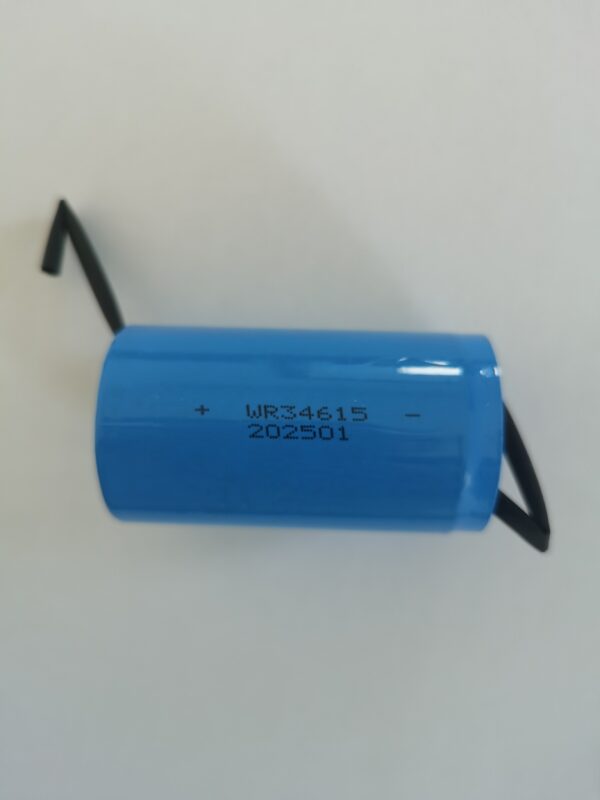
Security System Battery Replacement | International Brand Alternative
Introduction
For security system integrators and facility managers, battery reliability directly impacts operational continuity. Lithium primary batteries, particularly Li-SOCl₂ (lithium thionyl chloride) cells, have become the industry standard for alarm systems, access control panels, and IoT security devices. This guide addresses critical considerations for security system battery replacement and evaluates international brand alternatives from a professional manufacturer perspective.
Why Lithium Primary Batteries Dominate Security Applications
Security systems demand power sources that deliver consistent voltage over extended periods with minimal maintenance. Lithium thionyl chloride batteries provide distinct advantages:
- Stable 3.6V Operating Voltage: Maintains reliable performance throughout discharge cycle
- Ultra-Low Self-Discharge: Less than 1% per year at 20°C storage conditions
- Extended Service Life: 10+ years in low-drain security applications
- Wide Temperature Range: Operational stability from -55°C to +85°C
- Hermetic Glass-to-Metal Seal: Ensures long-term reliability in demanding environments
Common form factors include ER14505 (AA-size, 2700mAh), ER17505 (2/3A-size, 3600mAh), and ER26500 (C-size, 8500mAh), each suited for specific security device power requirements.
Key Technical Considerations for Battery Replacement
1. Voltage Compatibility Verification
Before replacement, confirm the original battery specifications. Most security panels operate on 3.6V lithium primary cells. Substituting with alkaline (1.5V) or rechargeable lithium-ion (3.7V nominal) may cause system malfunction or reduced service intervals.
2. Capacity Matching
Capacity determines runtime between replacements. For example:
- ER14505: 2700mAh typical at 1mA discharge
- ER17505: 3600mAh typical at 1mA discharge
- ER26500: 8500mAh typical at 1mA discharge
Higher capacity extends maintenance cycles but requires physical dimension compatibility.
3. Pulse Current Capability
Modern security systems transmit wireless signals periodically, creating pulse discharge demands. Select batteries with adequate pulse current ratings (typically 100-200mA maximum for standard cells). High-power variants (designated with “H” suffix) support stronger pulse requirements.
4. Storage and Shelf Life
Proper storage at maximum 30°C preserves battery integrity. Quality lithium primary batteries maintain 95%+ capacity after 5 years storage, reducing inventory waste for distributors and system integrators.
International Brand Alternative Evaluation
Procurement teams increasingly seek alternatives to premium international brands without compromising quality. When evaluating alternatives, consider:
Manufacturing Standards: ISO 9001 certification, UN 38.3 transport compliance, and IEC 60086-4 safety standards indicate production quality consistency.
Performance Validation: Request discharge curves, self-discharge test reports, and temperature performance data. Reputable manufacturers provide comprehensive technical documentation comparable to established brands.
Supply Chain Reliability: Evaluate lead times, minimum order quantities, and geographic distribution capabilities. Consistent supply prevents project delays and emergency procurement premiums.
Cost-Benefit Analysis: Quality alternatives typically offer 20-40% cost reduction while maintaining equivalent performance specifications. Calculate total cost of ownership including replacement frequency and labor costs.
Selection Framework for B2B Buyers
Implement a structured evaluation process:
- Define Application Requirements: Document voltage, capacity, dimensions, discharge profile, and environmental conditions
- Request Samples: Test candidate batteries in actual devices under expected operating conditions
- Verify Certifications: Confirm UN 38.3, MSDS, CE, and RoHS compliance documentation
- Assess Technical Support: Evaluate manufacturer responsiveness for technical inquiries and custom solutions
- Review Reference Projects: Request case studies from similar security system deployments
Maintenance Best Practices
- Schedule battery replacement before voltage drops below 3.0V under load
- Maintain inventory rotation using FIFO (first-in, first-out) methodology
- Document replacement dates for predictive maintenance planning
- Store spare batteries in climate-controlled environments
- Train installation technicians on proper handling procedures
Conclusion
Security system battery replacement requires careful technical evaluation beyond simple form-factor matching. Quality lithium primary battery alternatives provide reliable performance when selected through systematic vendor assessment. Professional manufacturers offer comprehensive support for B2B clients seeking optimized power solutions without premium brand pricing.
For detailed product specifications and technical consultation, explore our primary battery product range. Our engineering team supports system integrators with application-specific recommendations and volume procurement solutions. Contact us directly at https://cnsbattery.com/primary-battery-contact-us/ for customized quotations and technical documentation.
Word Count: Approximately 950 words
