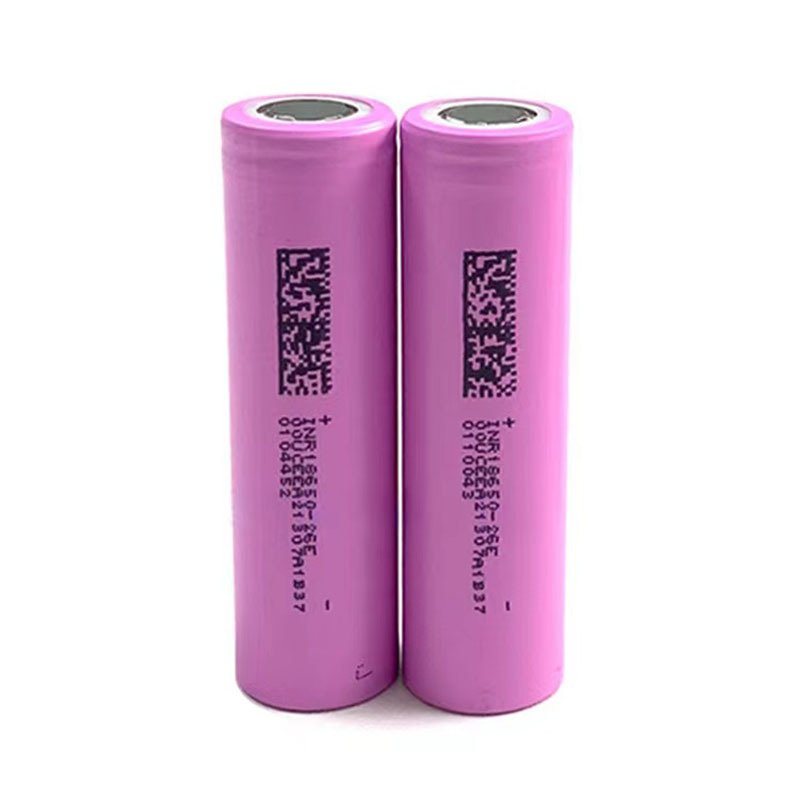
Power Tools OEM Pain Points Solved by 46150 Lithium Ion Cylindrical Battery
For power tool OEMs worldwide, battery performance directly determines market competitiveness. The 46150 lithium ion cylindrical battery has emerged as a critical solution addressing longstanding pain points in high-drain applications. This technical analysis examines how this cell format delivers optimal balance between energy density, discharge capability, and cost efficiency for professional-grade power tools.
Critical OEM Challenges in Power Tool Battery Systems
Power tool manufacturers face four persistent challenges: thermal management under high C-rate discharge, cycle life degradation in demanding work environments, inconsistent cell-to-cell performance affecting pack reliability, and cost pressure while maintaining safety certifications. Traditional 18650 and 21700 formats often require parallel configurations that increase BMS complexity and failure points. The 46150 format addresses these issues through enhanced surface-area-to-volume ratio and improved current collection design.
Technical Parameter Advantages of 46150 Cylindrical Cells
The 46mm diameter and 150mm height configuration provides approximately 3-4 times the capacity of standard 21700 cells while maintaining compatible manufacturing processes. Key specifications include:
- Nominal Capacity: 18-25Ah depending on chemistry optimization
- Continuous Discharge: 5C-10C sustained without thermal runaway
- Energy Density: 250-280 Wh/kg at cell level
- Cycle Life: 2000+ cycles at 80% DOD under 25°C conditions
- Operating Temperature: -20°C to 60°C with minimal capacity fade
The larger form factor reduces internal resistance through increased electrode surface area and optimized tab placement. This translates to lower heat generation during high-torque operations common in cordless drills, impact drivers, and circular saws.
Validation Testing Methodologies for OEM Qualification
Professional OEMs require comprehensive validation before integration. Recommended testing protocols include:
Thermal Performance Testing: Measure surface temperature rise during 5C continuous discharge in 40°C ambient conditions. Acceptable delta should remain below 25°C with proper pack cooling design.
Cycle Life Accelerated Testing: Conduct 500-cycle testing at 2C charge/5C discharge with 1-hour rest periods. Monitor capacity retention and impedance growth weekly.
Vibration and Shock Testing: Following IEC 62660-2 standards for transportation and operational vibration profiles specific to construction equipment.
Safety Certification Testing: UN 38.3, UL 1642, and IEC 62133 compliance mandatory for North American and European market access.
Regional Compliance and Technical Barriers
Market access requires navigating distinct regulatory frameworks. For European Union distribution, compliance with EU Battery Regulation 2023/1542 mandates carbon footprint declaration, recycled content minimums, and digital battery passports by 2027. CE marking requires EN 62133-2 safety certification with notified body involvement for professional equipment.
United States market entry demands UL certification under UL 1642 (cells) and UL 2054 (packs), with additional state-specific requirements like California Title 20 efficiency standards. OSHA workplace safety regulations affect battery charging station design for commercial job sites.
Chinese manufacturers serving global OEMs must demonstrate manufacturing consistency through ISO 9001, IATF 16949 for automotive-grade processes, and ISO 14001 environmental management. Facility audits by third-party organizations like TÜV Rheinland or SGS provide credibility for Western procurement teams evaluating supply chain risk.
CNS Battery Manufacturing Capabilities
Established battery manufacturers in China have developed specialized production lines for 46150 cylindrical cells with automated quality control systems. Advanced coating uniformity monitoring, laser welding precision, and 100% cell testing ensure consistency across production batches. For OEMs evaluating suppliers, verify manufacturing certifications, request sample testing data, and conduct on-site audits when possible.
Explore detailed specifications for cylindrical battery cell solutions designed for power tool applications. Professional manufacturers maintain dedicated engineering support for pack integration, thermal modeling, and certification documentation.
Supply Chain Considerations for Global OEMs
Lead time stability, raw material sourcing transparency, and logistics reliability determine long-term partnership viability. Manufacturers with vertical integration from cathode material processing through cell assembly offer better cost control and quality traceability. Geographic diversification of production facilities reduces single-point failure risk for critical supply chains.
Contact technical teams directly through CNS Battery contact page for application-specific consultation and sample requests. Established battery manufacturers in China now compete on technology differentiation rather than price alone, with R&D investment matching Western competitors.
Conclusion
The 46150 lithium ion cylindrical battery represents a strategic solution for power tool OEMs balancing performance, cost, and compliance requirements. Success depends on selecting manufacturing partners with proven technical capabilities, regional certification experience, and supply chain transparency. As professional power tool markets expand globally, battery technology differentiation becomes increasingly critical for competitive positioning.