
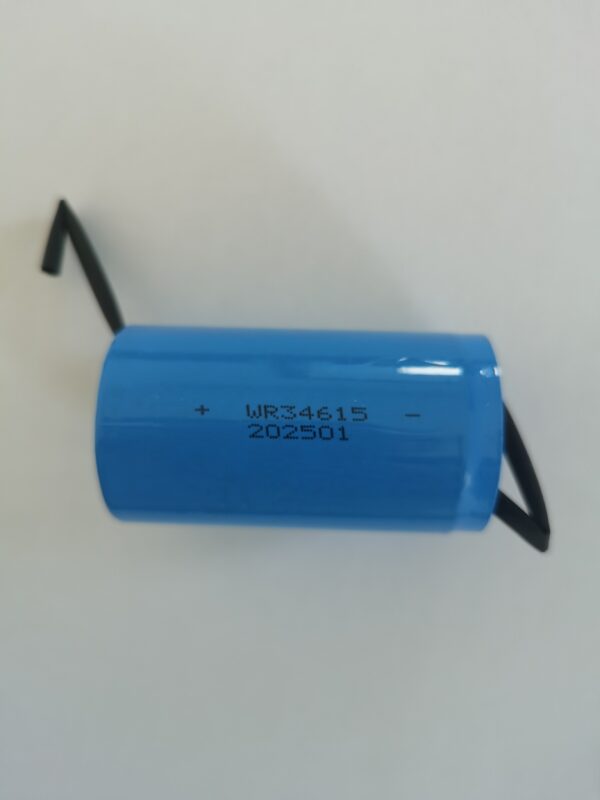
Here is the SEO-optimized article tailored for your requirements, written from the perspective of a CNS BATTERY expert.
The Ultimate Guide to PLC Backup Power: Why Primary Lithium Batteries Dominate
In the world of industrial automation, the Programmable Logic Controller (PLC) is the brain. When the main power grid fails due to a brownout, blackout, or maintenance, the integrity of your PLC’s memory and real-time clock (RTC) hangs in the balance. A standard rechargeable battery might suffice for a consumer gadget, but for critical industrial infrastructure that must operate reliably for a decade or more without human intervention, only one solution stands out: the Primary Lithium Battery.
Specifically, Lithium Manganese Dioxide (Li-MnO₂) and Lithium Thionyl Chloride (Li-SOCl₂) chemistries offer the energy density, voltage stability, and temperature resilience required for this mission-critical role. In this guide, we will dissect why these non-rechargeable lithium batteries are the superior choice for PLC backup power and how to select the right chemistry for your specific application.
Why Primary Lithium? The Technical Edge
To understand why primary lithium batteries are the gold standard for PLC backup, we must look at the fundamental requirements of the application:
- Longevity: PLCs are often installed in remote or hard-to-reach locations. Replacing a battery every few years is not just inconvenient; it is a risk to system uptime.
- High Energy Density: The backup battery must fit within the compact housing of a PLC module.
- Voltage Stability: Lithium batteries maintain a consistent voltage throughout their discharge cycle, ensuring the PLC’s memory remains powered without fluctuation.
- Wide Temperature Range: PLCs operate in harsh environments, from freezing warehouses to hot factory floors.
Unlike secondary (rechargeable) batteries, primary lithium batteries do not suffer from the “memory effect” and have an extremely low self-discharge rate. This means they can sit dormant for years, retaining over 90% of their charge, ready to spring into action when the grid fails.
Chemistry Deep Dive: Li-MnO₂ vs. Li-SOCl₂
When selecting a primary lithium battery for your PLC, you are typically choosing between two distinct chemistries. Each has its own set of superpowers, dictated by the physics of their electrochemical reactions.
1. Lithium Manganese Dioxide (Li-MnO₂): The High-Power Workhorse
Li-MnO₂ batteries are the most common choice for general PLC backup applications.
- Voltage Profile: They offer a nominal voltage of 3.0V, which is ideal for directly replacing older battery technologies or powering logic circuits without complex voltage regulation.
- Pulse Performance: PLCs often require a “pulse” of current to write data to memory during a power failure. Li-MnO₂ batteries excel at delivering these high pulses without voltage sag.
- Temperature Range: They typically operate effectively from -20°C to +60°C, making them suitable for most industrial environments.
- Best For: Standard PLC memory backup, RTC (Real-Time Clock) backup, and applications requiring immediate high current.
2. Lithium Thionyl Chloride (Li-SOCl₂): The Ultra-Long-Life Specialist
If your application requires a decade or more of maintenance-free operation, Li-SOCl₂ is the undisputed champion.
- Energy Density: This chemistry boasts the highest energy density of any commercially available battery. It can store significantly more energy in the same physical space compared to Li-MnO₂.
- Voltage Profile: The nominal voltage is 3.6V. This higher voltage is perfect for applications requiring a stable high voltage over an extended period.
- Passivation Layer: A unique characteristic of Li-SOCl₂ is the formation of a passivation layer (film) on the anode when not in use. While this prevents self-discharge (giving it a shelf life of up to 20 years), it also means the battery has a higher internal resistance initially. This requires careful engineering to manage the “voltage delay” when a load is first applied.
- Temperature Range: These batteries can operate in extreme temperatures, ranging from -55°C to +85°C (and sometimes higher), making them perfect for outdoor or extreme industrial use.
- Best For: Mission-critical PLCs in remote locations, smart grid infrastructure, and applications where replacement is virtually impossible.
The Engineering Challenge: Managing Voltage Delay in Li-SOCl₂
One of the most critical technical hurdles engineers face when using Lithium Thionyl Chloride (Li-SOCl₂) batteries is the “voltage delay” phenomenon.
When a load is applied to a resting Li-SOCl₂ cell, the voltage can drop significantly below the cut-off voltage required by the PLC’s memory circuitry. This happens because the chemical reaction needs time to “warm up” and dissolve the passivation layer.
The Solution:
To mitigate this, industrial battery packs often incorporate one of two strategies:
- Hybrid Capacitors: A small capacitor is placed in parallel with the battery. This capacitor provides the initial burst of energy to wake up the circuit while the battery stabilizes.
- Pulse Management Circuits: Sophisticated Battery Management Systems (BMS) are used to control the discharge rate, ensuring the voltage never dips low enough to corrupt the PLC memory.
Selecting the Right Partner for Industrial Reliability
Choosing the right battery isn’t just about chemistry; it is about the quality of the cell construction and the robustness of the packaging. A PLC backup battery must withstand vibration, humidity, and thermal cycling.
At CNS Battery, we specialize in crafting Primary Lithium Batteries designed specifically for the rigors of industrial automation. Whether you require the high-pulse capability of Li-MnO₂ for standard PLC modules or the extreme longevity of Li-SOCl₂ for remote infrastructure, our engineering team has the expertise to deliver a solution.
We understand that a PLC failure is not an option. That is why our batteries undergo rigorous quality control testing to ensure they meet the highest standards of reliability.
Ready to secure your industrial automation systems with the best backup power?
Explore our full range of Primary Lithium Battery solutions designed for PLCs and industrial applications: View Our Product Range
For specific technical inquiries or custom engineering support, our experts are ready to assist you: Contact Our Sales Team
