

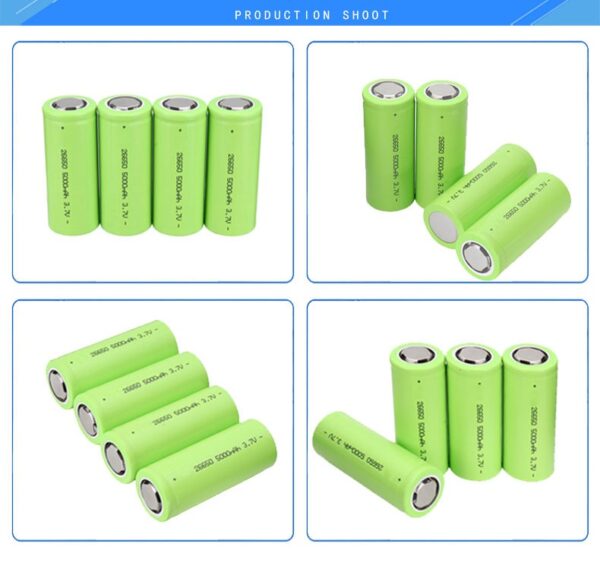
Here is the professional article tailored for the B2B engineering and procurement audience, focusing on Overheat Protection in Cylindrical Battery Cells.
Advanced Overheat Protection in Cylindrical Battery Cells: Engineering Safety
In the rapidly evolving landscape of energy storage and portable power, the integration of robust overheat protection mechanisms within cylindrical battery cells is no longer optional—it is a fundamental requirement for safety and longevity. As global demand surges for high-density energy solutions, manufacturers face the critical challenge of balancing performance with thermal stability. At the forefront of this innovation, CNS Battery employs advanced engineering techniques to ensure that their cylindrical cells operate safely even under extreme conditions. This article delves into the technical principles behind thermal management in lithium-ion batteries and explores how specific design features mitigate the risks associated with thermal runaway.
The Science of Thermal Runaway and Safety Mechanisms
To understand overheat protection, one must first grasp the electrochemical processes within a lithium-ion cell. During normal operation, lithium ions shuttle between the cathode and anode through an electrolyte. However, excessive heat—often caused by overcharging, external short circuits, or high ambient temperatures—can trigger exothermic reactions within the cell. If uncontrolled, this leads to Thermal Runaway, a self-sustaining cycle where rising temperatures cause further chemical breakdown, leading to catastrophic failure.
Modern cylindrical cells combat this through a multi-layered approach:
- Positive Temperature Coefficient (PTC) Devices: Located at the cell’s top, these devices act as resettable fuses. As temperature rises, the resistance of the PTC material increases exponentially, effectively cutting off the current flow and halting the heat generation process.
- Current Interrupt Devices (CID): This is a mechanical safety switch built into the cell’s seal. If internal pressure rises due to gas generation (a precursor to thermal events), the CID physically disconnects the internal electrode from the top cap, permanently breaking the circuit.
- Thermally Stable Electrode Materials: The selection of cathode materials, such as Nickel Manganese Cobalt (NMC) or Lithium Iron Phosphate (LFP), plays a crucial role. Advanced formulations offer higher thermal decomposition temperatures compared to older chemistries like Lithium Cobalt Oxide (LCO).
CNS Battery’s Approach to Thermal Management
CNS Battery distinguishes itself in the market of battery manufacturers in China by prioritizing these safety mechanisms without compromising on energy density. Their R&D capabilities are directed toward optimizing the internal architecture of their cells to dissipate heat more efficiently.
Unlike pouch or prismatic cells, the cylindrical format offers inherent structural advantages. The rigid steel or aluminum casing provides excellent mechanical strength, which helps contain internal pressures during thermal events. Furthermore, the symmetrical geometry of cylindrical cells allows for more uniform heat distribution, preventing localized hot spots that can initiate failure.
CNS Battery leverages this geometry to enhance their overheat protection systems. By utilizing automated production lines, they ensure that the internal winding tension and electrode alignment are precise, minimizing internal resistance and the subsequent heat generation during high-rate discharges.
Product Lineup: Engineered for Safety and Performance
CNS Battery provides a comprehensive range of cylindrical cells, each engineered with specific thermal characteristics to suit diverse industrial applications. The table below outlines the core specifications of their flagship product lines, highlighting their capacity and application focus.
| Model Series | Typical Capacity (Ah) | Nominal Voltage | Key Applications |
|---|---|---|---|
| 18650 Series | 0.8 – 3.8 Ah | 3.6V – 3.7V | Consumer Electronics, Power Tools, E-Bikes |
| 21700 Series | 4.0 – 6.0 Ah | 3.6V – 3.7V | Electric Vehicles, High-Performance Power Tools, ESS |
| 32700 Series | 6.0 Ah | 3.2V | High-Power Applications, Industrial Energy Storage, UPS |
Table 1: Overview of CNS Battery Cylindrical Cell Offerings
The 18650 series, a staple in the industry, is optimized for consumer electronics and medium-power tools. These cells are designed with a balance of energy density and safety, making them ideal for applications where size constraints are critical.
For applications demanding higher throughput, the 21700 series offers superior energy density and discharge efficiency. These cells are particularly noted for their application in electric vehicles and high-drain power tools, where their thermal management performance is rigorously tested. The larger surface area relative to volume allows these cells to manage heat more effectively during high-current draws.
The 32700 series represents the cutting edge of high-capacity storage. With capacities reaching 6000mAh and beyond, these cells are built for heavy-duty applications like industrial energy storage systems (ESS) and high-power UPS systems. Their robust construction ensures that even when delivering high currents, the overheat protection mechanisms remain reliable.
Applications and Industrial Relevance
The implementation of these cells extends across various sectors where safety is paramount. In the realm of Electric Vehicles (EVs) and E-Bikes, the cylindrical format’s ability to withstand vibration and thermal stress makes it the preferred choice. CNS Battery’s cells are utilized in vehicle battery packs where the collective thermal management of thousands of cells is simplified by the individual stability of each cylindrical unit.
In Consumer Electronics, from laptops to portable speakers, the reliability of the 18650 form factor ensures that devices remain cool during extended use. For Power Tools, which often operate in harsh environments and require rapid bursts of energy, the 21700 and 32700 series provide the necessary power density coupled with rugged thermal safeguards.
Partnering for Power Solutions
Selecting the right cylindrical battery cell requires a deep understanding of both the chemical composition and the mechanical safety features involved. As a leading lithium-ion cylindrical battery manufacturer, CNS Battery is committed to providing not just components, but comprehensive energy solutions.
Whether you are an engineer designing the next generation of electric scooters or a procurement manager sourcing cells for a large-scale energy storage project, understanding the nuances of overheat protection is crucial for long-term product reliability.
To consult with a technical expert regarding your specific energy needs or to request a sample for testing, please visit the Cylindrical Battery Cell product page. For direct inquiries regarding customization or bulk purchasing, contact the CNS Energy team through the Contact Information portal. Explore the full capabilities of a manufacturer dedicated to safety and innovation by visiting Battery Manufacturers in China.

