🔋 The Ultimate Guide to Nail Penetration Test Passed Batteries
In the high-stakes world of lithium-ion battery procurement, safety isn’t just a feature—it’s the foundation. As an industry insider, I often get asked: “How do I know a battery won’t turn into a thermal grenade under stress?” The answer lies in one of the most brutal torture tests a cell can endure: the Nail Penetration Test.
This article is a deep dive into what makes a “Nail Penetration Test Passed Battery” a non-negotiable standard for engineers and OEMs. We’ll dissect the physics behind the test, analyze the specific cylindrical cells from CNS BATTERY that survive this ordeal, and explain why this certification is your golden ticket to meeting EU and US safety regulations.
📌 What is a “Nail Penetration Test Passed Battery”?
Before we geek out on the technicalities, let’s define the battlefield. The Nail Penetration Test is a mandated safety evaluation under standards like IEC 62133 and UL 1642. It simulates the worst-case scenario: an internal short circuit.
The Process:
A steel nail (typically 2.8mm to 5mm in diameter) is driven directly through the center of a fully charged battery cell at a specific speed. This action physically crushes the internal layers—the anode, cathode, and separator—forcing a massive, instantaneous short circuit.
The Verdict:
A “Passed” battery must meet strict criteria:
- No Fire: The cell cannot ignite.
- No Explosion: There must be no violent rupture.
- Temperature Control: While the cell will vent gas and heat up, the temperature rise must be contained within safe limits (usually not exceeding a specific delta, e.g., 150°C or remaining below 200°C depending on the standard).
A cell that passes this test proves it has robust internal chemistry and structural integrity to handle catastrophic physical abuse without becoming a hazard.
⚙️ The Physics of Survival: Why Cylindrical Cells Excel
To understand why certain batteries pass, we need to look at the thermal runway mitigation. When a nail penetrates a cell, it creates a “hot spot.” The survival of a Cylindrical Battery Cell often hinges on the “PTC (Positive Temperature Coefficient)” effect of the current collector and the robustness of the separator.
CNS BATTERY utilizes advanced Ceramic Coated Separators. During the nail penetration, these separators act like a thermal fuse. If the temperature spikes, the ceramic layer closes the micropores, physically blocking the ion flow and halting the reaction before it cascades into fire.
Furthermore, the cylindrical geometry itself offers superior mechanical strength compared to pouch cells. The rigid steel (or aluminum) casing contains the internal pressure generated during the venting process, preventing explosion.
📊 CNS BATTERY’s Lineup: Certified Safety & Performance
CNS BATTERY subjects its industrial-grade cylindrical cells to this rigorous torture test. These cells are engineered not just to power devices, but to protect them. Below is a technical breakdown of their high-performance lineup, all designed with safety as the core mandate.
| Model Series | Key Specifications | Primary Applications | Safety Profile |
|---|---|---|---|
| CNS 18650 | 1.2Ah – 3.8Ah Capacity 3.6V – 3.7V Nominal |
Power Tools, E-Bikes, 3C Devices | Ultra-Safe chemistry with high thermal stability. |
| CNS 21700 | 4.0Ah – 6.0Ah Capacity 3.6V – 3.7V Nominal |
EVs, High-End Power Tools, ESS | Higher energy density with optimized thermal management. |
| CNS 32700 | 6.0Ah Capacity 3.2V Nominal (LiFePO4) |
UPS, Starting Power, Heavy Machinery | Super large capacity with excellent discharge and fire resistance. |
🔋 CNS 18650: The Industry Standard
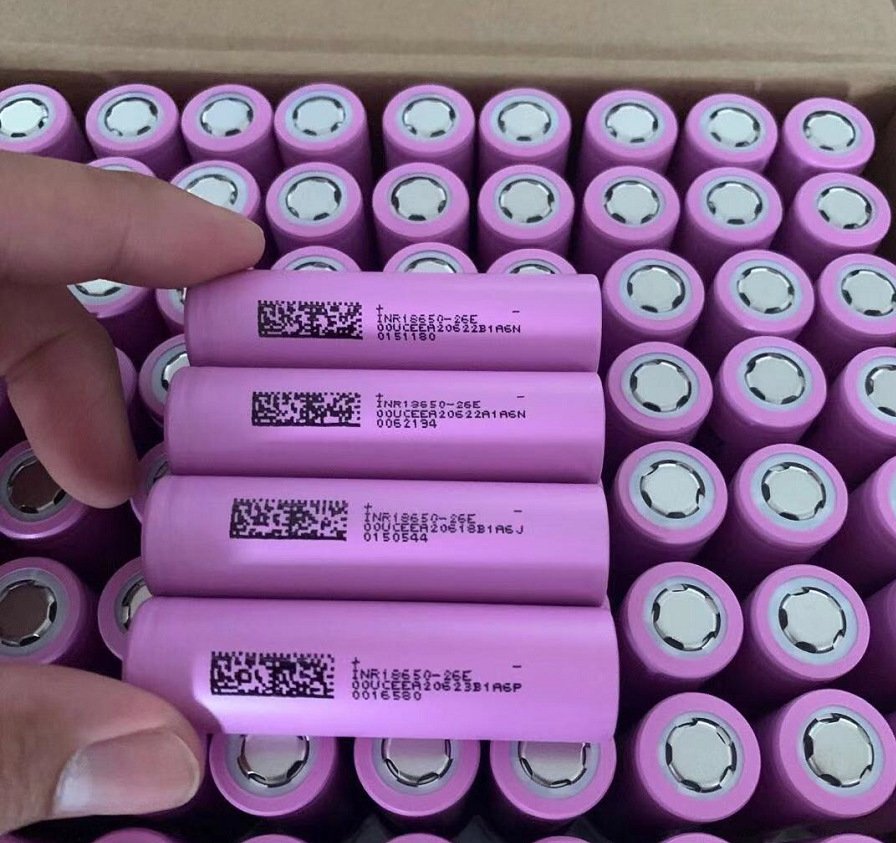
The 18650 remains the workhorse of the lithium industry. CNS offers variants ranging from the high-power ISR18650-2200 (perfect for power tools requiring high discharge rates) to the high-energy INR18650-3500 (ideal for consumer electronics). Every single model in this series undergoes the nail penetration protocol to ensure reliability in compact devices.
🔋 CNS 21700: The Future of High Density
Moving to the 21700 format is the next evolution. With a larger diameter (21mm) and height (70mm), these cells provide significantly higher energy density without sacrificing safety. For engineers designing Electric Vehicles (EVs) or high-capacity Energy Storage Systems (ESS), the 21700 series offers a lighter, more efficient solution that still passes the nail test with flying colors.
🔋 CNS 32700: Powering Heavy Industry
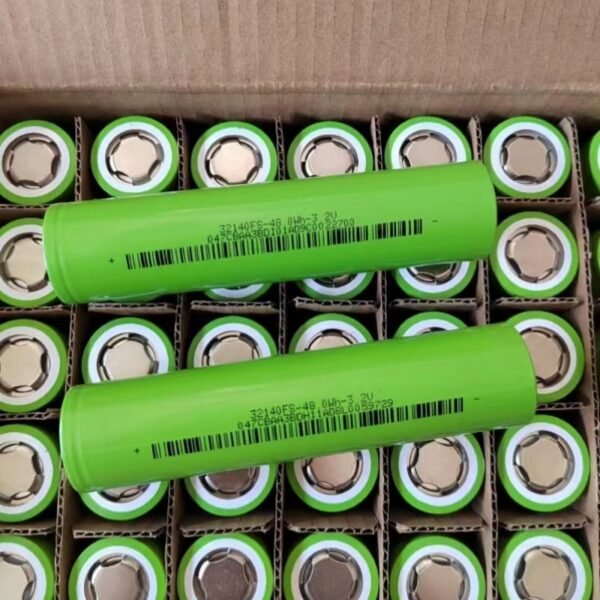
For applications requiring brute force, the 32700 cylindrical cell is unmatched. Featuring a massive 6.0Ah capacity, this cell is built for high-torque applications and backup power supplies. Its robust construction ensures that even under the stress of a nail penetration, it remains stable, making it a safe choice for critical infrastructure.
🌍 Global Compliance: Bridging the Gap for US & EU Markets
As a technical blogger, I emphasize this point heavily to my readers: Passing the Nail Penetration Test is your passport to global markets.
If you are an OEM or engineer based in the United States or the European Union, importing battery cells without this certification is a legal and logistical nightmare.
- EU Compliance (CE/ROHS): The European Union has stringent directives regarding the safety of electrical equipment. A Nail Penetration Test Passed certificate is often required for CE marking documentation, proving the product won’t pose a fire risk to consumers.
- US Market (UL Standards): Similarly, the US market relies heavily on UL certifications. Distributors and retailers in America demand proof of safety testing to mitigate liability risks.
By sourcing from a manufacturer like CNS BATTERY, which adheres to these international testing protocols, you eliminate the barrier of entry. You don’t just get a battery; you get a pre-qualified component ready for integration into your global supply chain.
📝 Conclusion: Safety is the Ultimate Performance Metric
In conclusion, when you search for a “Nail Penetration Test Passed Battery,” you are essentially searching for a partner who prioritizes engineering integrity over cost-cutting.
CNS BATTERY’s commitment to this standard across its 18650, 21700, and 32700 product lines demonstrates a mastery of material science and quality control. Whether you are designing the next generation of power tools or scaling up an energy storage project, choosing a cell that survives the nail test is choosing peace of mind.
For technical inquiries or to request the specific test reports for your engineering validation, reach out to the experts directly.
Ready to build with safety-certified cells? Explore the full range of Cylindrical Battery Cells from CNS BATTERY.
Explore Cylindrical Battery Products
Contact CNS BATTERY for Technical Support and Global Compliance Documentation:
Contact Information
Learn more about being a distinguished global customer:
Become a Global Customer