Minimal Capacity Fade 40150 Lithium Ion Cylindrical Battery Cells for Power Tools – B2B Export
The power tool industry demands battery solutions that deliver consistent performance over extended operational cycles. Among emerging formats, the 40150 lithium ion cylindrical battery cell has gained significant traction for its optimal balance between energy density and thermal management. For B2B exporters and technical procurement specialists, understanding the capacity fade characteristics of these cells is critical for long-term project viability.
Understanding the 40150 Cylindrical Cell Format
The 40150 designation refers to a cylindrical lithium ion cell with 40mm diameter and 150mm length. This format offers approximately 2.5-3 times the capacity of standard 21700 cells while maintaining compatible manufacturing processes. The larger form factor enables reduced internal resistance and improved heat dissipation—essential factors for high-drain power tool applications.
For manufacturers seeking reliable supply chains, partnering with established battery manufacturers in China ensures access to cells meeting international certification standards including UL, CE, and IEC 62619.
Capacity Fade Mechanisms in Cylindrical Cells
Capacity fade represents the gradual reduction in available energy storage over charge-discharge cycles. In 40150 cylindrical cells, three primary degradation mechanisms dominate:
SEI Layer Growth: The solid electrolyte interphase forms on the anode surface during initial cycles. While necessary for stable operation, continuous SEI thickening consumes active lithium ions, reducing overall capacity. Premium 40150 cells utilize optimized electrolyte additives to stabilize SEI formation, achieving less than 5% capacity loss after 500 cycles at 1C discharge rates.
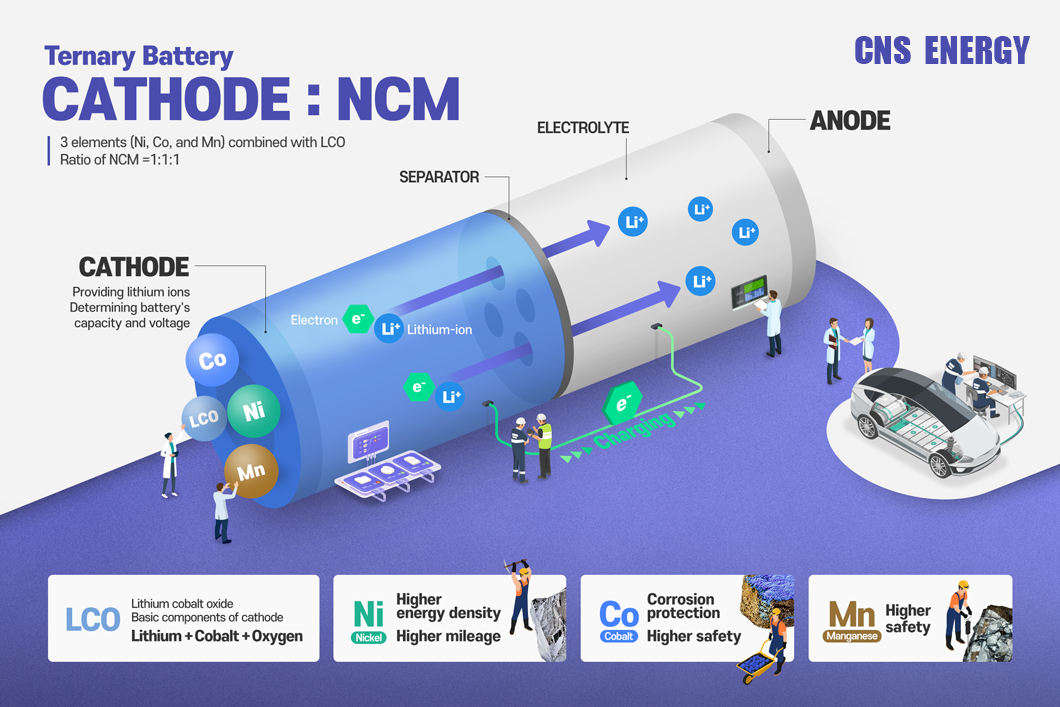
Cathode Material Degradation: High-nickel NCM cathodes offer superior energy density but experience structural changes during deep cycling. Advanced 40150 cells incorporate doped cathode materials that maintain crystal structure integrity, minimizing transition metal dissolution and oxygen release.
Lithium Plating: Under high-current charging or low-temperature operation, metallic lithium deposits on the anode surface instead of intercalating. This irreversible process accelerates capacity fade and poses safety risks. Quality 40150 cells feature enhanced anode coatings and thermal management designs that suppress plating even at 3C charging rates.
Technical Specifications for Power Tool Applications
Power tools require batteries capable of delivering sustained high-current discharge without significant voltage sag. The 40150 format excels in this regard due to its larger electrode surface area and reduced current density per unit area.
| Parameter | Typical Value |
|---|---|
| Nominal Capacity | 12,000-15,000 mAh |
| Continuous Discharge | 10-15A |
| Peak Discharge | 25-30A (10s) |
| Cycle Life | 800-1,200 cycles |
| Operating Temperature | -20°C to 60°C |
These specifications make 40150 cells suitable for professional-grade cordless drills, impact drivers, circular saws, and garden equipment requiring extended runtime between charges.
B2B Export Considerations
When sourcing 40150 cylindrical cells for international distribution, several factors require careful evaluation:
Certification Compliance: Ensure cells meet destination market requirements. North American markets require UL 1642 certification, while European distribution demands CE marking and UN 38.3 transport approval. Reputable suppliers provide complete documentation packages including test reports and material safety data sheets.
Quality Consistency: Batch-to-batch variation affects pack assembly yield and end-product performance. Request statistical process control data and sample testing before committing to large orders. Established manufacturers maintain capacity sorting within ±50mAh tolerance for premium grades.
Supply Chain Transparency: Traceability from raw materials to finished cells ensures ethical sourcing and quality accountability. Leading suppliers offer factory audits and real-time production monitoring for key B2B partners.
Explore the full range of cylindrical battery cell options available for your specific application requirements.
Minimizing Capacity Fade in Field Applications
End-user handling significantly impacts actual cycle life. Implement these best practices to maximize 40150 cell longevity:
- Temperature Management: Avoid operation above 45°C or below 0°C without thermal conditioning. Integrated battery management systems should monitor cell temperature and adjust charge/discharge limits accordingly.
- State of Charge Storage: For extended storage, maintain cells at 40-60% SOC. Full charge storage accelerates cathode degradation, while deep discharge risks copper dissolution.
- Charge Rate Optimization: While 40150 cells support fast charging, routine use of 1C or lower rates extends cycle life by 30-40% compared to maximum rate charging.
Conclusion
The 40150 lithium ion cylindrical battery cell represents a compelling solution for power tool manufacturers seeking minimal capacity fade and extended service life. Understanding degradation mechanisms, technical specifications, and proper handling protocols enables informed procurement decisions that protect both product performance and brand reputation.
For technical consultations and customized battery solutions, contact our engineering team through the official contact page to discuss your specific requirements and obtain detailed product specifications.
This article provides technical guidance for B2B professionals evaluating 40150 cylindrical cells. All specifications should be verified with manufacturers before final procurement decisions.