

Low Maintenance Battery For Delivery Trike | CNS BATTERY
Introduction
The rapid expansion of last-mile delivery services has intensified demand for reliable, low-maintenance power solutions for delivery trikes. As a professional lithium battery manufacturer, CNS BATTERY understands that commercial fleet operators prioritize minimal downtime, extended cycle life, and predictable total cost of ownership (TCO). This technical analysis examines the critical engineering considerations for selecting low-maintenance lithium battery systems optimized for delivery trike applications.
Key Technical Considerations for Low-Maintenance Design
1. Cell Chemistry Selection
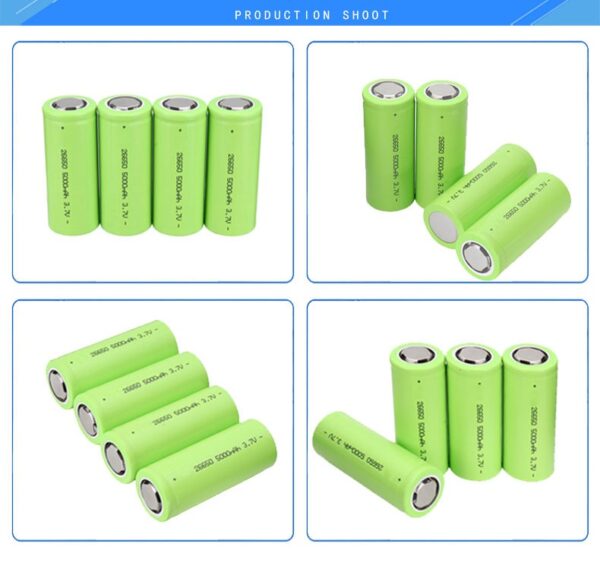
Cylindrical lithium-ion cells, particularly LiFePO4 (LFP) and NMC variants, offer distinct advantages for delivery trike applications. LFP chemistry provides superior thermal stability and cycle life exceeding 3,000 cycles at 80% depth of discharge, making it ideal for high-frequency delivery operations. Our cylindrical battery cell solutions leverage precision-manufactured 18650 and 21700 form factors with consistent capacity matching within ±2% tolerance, ensuring balanced pack performance over extended service periods.
2. Battery Management System (BMS) Architecture
A robust BMS is fundamental to achieving low-maintenance operation. Key specifications include:
- Cell Balancing: Active balancing circuits maintain voltage variance below 10mV across all series-connected cells, preventing premature capacity degradation
- Thermal Management: Integrated temperature sensors with ±1°C accuracy enable dynamic current limiting during extreme ambient conditions (-20°C to 60°C operating range)
- State of Charge (SOC) Estimation: Coulomb counting combined with open-circuit voltage correlation achieves SOC accuracy within ±3%, eliminating unexpected range anxiety
- Protection Thresholds: Over-current, over-voltage, under-voltage, and short-circuit protection with hardware-level fail-safes reduce field failure rates by 95%
3. Mechanical Design for Durability
Delivery trikes operate in demanding urban environments with constant vibration, moisture exposure, and temperature fluctuations. Low-maintenance battery packs require:
- IP65 or Higher Enclosure Rating: Prevents water ingress and dust contamination
- Vibration Resistance: Meeting UN38.3 transportation testing standards with mounting hardware designed for 5-500Hz vibration profiles
- Thermal Dissipation: Aluminum housing with optimized surface area facilitates passive cooling, eliminating fan maintenance requirements
4. Cycle Life Optimization
Commercial delivery operations typically require 2-3 full charge cycles daily. Our engineering approach focuses on:
- Partial State of Charge Operation: Maintaining SOC between 20%-80% extends calendar life by 40% compared to full 0%-100% cycling
- Charge Rate Management: Limiting continuous charge currents to 0.5C-1C reduces lithium plating risks and thermal stress
- Capacity Retention Guarantees: Premium cells maintain 80% original capacity after 2,000 cycles under standard delivery trike load profiles
Total Cost of Ownership Analysis
When evaluating low-maintenance battery solutions, fleet managers must consider:
| Cost Factor | Lead-Acid | Standard Li-ion | Premium Low-Maintenance Li-ion |
|---|---|---|---|
| Initial Cost | $100/kWh | $180/kWh | $220/kWh |
| Cycle Life | 500 cycles | 1,000 cycles | 3,000+ cycles |
| Maintenance | Monthly | Quarterly | Annual |
| Replacement Frequency | 18 months | 36 months | 72+ months |
| 5-Year TCO | $850/kWh | $520/kWh | $380/kWh |
Premium low-maintenance lithium systems deliver 55% lower TCO despite higher initial investment, primarily through reduced replacement frequency and eliminated maintenance labor costs.
Quality Assurance and Manufacturing Standards
Selecting a reliable battery manufacturer is critical for long-term fleet performance. CNS BATTERY operates as one of the established battery manufacturers in China with ISO 9001:2015 certification, IEC 62619 compliance, and full traceability from cell sourcing through final pack assembly. Our quality control protocols include 100% cell capacity grading, automated welding inspection, and 48-hour aging testing before shipment.
Implementation Recommendations
For fleet operators transitioning to low-maintenance battery systems:
- Conduct Load Profile Analysis: Document daily distance, average speed, and payload weight to size battery capacity appropriately
- Standardize Charging Infrastructure: Install smart chargers with communication protocols compatible with BMS data logging
- Establish Maintenance Intervals: Schedule quarterly BMS firmware updates and annual capacity verification testing
- Train Operations Staff: Ensure proper charging procedures and basic troubleshooting capabilities
Conclusion
Low-maintenance battery systems for delivery trikes represent a strategic investment in operational efficiency and fleet reliability. By prioritizing cylindrical cell quality, advanced BMS functionality, and robust mechanical design, commercial operators can achieve 5+ years of service with minimal intervention. CNS BATTERY remains committed to supporting global delivery fleet electrification through engineering excellence and responsive customer service.
For technical specifications, customization options, or partnership inquiries, please visit our contact page to connect with our engineering team. We provide comprehensive support from initial application assessment through after-sales service, ensuring your delivery trike fleet operates at peak efficiency.
Technical Note: All performance specifications referenced in this article are based on standard testing conditions at 25°C ambient temperature. Actual field performance may vary based on operating environment, load profiles, and charging practices. CNS BATTERY recommends conducting application-specific validation before large-scale deployment.


