
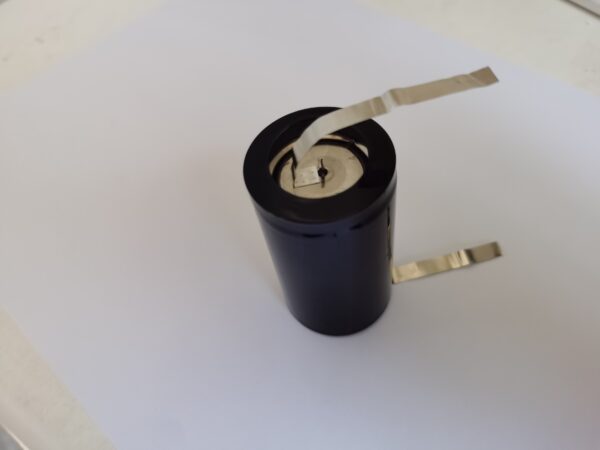
Low Internal Resistance Li-SOCl₂ Battery for Pulse Discharge: Technical Analysis for Industrial Applications
In the rapidly expanding landscape of IoT connectivity, smart metering, and remote telemetry systems across North America, Europe, and Asia-Pacific regions, the demand for reliable primary power sources capable of delivering high pulse currents has never been more critical. Low internal resistance Li-SOCl₂ (Lithium Thionyl Chloride) batteries have emerged as the definitive solution for pulse discharge applications, combining exceptional energy density with the ability to supply instantaneous high-current bursts without significant voltage depression.
Understanding Internal Resistance in Li-SOCl₂ Chemistry
The fundamental electrochemical reaction of Li-SOCl₂ batteries follows: 4Li + 2SOCl₂ → 4LiCl + S + SO₂. While traditional Li-SOCl₂ cells offer outstanding energy density (up to 590 Wh/kg) and ultra-low self-discharge rates (approximately 0.08% per month), standard designs often exhibit voltage lag during high-current pulse events due to passivation layer formation on the lithium anode.
Low internal resistance variants address this challenge through optimized electrode architecture, enhanced electrolyte formulations (LiAlCl₄-SOCl₂), and specialized separator materials. These engineering refinements reduce impedance from typical values exceeding 50Ω to below 10Ω in premium cells, enabling consistent pulse current delivery up to 100mA or higher depending on cell capacity.
Critical Pulse Discharge Applications
Smart Metering Infrastructure
Utility companies throughout the European Union and United States increasingly deploy AMI (Advanced Metering Infrastructure) systems requiring batteries capable of supporting periodic RF transmission pulses. Each communication burst demands 50-150mA for 200-500ms intervals while maintaining base load currents below 10μA between transmissions. Low internal resistance Li-SOCl₂ batteries ensure voltage remains above the 3.0V threshold throughout 10-15 year operational lifespans.
IoT Asset Tracking & GPS Devices
Global supply chain monitoring solutions operating across North America, Western Europe, and Southeast Asia require batteries that withstand temperature extremes (-40°C to +85°C) while delivering GPS fix pulses. The hybrid layer capacitor (HLC) configuration paired with low-impedance Li-SOCl₂ cells provides optimal pulse performance without compromising long-term reliability.
Industrial Telemetry & Remote Sensors
Oil & gas pipeline monitoring, agricultural soil sensors, and environmental stations deployed in remote locations depend on primary batteries that eliminate maintenance visits. Low internal resistance designs prevent voltage sag during sensor activation and data transmission cycles, ensuring uninterrupted operation in compliance with ATEX, IECEx, and UL certification requirements.
Technical Selection Criteria for B2B Procurement
When evaluating low internal resistance Li-SOCl₂ batteries for pulse discharge applications, procurement specialists should consider:
| Parameter | Standard Cell | Low IR Cell |
|---|---|---|
| Internal Resistance | 30-60Ω | 5-15Ω |
| Max Pulse Current | 30-50mA | 100-200mA |
| Voltage Lag | Significant | Minimal |
| Operating Temperature | -20°C to +60°C | -40°C to +85°C |
| Shelf Life | 10 years | 15+ years |
Key Considerations:
- Pulse Profile Analysis: Document pulse amplitude, duration, frequency, and recovery time
- Temperature Compensation: Account for increased internal resistance at sub-zero temperatures
- Regulatory Compliance: Ensure batteries meet UN38.3, RoHS, REACH, and region-specific transportation regulations
- Quality Certifications: ISO9001, ISO14001, and IEC60086-4 compliance essential for enterprise procurement
Geo-Specific Compliance Requirements
North America (USA & Canada)
Batteries must comply with UL 1642 standards and DOT 49 CFR transportation regulations. California Proposition 65 labeling may be required for certain markets.
European Union
CE marking, RoHS Directive 2011/65/EU, and Battery Directive 2006/66/EC compliance mandatory. WEEE registration required for end-of-life management.
Asia-Pacific
Country-specific certifications include PSE (Japan), KC (South Korea), and CCC (China) where applicable for imported battery products.
Why Partner with CNS BATTERY for Low Internal Resistance Li-SOCl₂ Solutions
CNS BATTERY specializes in manufacturing premium-grade primary lithium batteries engineered specifically for demanding pulse discharge applications. Our low internal resistance Li-SOCl₂ product line features:
- Proprietary electrode design minimizing passivation-induced voltage lag
- Extended temperature performance from -40°C to +85°C without capacity degradation
- Global compliance certification supporting shipments to USA, Europe, Middle East, and Asia-Pacific markets
- Customizable form factors including AA, C, D, and specialized industrial configurations
- 15+ year shelf life with less than 1% annual self-discharge
Our engineering team provides comprehensive technical support for battery selection, pulse profile optimization, and regulatory documentation—ensuring seamless integration into your IoT, smart metering, or telemetry deployments worldwide.
For detailed product specifications, technical datasheets, or customized quotations tailored to your pulse discharge requirements, visit our primary battery product catalog. Our international sales team stands ready to support your procurement needs with competitive pricing, reliable lead times, and full compliance documentation.
Contact CNS BATTERY today to discuss how our low internal resistance Li-SOCl₂ batteries can power your next-generation pulse discharge applications: https://cnsbattery.com/primary-battery-contact-us/
Optimized for industrial buyers searching “low internal resistance Li-SOCl2 battery,” “pulse discharge lithium battery,” “IoT battery supplier Europe USA,” and “smart metering battery manufacturer” across global B2B markets.
