

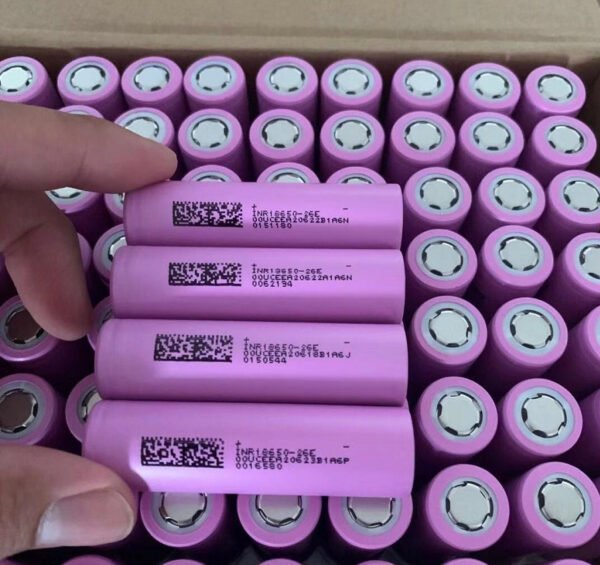
Low Internal Resistance Battery For Cordless Tools | CNS BATTERY
In the rapidly evolving power tool industry, low internal resistance battery technology has become the decisive factor determining cordless tool performance. Professional engineers and technical procurement specialists increasingly recognize that internal resistance directly impacts power output efficiency, thermal management, and overall tool runtime. CNS BATTERY specializes in delivering high-performance cylindrical battery cells engineered specifically for demanding cordless tool applications.
Understanding Internal Resistance in Lithium-Ion Batteries
Internal resistance refers to the opposition to current flow within a battery cell during charge and discharge cycles. Measured in milliohms (mΩ), lower internal resistance enables higher current delivery with minimal voltage drop and heat generation. For cordless tools requiring burst power during operation, this parameter becomes critical.
The fundamental electrochemical principle involves ion movement between anode and cathode through the electrolyte. Higher resistance creates energy loss as heat (I²R losses), reducing efficiency and accelerating cell degradation. Premium cylindrical cells optimize electrode coating uniformity, electrolyte formulation, and tab welding to minimize resistance pathways.
Key Advantages for Cordless Tool Applications
1. Enhanced Power Delivery
Low internal resistance batteries sustain higher discharge currents without significant voltage sag. Brushless motors in modern cordless drills, impact drivers, and saws demand instantaneous power spikes. Cells with resistance below 15mΩ maintain consistent torque output throughout the discharge cycle, ensuring professional-grade performance.
2. Superior Thermal Management
Heat generation correlates directly with internal resistance. Reduced resistance means less thermal stress during high-load operations, extending cell lifespan and maintaining safety margins. This is particularly crucial for tools used in continuous industrial applications where overheating triggers protective shutdowns.
3. Extended Cycle Life
Minimized internal heating reduces electrolyte decomposition and SEI layer growth. Quality cylindrical battery cells from reputable manufacturers achieve 1000+ cycles while maintaining 80% capacity retention. This translates to lower total cost of ownership for equipment manufacturers and end users.
4. Faster Charging Capability
Lower resistance enables higher charging currents without excessive temperature rise. Fast-charge protocols become viable, reducing downtime on job sites. Advanced battery management systems leverage this characteristic to optimize charge profiles dynamically.
Technical Selection Criteria for Engineers
When evaluating battery suppliers, technical procurement teams should verify:
- DC Internal Resistance (DCIR) specifications at multiple states of charge
- Temperature-dependent resistance curves across operating ranges (-20°C to 60°C)
- Consistency metrics within battery packs (cell-to-cell variation under 3%)
- Pulse discharge performance at tool-specific current profiles
- Certification compliance (UN38.3, IEC62133, UL standards)
CNS BATTERY provides comprehensive technical documentation supporting engineering validation processes. Our cylindrical battery cell lineup includes options optimized for high-drain applications with resistance values ranging from 8mΩ to 20mΩ depending on capacity requirements.
Manufacturing Excellence and Quality Assurance
Partnering with established battery manufacturers in China ensures access to mature supply chains and competitive pricing without compromising quality. Automated production lines maintain tight tolerances on electrode coating thickness, winding tension, and electrolyte filling volume—all factors influencing internal resistance consistency.
Quality control protocols include 100% DCIR testing, capacity grading, and self-discharge screening. Batch traceability systems enable root cause analysis should field issues arise. For cordless tool OEMs, this manufacturing discipline translates to predictable performance across production volumes.
Integration Considerations for Tool Designers
Battery pack architects must account for:
- Series-parallel configuration impact on total pack resistance
- Busbar and connection resistance contributions to overall system performance
- Thermal pathway design to dissipate residual heat effectively
- BMS current sensing accuracy for precise state estimation
Collaboration between cell suppliers and pack integrators early in the design phase prevents costly redesigns. CNS BATTERY offers application engineering support to optimize cell selection for specific tool platforms.
Conclusion
Low internal resistance battery technology represents a competitive advantage in the cordless tool market. Engineers specifying cells must balance resistance, capacity, cost, and safety requirements. CNS BATTERY delivers cylindrical solutions meeting these multidimensional demands with proven performance in professional tool applications.
For technical specifications, sample requests, or partnership discussions, visit our product portfolio at https://cnsbattery.com/products-3/cylindrical-battery-cell/ or learn more about our manufacturing capabilities at https://cnsbattery.com/battery-manufacturers-in-china/. Contact our engineering team directly at https://cnsbattery.com/contact-2/ to discuss your specific cordless tool battery requirements.


