

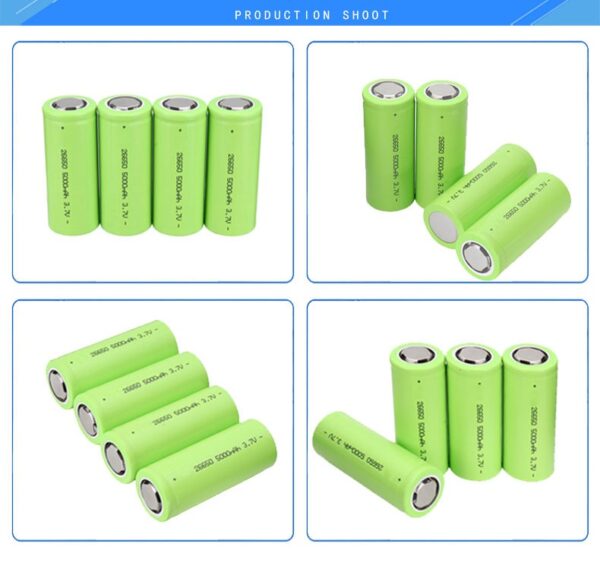
Low Heat High Rate Discharge Battery: Technical Analysis for Industrial Applications
In today’s demanding power tool, drone, and electric vehicle markets, battery performance under high discharge conditions remains a critical engineering challenge. Low Heat High Rate Discharge Battery technology represents a significant advancement in lithium-ion cell design, enabling sustained power delivery while minimizing thermal buildup. For engineers and technical procurement specialists evaluating battery solutions, understanding the underlying technology is essential for making informed decisions.
Understanding High Rate Discharge Characteristics
High rate discharge batteries are designed to deliver substantial current relative to their capacity, typically measured in C-rate. A 10C discharge rate means the battery can deliver current equal to 10 times its capacity in one hour. However, traditional high-drain cells often generate excessive heat during operation, leading to capacity degradation, safety concerns, and reduced cycle life.
The key innovation in low heat high rate discharge technology lies in optimizing internal resistance and thermal management at the cell level. By reducing impedance through advanced electrode formulations and improved electrolyte conductivity, these batteries maintain efficiency even under demanding load conditions.
Core Technical Advantages
1. Optimized Electrode Architecture
Modern cylindrical battery cells utilize specialized cathode and anode materials engineered for rapid ion transport. The electrode coating thickness, porosity, and particle size distribution are precisely controlled to minimize resistance pathways. This design approach allows for higher current flow without proportional heat generation.
2. Advanced Electrolyte Formulations
The electrolyte serves as the ion transport medium between electrodes. Low heat discharge batteries incorporate additives that enhance ionic conductivity while maintaining thermal stability at elevated temperatures. This prevents electrolyte decomposition during high-rate operations.
3. Enhanced Thermal Dissipation
Cell geometry and internal construction play crucial roles in heat management. Cylindrical formats offer superior surface-area-to-volume ratios compared to pouch cells, facilitating more efficient heat dissipation. Combined with low-resistance current collectors, this design minimizes hot spot formation.
Application Scenarios and Performance Metrics
Technical procurement teams should evaluate batteries based on specific application requirements. Common use cases include:
- Power Tools: Requiring burst currents of 20-30C with minimal voltage sag
- UAV/Drones: Demanding sustained high discharge with weight constraints
- Electric Mobility: Needing consistent power delivery across temperature ranges
Key performance indicators include continuous discharge rating, peak pulse capability, operating temperature range, and cycle life at various discharge rates. Quality manufacturers provide comprehensive datasheets with thermal imaging data and discharge curves under different load conditions.
Selection Criteria for Engineering Teams
When sourcing low heat high rate discharge batteries, consider the following factors:
Manufacturer Credentials: Verify production capabilities, quality certifications (ISO, UL, UN38.3), and testing infrastructure. Established battery manufacturers in China have developed significant expertise in high-performance cell production.
Cell Format Compatibility: Cylindrical battery cells remain the preferred choice for high-drain applications due to their mechanical robustness and thermal characteristics. Standard formats like 18650, 21700, and 26650 offer proven supply chain availability.
Technical Support: Reliable suppliers provide application engineering support, custom testing, and failure analysis capabilities. This partnership approach ensures optimal battery integration into your specific product design.
Quality Assurance and Testing Standards
Professional battery procurement requires verification of manufacturer testing protocols. Look for suppliers conducting:
- Internal resistance mapping across production batches
- Thermal cycling tests under maximum discharge conditions
- Long-term cycle life validation at various C-rates
- Safety testing including overcharge, short circuit, and crush tests
Consistent quality control ensures batch-to-batch performance uniformity, critical for production-scale deployments.
Conclusion
Low heat high rate discharge battery technology continues evolving to meet increasingly demanding application requirements. For engineering teams and procurement specialists, partnering with qualified manufacturers who understand these technical nuances is essential for project success. The combination of optimized cell chemistry, superior thermal management, and rigorous quality control defines the next generation of high-performance lithium-ion solutions.
For technical consultations and product specifications, visit our contact page to connect with our engineering team. Understanding the intersection of discharge performance and thermal management will guide your battery selection toward optimal system reliability and longevity.


