

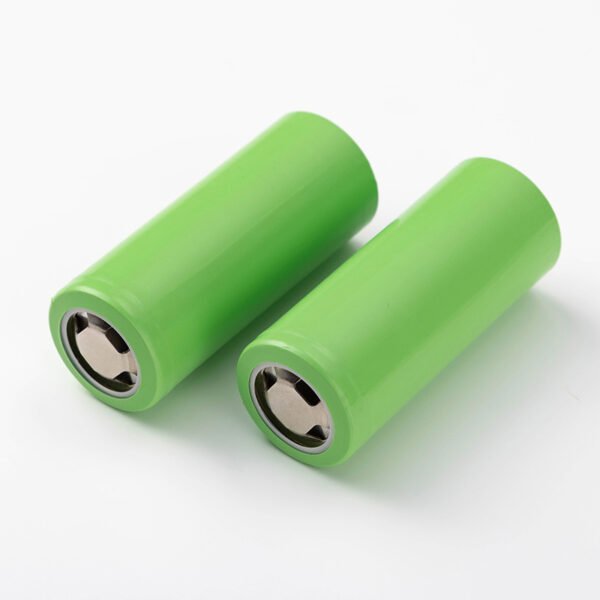
Low Heat High Rate 18650 Battery Cell | CNS BATTERY
Powering High-Performance Applications with Advanced Thermal Management
In the rapidly evolving landscape of portable power solutions, the demand for low heat high rate 18650 battery cells has become increasingly critical across industries ranging from power tools to electric mobility systems. As engineering teams seek reliable energy storage that balances high discharge capability with minimal thermal generation, understanding the technical foundations of these advanced cylindrical cells becomes essential for informed procurement decisions.
Understanding the 18650 Battery Architecture
The 18650 designation refers to the standardized cylindrical form factor: 18mm diameter, 65mm length, with a zero indicating the cylindrical shape. This industry-standard dimension, originally established by Sony, has become the backbone of countless applications due to its optimal balance between energy density, manufacturability, and thermal dissipation characteristics.
Modern low heat high rate 18650 cells employ advanced electrode engineering and electrolyte formulations specifically designed to minimize internal resistance during high-current discharge operations. The fundamental challenge lies in managing the relationship between discharge rate (C-rate) and heat generation, governed by the equation Q = I²R, where heat production increases exponentially with current.
Key Technical Advantages of Low Heat Design
1. Advanced Electrode Material Engineering
Premium high-rate 18650 cells utilize optimized cathode materials such as high-nickel NCM (Nickel-Cobalt-Manganese) or specialized LFP (Lithium Iron Phosphate) formulations. These materials feature enhanced ionic conductivity and reduced polarization during high-current operations. The anode typically incorporates modified graphite structures with improved lithium-ion intercalation kinetics, significantly reducing internal resistance and associated heat generation.
2. Enhanced Thermal Dissipation Architecture
The cylindrical form factor inherently provides superior surface-area-to-volume ratio compared to prismatic or pouch cells. Advanced manufacturers implement additional thermal management features including:
- Optimized current collector designs with reduced resistive losses
- Enhanced separator materials with improved thermal stability
- Precision welding techniques minimizing connection resistance
- Advanced electrolyte additives reducing impedance at high discharge rates
3. Safety Through Thermal Control
Heat generation represents the primary catalyst for thermal runaway scenarios in lithium-ion batteries. Low heat high rate cells maintain operating temperatures within safe thresholds even during sustained high-current discharge, typically keeping surface temperatures below 45°C during continuous 10C-20C discharge operations. This thermal stability directly translates to extended cycle life and reduced safety risks.
Performance Specifications for Engineering Evaluation
When evaluating 18650 battery cells for high-rate applications, technical procurement teams should consider these critical parameters:
- Continuous Discharge Rate: Quality high-rate cells support 10A-25A continuous discharge with minimal voltage sag
- Internal Resistance: Premium cells maintain AC impedance below 20mΩ, significantly reducing I²R losses
- Cycle Life: Expect 300-500 cycles at high discharge rates, extending to 1000+ cycles at moderate rates
- Operating Temperature Range: Typically -20°C to 60°C with optimal performance between 15°C-35°C
- Energy Density: Ranging from 180-250 Wh/kg depending on chemistry optimization
Application Scenarios Requiring Low Heat High Rate Solutions
The technical advantages of these specialized cells make them ideal for demanding applications including:
- Power Tools: Cordless drills, impact drivers, and saws requiring burst power delivery
- Electric Mobility: E-bikes, scooters, and light EVs demanding sustained high-current output
- Portable Equipment: Professional lighting, medical devices, and communication equipment
- Energy Storage Systems: High-power buffer applications requiring rapid charge-discharge cycles
Partnering with Established Manufacturers
Selecting the right manufacturing partner proves critical for ensuring consistent quality and technical support. Established Chinese battery manufacturers have developed sophisticated production capabilities meeting international quality standards while maintaining competitive pricing structures. For comprehensive product specifications and technical documentation, explore the complete range of cylindrical battery cell solutions available through certified manufacturers.
When evaluating potential suppliers, consider their production capacity, quality certification status (UL, CE, UN38.3), and technical support capabilities. Reputable battery manufacturers in China maintain rigorous quality control processes including automated production lines, comprehensive testing protocols, and traceability systems ensuring each cell meets specified performance parameters.
Technical Support and Customization Options
Engineering teams often require customized solutions addressing specific application requirements. This may include tailored discharge profiles, specialized packaging configurations, or integrated battery management system recommendations. Direct communication with technical teams enables precise specification matching and accelerates development timelines.
For detailed technical consultations, custom specification discussions, or volume pricing inquiries, reach out through the official contact channel to connect with engineering support teams capable of addressing complex application requirements.
Conclusion: Making Informed Procurement Decisions
The selection of low heat high rate 18650 battery cells represents a critical engineering decision impacting product performance, safety, and total cost of ownership. By understanding the technical foundations, evaluating key performance parameters, and partnering with qualified manufacturers, engineering teams can confidently specify battery solutions meeting demanding application requirements.
As the industry continues advancing toward higher energy densities and improved thermal management, staying informed about latest developments ensures optimal component selection for next-generation products. The investment in quality battery cells delivers measurable returns through extended product life, reduced warranty claims, and enhanced end-user satisfaction.
For technical specifications, volume pricing, and application engineering support, connect with our team through the contact information provided above. Our engineering team stands ready to support your battery integration projects with comprehensive technical documentation and testing data.

