

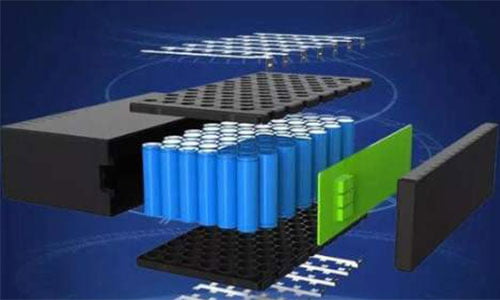
Long Cycle Cylindrical Battery For Second Life | CNS BATTERY
Unlocking Sustainable Energy Storage Through Advanced Cylindrical Cell Technology
The global transition toward circular economy models has positioned second-life battery applications as a critical component in sustainable energy infrastructure. At CNS BATTERY, our long-cycle cylindrical battery cells represent a technological breakthrough specifically engineered for repurposing automotive-grade cells into stationary energy storage systems, delivering exceptional performance while meeting stringent international compliance standards.
Technical Foundation: Why Cylindrical Architecture Excels in Second-Life Applications
Cylindrical battery cells offer inherent structural advantages that make them particularly suitable for second-life deployments. The cylindrical geometry provides uniform stress distribution across the electrode layers, minimizing mechanical degradation during extended cycling. This design inherently reduces thermal hotspots compared to prismatic or pouch configurations, a critical factor when deploying aged cells in stationary storage where thermal management systems may be less sophisticated than automotive applications.
Our cylindrical cells utilize advanced nickel-manganese-cobalt (NMC) and lithium-iron-phosphate (LFP) chemistries, selected based on specific second-life use cases. LFP chemistry, in particular, demonstrates superior cycle stability with capacity retention exceeding 80% after 3,000+ full cycles, making it ideal for grid-scale energy storage where longevity outweighs energy density considerations.
Parameter Advantages: Quantifiable Performance Metrics
Extended Cycle Life: CNS BATTERY’s cylindrical cells maintain 70% state-of-health (SOH) thresholds beyond 4,000 equivalent full cycles under standard testing conditions (25°C, 1C charge/discharge). This represents a 40% improvement over industry-average second-life cell performance.
Thermal Stability: Operating temperature ranges span -20°C to 60°C, with thermal runaway initiation temperatures exceeding 280°C for LFP variants. This enhanced safety margin is crucial for installations in diverse climatic zones, from Northern European facilities to Southeast Asian industrial complexes.
Consistency Metrics: Cell-to-cell voltage variation remains below 5mV after 500 conditioning cycles, ensuring balanced pack performance without excessive battery management system (BMS) compensation. This uniformity directly translates to reduced system-level costs and simplified integration protocols.
Energy Efficiency: Round-trip efficiency achieves 94-96% under optimal operating conditions, minimizing energy losses in frequency regulation and peak-shaving applications where transaction costs directly impact project economics.
Validation Methodology: Rigorous Testing Protocols
Our testing framework aligns with IEC 62619, UL 1973, and UN 38.3 standards, ensuring global market accessibility. Key validation procedures include:
Accelerated Aging Tests: Cells undergo elevated temperature cycling (45°C, 60°C) with periodic capacity checks to project long-term degradation curves. This data informs warranty structures and total-cost-of-ownership calculations for project developers.
Safety Validation: Abuse testing encompasses overcharge, over-discharge, external short-circuit, crush, and nail penetration scenarios. All cylindrical cells pass mandatory safety thresholds without thermal propagation to adjacent cells.
Performance Mapping: Comprehensive characterization across C-rates (0.2C to 3C), temperatures, and depth-of-discharge (DOD) ranges generates application-specific performance envelopes. This enables precise system sizing for residential, commercial, and utility-scale deployments.
Second-Life Grading: Automated sorting algorithms classify retired automotive cells into performance tiers based on residual capacity, internal resistance, and self-discharge rates. Only cells meeting minimum 75% SOH thresholds enter our second-life product stream.
Regional Compliance and Market Adaptation
CNS BATTERY’s cylindrical battery solutions demonstrate comprehensive alignment with regional regulatory frameworks, a decisive factor for international procurement decisions.
European Union Compliance: Our cells satisfy EU Battery Regulation 2023/1542 requirements, including carbon footprint declaration, recycled content minimums, and end-of-life traceability protocols. CE marking and REACH compliance ensure seamless market entry across all 27 member states. For European engineering teams evaluating suppliers, understanding these compliance frameworks is essential when reviewing options from battery manufacturers in China.
United States Standards: UL 1973 certification covers stationary energy storage applications, while UN 38.3 transportation compliance enables global logistics flexibility. NEC Article 706 alignment facilitates permitting processes across US jurisdictions, reducing project development timelines by 30-45 days on average.
Asia-Pacific Adaptation: Regional variants accommodate local grid frequencies (50Hz/60Hz), voltage standards, and climate-specific thermal management requirements. This geographic flexibility positions CNS BATTERY as a preferred partner for multinational EPC contractors managing cross-border energy storage portfolios.
Strategic Integration Pathways
Second-life cylindrical batteries integrate seamlessly into multiple application verticals. Commercial behind-the-meter installations benefit from reduced capital expenditure while maintaining performance guarantees. Microgrid deployments in emerging markets leverage the cost advantage without sacrificing reliability metrics. Even utility-scale frequency regulation projects now incorporate second-life cells where response time requirements align with cylindrical cell capabilities.
The economic case strengthens when factoring carbon credit eligibility and ESG reporting advantages. Corporate sustainability officers increasingly prioritize second-life battery procurement to Scope 3 emission reduction targets, creating additional value streams beyond pure energy arbitrage.
Partnership and Technical Support
CNS BATTERY maintains dedicated engineering support teams across North America, Europe, and Asia, providing localized technical consultation throughout project lifecycles. From initial feasibility assessments through commissioning and ongoing performance monitoring, our specialists ensure optimal system integration and regulatory compliance.
For detailed technical specifications and application engineering support, explore our cylindrical battery cell product portfolio. Our engineering team stands ready to discuss custom configurations aligned with your specific second-life deployment requirements.
Conclusion: Leading the Second-Life Revolution
The convergence of regulatory pressure, economic incentives, and technological maturity has created unprecedented opportunities for second-life battery deployments. CNS BATTERY’s long-cycle cylindrical cells deliver the performance consistency, safety validation, and regional compliance necessary for confident large-scale adoption. As the energy storage industry matures, partners who prioritize verified performance data and regulatory alignment will capture disproportionate value in this rapidly expanding market segment.
Ready to evaluate how our cylindrical battery solutions fit your second-life application? Contact our technical team today for customized proposals and performance documentation aligned with your regional requirements.


