
Here is the professional article tailored for your requirements, designed to meet Google SEO standards while providing high value to B2B technical readers.
The Critical Guide to Li-SO₂ Batteries for Aviation Emergency Equipment
In the high-stakes environment of aviation, the reliability of emergency equipment is non-negotiable. From Emergency Locator Transmitters (ELTs) to underwater beacons and ejection seat systems, the power source must function flawlessly after years of dormancy and in the most extreme conditions. While lithium-ion batteries dominate consumer electronics, the specific demands of aviation safety gear often necessitate a different chemistry: the Lithium-Thionyl Chloride (Li-SOCl₂) battery, commonly referred to as a primary (non-rechargeable) lithium battery.
This guide delves into the engineering rationale behind selecting Li-SO₂ batteries for critical flight safety applications. We will explore the fundamental electrochemistry that grants these cells their longevity, analyze the specific performance metrics required for aviation, and provide a structured selection framework for engineers and technical procurement managers.
The Electrochemical Foundation: Why Lithium?
To understand the dominance of lithium-based primary cells in aerospace, one must first examine the periodic table. Lithium is the lightest of all metals and possesses the most negative electrochemical potential (-3.04V vs. Standard Hydrogen Electrode). This translates into the highest specific energy (energy per unit weight) of any battery chemistry available today.
For aviation emergency equipment, weight is a perpetual enemy. Every gram saved on the power source is a gram available for structural integrity or payload. Lithium-based primary batteries, specifically Lithium-Thionyl Chloride (Li-SOCl₂) and Lithium-Sulfur Dioxide (Li-SO₂), offer energy densities that are typically 2 to 3 times higher than traditional aqueous electrolyte systems.
The Passivation Phenomenon:
A unique characteristic of Lithium-Thionyl Chloride chemistry is the formation of a passivation layer on the lithium anode. When the battery is idle, a thin film of Lithium Chloride (LiCl) forms on the surface. This layer acts as a barrier, significantly reducing the self-discharge rate to less than 1% per year. While this passivation can cause a voltage delay upon initial discharge (a critical factor for designers to consider), it is this very mechanism that allows these batteries to sit on a shelf or inside an aircraft fuselage for 10 to 15 years without losing capacity.
Core Requirements for Aviation Emergency Power
Selecting a battery for an ELT or similar device is not merely about voltage and capacity; it is about meeting rigorous environmental and safety standards. The following table outlines the critical parameters that a primary lithium battery must satisfy for aviation deployment.
| Parameter | Requirement Rationale | Typical Specification |
|---|---|---|
| Temperature Range | Aircraft may be parked in desert heat or polar cold. | -55°C to +85°C (Extended ranges available) |
| Service Life | Emergency gear must be maintenance-free for years. | 10+ years shelf life, 5+ years operational life. |
| Pulse Capability | ELTs transmit high-power RF bursts, not steady loads. | Ability to deliver high current pulses without voltage collapse. |
| Hermeticity | Prevents electrolyte leakage and ingress of moisture. | Laser-welded stainless steel or aluminum casing. |
| Safety Certification | Compliance with international air transport regulations. | UN/DOT 38.3, IATA DGR, MIL-STD-810. |
Selection Criteria: Matching the Battery to the System
When designing or sourcing power for aviation emergency equipment, engineers must navigate a complex landscape of trade-offs. Here are the three primary selection criteria to evaluate.
1. Voltage and Delay Management
Lithium-Thionyl Chloride cells have a nominal voltage of 3.6V, which is higher than the standard 1.5V of alkaline cells. This higher voltage can simplify circuit design by reducing the number of cells needed in series. However, the passivation layer introduces a “voltage delay” when the load is first applied. For a typical ELT that transmits a distress signal immediately upon activation, this delay is unacceptable.
- Solution: Designers often use hybrid systems or select “Low-Delay” variants of Li-SOCl₂ cells where the internal structure is modified to minimize this lag, or pair the battery with a supercapacitor to provide the initial surge current.
2. Pulse Performance vs. Continuous Drain
Aviation transmitters are pulsed loads. They draw a high current (e.g., 2-5A) for a few milliseconds every second. Standard Li-SOCl₂ cells have high internal impedance, which can cause the voltage to sag under heavy loads due to ohmic heating and concentration polarization.
- Evaluation: It is crucial to test the battery under the specific pulse profile of the equipment. Some manufacturers offer cells with carbon cathodes optimized for high-rate pulses, whereas standard cells are better suited for low-drain applications like memory backup.
3. Mechanical Robustness and Vibration
An aircraft in flight, or worse, in a crash scenario, subjects components to extreme vibration and shock.
- Selection: Look for batteries with robust mechanical design. The internal spiral-wound jellyroll must be tightly compressed to prevent movement. Loose internal components can lead to internal shorts, a catastrophic failure mode in a high-energy-density cell.
The CNS BATTERY Advantage in Primary Systems
Navigating these technical complexities requires a partner with deep expertise in primary lithium chemistry. At CNS BATTERY, we specialize in providing tailored primary battery solutions for mission-critical applications.
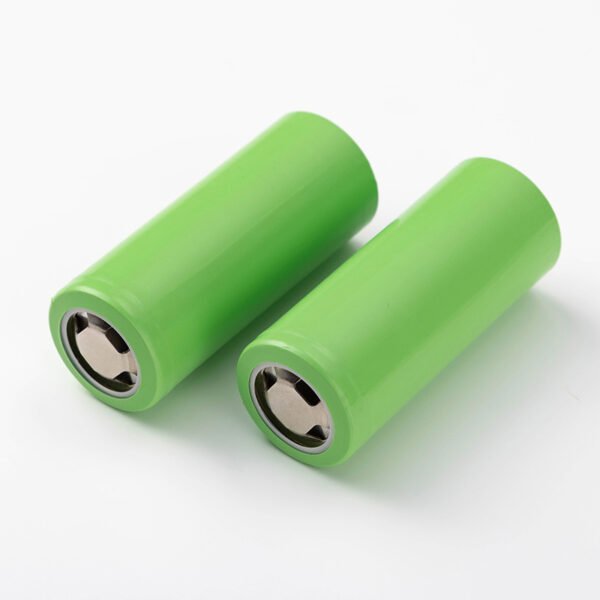
Our engineering team understands that aviation emergency equipment is not a one-size-fits-all application. We offer customized cell formulations to address specific voltage delay issues or pulse requirements. Whether your design requires a standard Prismatic Battery Cell for a compact beacon or a specialized Cylindrical Battery Cell for an ELT housing, our R&D capabilities ensure that the chemistry is matched perfectly to the operational profile.
We recognize that the selection process is just the beginning. For technical inquiries, custom design consultations, or to discuss the specific requirements of your next-generation aviation safety system, our experts are ready to assist.
Contact our technical sales team today to ensure your emergency equipment has the power it can rely on. Reach out to our experts here.
For a comprehensive overview of our primary battery technologies, explore our full range of products. View our Primary Battery product line.
